Are you struggling to maintain precision in your automated manufacturing processes? Achieving the right balance between speed and accuracy is a critical challenge. Ultra-precision control systems provide a solution that can help optimize both.
Industries such as automotive, aerospace, and medical device manufacturing rely on these systems to meet strict tolerances and high-quality standards. Without the proper technology, even minor errors can result in costly defects and inefficiencies.
This article will explore how ultra-precision control systems are changing automation. Let's look into specific use cases, real-world applications, and the key benefits these systems offer to manufacturers looking to improve their production processes.
Quick look
Ultra-precision control systems improve accuracy, reduce waste, and optimize production in precision-critical industries.
Key use cases include CNC machines, robotics, semiconductor manufacturing, and medical device production.
Benefits include cost savings, improved quality control, and enhanced operational efficiency.
Selecting the right system involves considering accuracy, compatibility, scalability, and maintenance needs.
Common challenges include high initial costs, integration complexity, and skilled workforce requirements.
What Are Ultra Precision Control Systems?
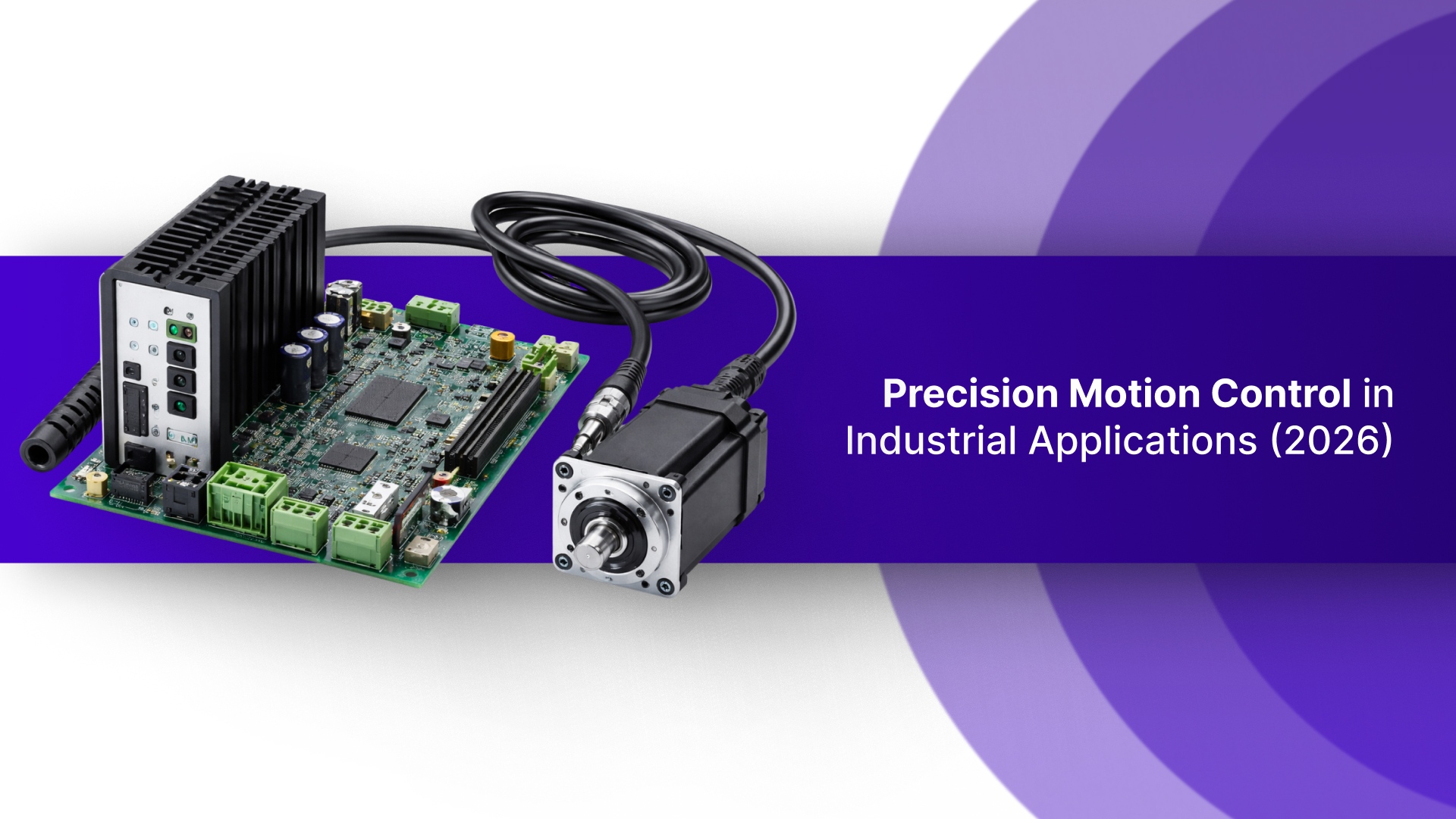
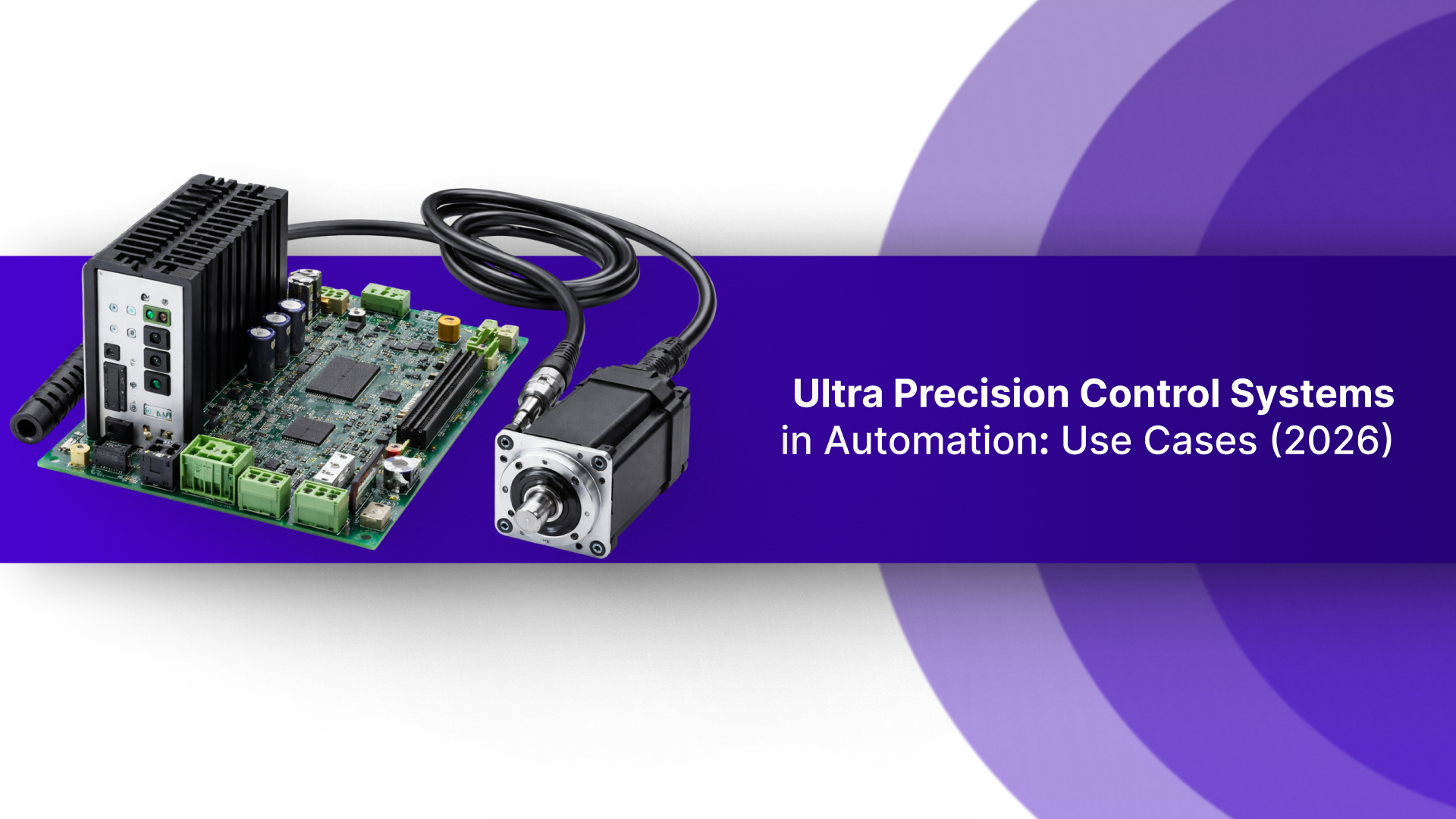
Ultra-precision control systems are advanced technologies designed to provide highly accurate control over industrial automation processes. They integrate sensors, actuators, and controllers to manage operations with minimal margin of error.
These systems ensure the precise movement and positioning of machinery, making them essential in industries that demand tight tolerances.
These systems are used to improve the performance of machinery in sectors such as CNC machining, robotics, and semiconductor manufacturing. By delivering unparalleled accuracy, they help improve quality, reduce waste, and increase efficiency.
Now that you know what these systems are, let’s explore their applications across various industries.
Top 7 Use cases of Ultra Precision Control Systems
Ultra-precision control systems are changing automation across various industries. Their ability to maintain accuracy while improving efficiency makes them invaluable in precision-critical processes.
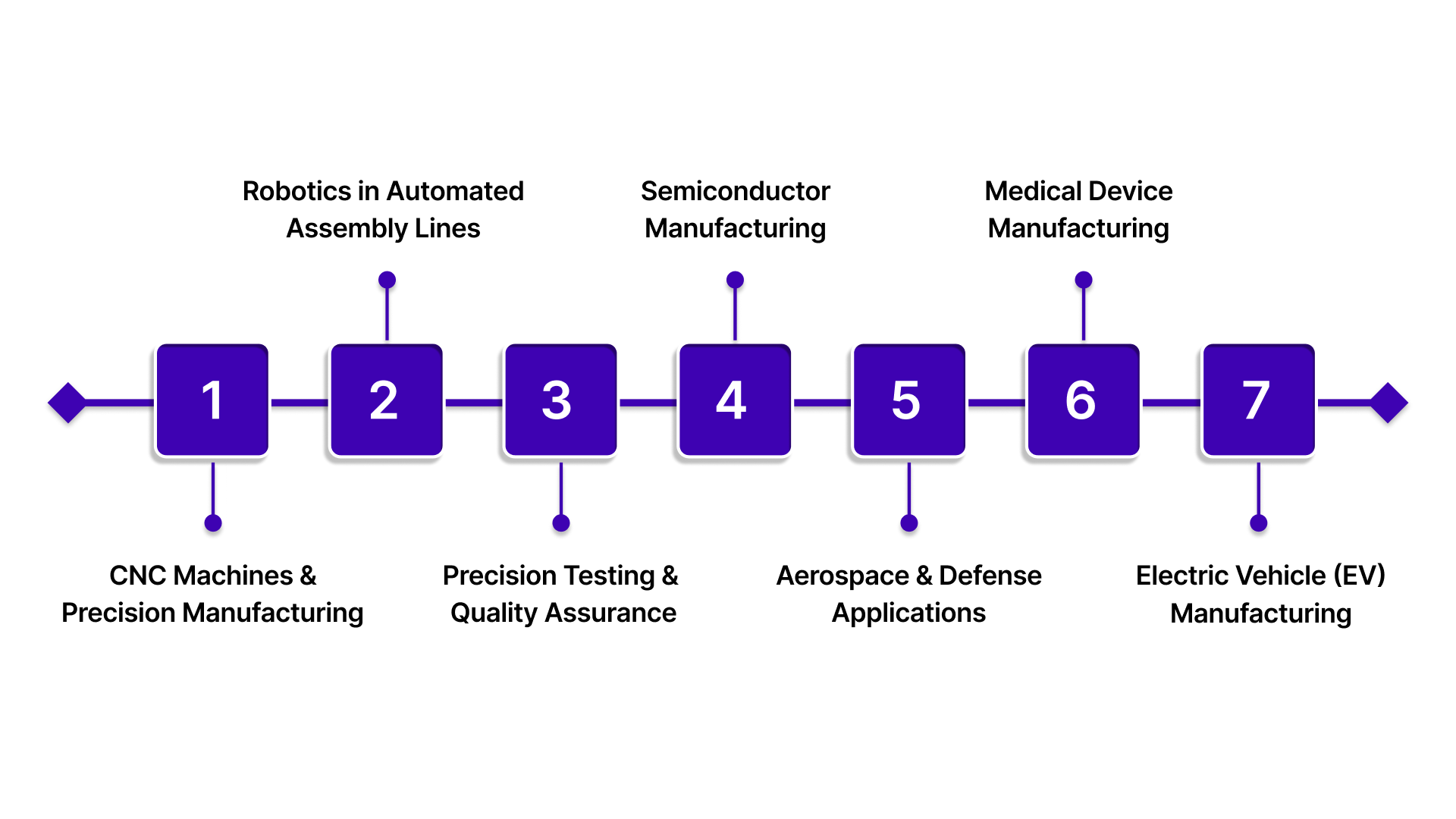
From CNC machines to medical device manufacturing, these systems are essential in driving innovation and operational excellence.
Here are the top 7 use cases where ultra-precision control systems are making a significant impact in industrial automation:
Use Case 1: CNC Machines & Precision Manufacturing
Ultra-precision control systems drive accuracy in CNC machines, which are critical for industries like aerospace, automotive, and high-tech manufacturing.
Application: These systems ensure precise tool positioning, reducing deviation to micrometer levels, enhancing repeatability and part quality.
Impact: Results in reduced material waste, increased throughput, and higher-quality components meeting tight tolerances (e.g., ±0.0001 inches in aerospace).
Use Case 2: Robotics in Automated Assembly Lines
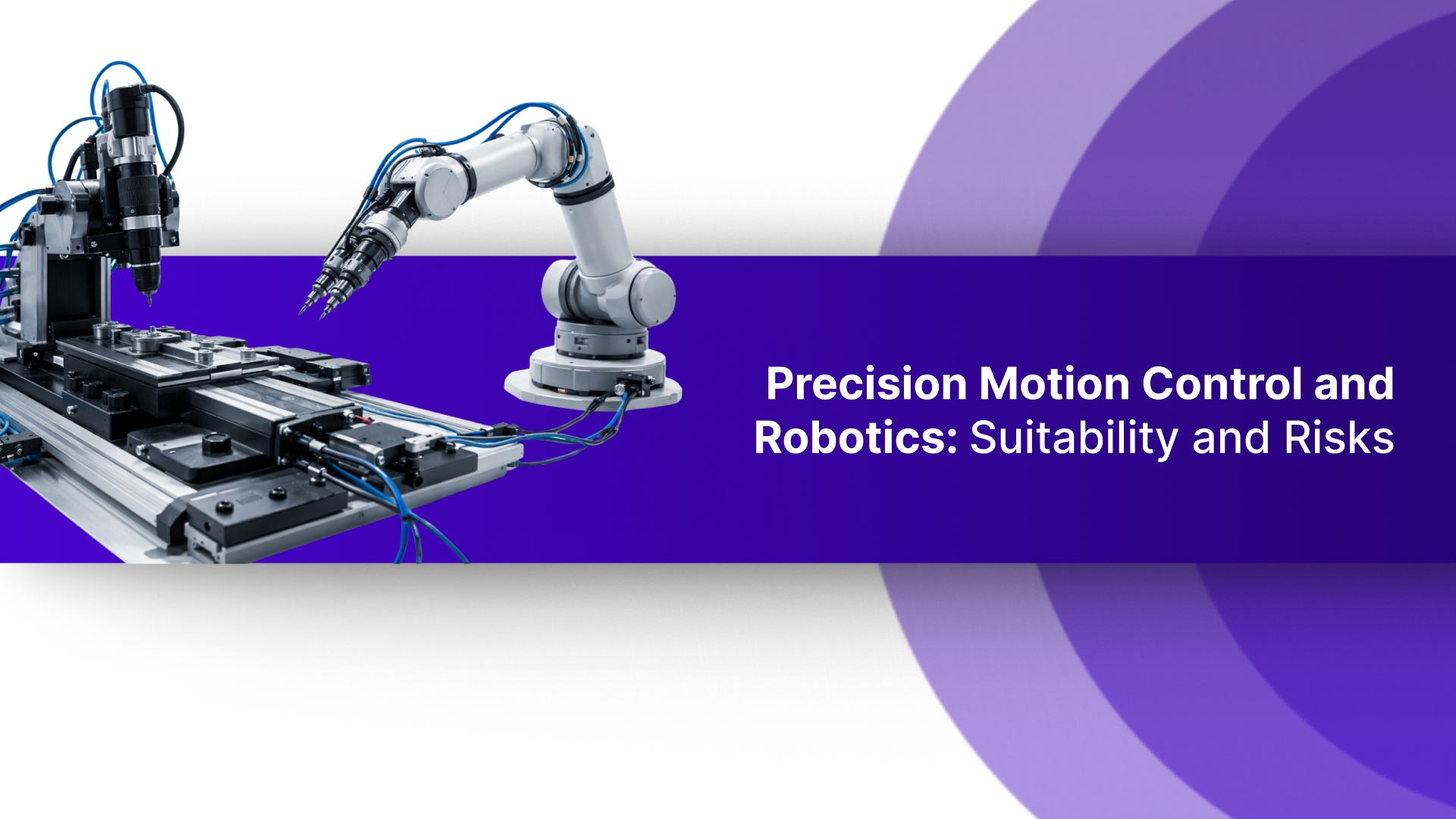
Precision control systems enable robotic arms to perform intricate tasks like welding, part assembly, and testing with high accuracy.
Application: In automotive and electronics manufacturing, robots perform tasks with sub-millimeter precision, significantly improving speed and reducing human error.
Impact: Increased operational efficiency, lower labor costs, and improved product consistency.
Use Case 3: Precision Testing & Quality Assurance
Ultra-precision control systems are key to testing and inspecting critical components in electronics, semiconductors, and aerospace parts.
Application: They perform high-precision measurements, such as strain and temperature testing, ensuring components meet strict industry standards.
Impact: Results in fewer defective products, improved compliance with standards (e.g., ISO 9001), and more reliable end products.
Use Case 4: Semiconductor Manufacturing
Ultra-precision control systems play a vital role in semiconductor fabrication, where even the smallest misalignment can cause defects.
Application: They control photolithography machines and wafer handling equipment, maintaining sub-nanometer precision during the manufacturing process.
Impact: Higher yields and fewer defective chips, contributing to lower costs and improved performance of semiconductor devices.
Use Case 5: Aerospace & Defense Applications
Precision control systems are essential for manufacturing parts used in aerospace and defense, where failure is not an option.
Application: They ensure exacting tolerances in turbine blades, satellite components, and military-grade electronics, where precision is critical for performance and safety.
Impact: Improved reliability, extended lifespan of critical components, and compliance with stringent military and aerospace standards (e.g., AS9100D).
Use Case 6: Medical Device Manufacturing
Ultra-precision control systems ensure that medical devices, such as implants, surgical instruments, and diagnostic tools, are produced with utmost accuracy.
Application: They help in the creation of complex, high-tolerance components like orthopedic implants and stents, ensuring biocompatibility and optimal functionality.
Impact: Reduced risk of surgical complications, improved patient safety, and compliance with regulatory standards like FDA 21 CFR Part 820.
Use Case 7: Electric Vehicle (EV) Manufacturing
Precision control systems are critical in EV manufacturing, ensuring high-performance components like batteries, motors, and control systems are built to exact specifications.
Application: They maintain precise assembly of battery cells and motors, which is essential for ensuring long battery life and high efficiency.
Impact: Improved energy efficiency, improved vehicle performance, and increased consumer confidence in EV reliability.
Now that you know the key use cases, let's look into the benefits of implementing ultra-precision control systems and how they can drive efficiency, cost savings, and scalability in your operations.
Top 7 Benefits of Implementing Ultra Precision Control Systems
Ultra-precision control systems provide significant improvements in manufacturing and automation. They ensure high accuracy, reduce errors, and optimize production processes, leading to greater operational efficiency.
By minimizing deviations, these systems also help companies stay competitive in precision-driven industries.
These benefits include:
Improved Accuracy: Achieve tolerances as tight as ±0.0001 inches, critical for industries like aerospace, semiconductor, and medical device manufacturing.
Increased Throughput: Faster production cycles and reduced downtime, allowing for higher output without compromising precision.
Cost Savings: Minimized waste and material defects, leading to lower scrap rates and reduced rework costs.
Improved Quality Control: Consistent production quality, reducing the risk of defects and meeting industry standards (e.g., ISO 9001, FDA).
Energy Efficiency: Optimized control over machinery, reducing energy consumption during operation.
Scalability: Seamless scaling of operations without sacrificing precision, ideal for high-volume production environments.
Long-Term Durability: Reduced wear and tear on machinery, extending the lifespan of equipment and decreasing maintenance costs.
With a clear understanding of the benefits, the next crucial step is selecting the right ultra-precision control system for your specific needs.
Let's explore the key factors to consider when making this important decision.
How to Select the Right Ultra Precision Control System
When selecting the right ultra-precision control system, it's essential to consider several key factors that can influence the system's effectiveness and integration into your operations.
Below is a table outlining the key selection criteria and their significance:
Selection Criteria | Key Considerations | Why It Matters |
Accuracy & Tolerance | The level of precision the system can achieve (e.g., ±0.0001 inches). | High accuracy ensures minimal errors, which is critical for industries like aerospace and medical device manufacturing. |
System Compatibility | Compatibility with existing machinery and software. | Seamless integration with current systems minimizes disruptions and costly reconfigurations. |
Scalability | The ability to scale the system for higher production volumes. | Ensures the system can grow with your business, accommodating future demands without compromising performance. |
Control System Features | Features such as real-time feedback, adaptive control, and automation integration. | Advanced features improve efficiency, flexibility, and reduce human intervention, boosting overall productivity. |
Maintenance Requirements | The ease and cost of maintaining the system. | Low-maintenance systems reduce downtime and long-term operational costs, ensuring consistent performance. |
Cost vs. Return on Investment (ROI) | The initial cost of the system versus its long-term benefits. | Evaluate the system's efficiency, savings, and productivity gains to justify the investment. |
Support & Service | Availability of technical support and training from the manufacturer. | Reliable support ensures minimal downtime and proper system functionality, especially in critical applications. |
Energy Efficiency | The system's energy consumption during operation. | Energy-efficient systems reduce operational costs and contribute to sustainability goals. |
Despite the significant benefits, implementing ultra precision control systems comes with its own set of challenges.
Let’s take a closer look at some of the most common obstacles manufacturers face when adopting these systems.
Common Challenges in Implementing Ultra Precision Control Systems
Implementing ultra-precision control systems can greatly improve manufacturing processes, but the path to success isn't without its challenges. From high upfront costs to integration complexities, these obstacles must be addressed to ensure smooth deployment.
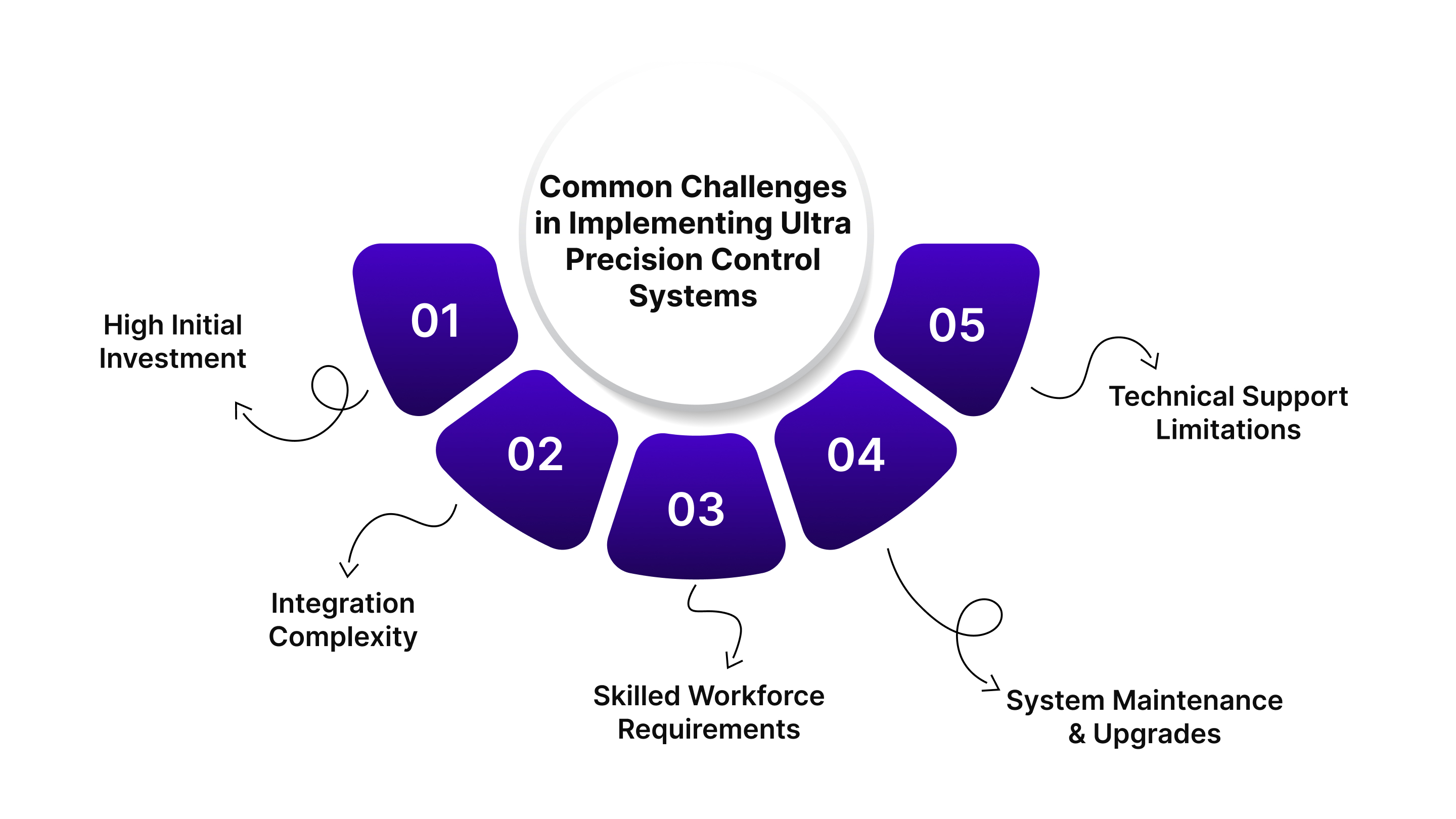
Here are the common challenges in implementing ultra-precision control systems:
High Initial Investment: Ultra-precision control systems can require significant upfront investment, making it a costly decision for some manufacturers.
How to Overcome It: Perform a thorough ROI analysis to justify the initial costs through long-term savings and efficiency gains.
Integration Complexity: Integrating new precision control systems with existing machinery and software can be technically challenging and time-consuming.
How to Overcome It: Ensure compatibility by choosing systems designed to work with existing infrastructure, and consider using professional services for integration.
Skilled Workforce Requirements: Operating and maintaining ultra-precision control systems requires a skilled workforce that is well-versed in the technology.
How to Overcome It: Provide specialized training for current employees and hire or consult with experts in precision control systems.
System Maintenance and Upgrades: Ongoing maintenance and periodic upgrades are necessary to keep ultra-precision control systems performing at optimal levels.
How to Overcome It: Establish a routine maintenance schedule and plan for future upgrades to ensure system longevity.
Technical Support Limitations: Lack of readily available technical support can cause delays during system troubleshooting and repairs.
How to Overcome It: Partner with reliable vendors who offer full support services, and maintain an in-house team capable of handling basic issues.
By addressing these challenges head-on, manufacturers can open the full potential of ultra-precision control systems, paving the way for significant improvements in their automation processes.
Looking for Better Automation? How Ultra Precision Control Systems Can Help
Ultra-precision control systems are essential for improving accuracy, reducing waste, and optimizing production in industries that require tight tolerances. By utilizing these systems, manufacturers can ensure higher efficiency and consistent quality.
Pico Systems provides innovative solutions to improve your automation processes. We specialize in precision control technologies, including:
Additionally, Pico Systems offers:
Expert technical support for seamless integration.
Custom solutions personalized to your specific industrial needs.
Ready to optimize your automation? Contact us today to discuss how Pico Systems can drive efficiency in your manufacturing processes.
FAQs
What industries benefit most from ultra-precision control systems?
Yes, industries like aerospace, medical device manufacturing, automotive, and semiconductor fabrication greatly benefit from ultra-precision control systems. These systems ensure tight tolerances and high-quality standards across critical applications.
Can ultra-precision control systems reduce production costs?
Absolutely! By improving accuracy, reducing waste, and minimizing rework, ultra-precision control systems help manufacturers lower overall production costs and increase operational efficiency.
How do ultra-precision control systems improve manufacturing efficiency?
These systems optimize machine performance by ensuring precise movement and positioning. This leads to faster production cycles, fewer defects, and more reliable operations, ultimately increasing efficiency.
Are ultra-precision control systems difficult to integrate with existing machinery?
Integration can be challenging, but it's manageable with the right approach. Many systems are designed to be compatible with legacy equipment, and professional services can help ensure a smooth integration process.
How long do ultra-precision control systems typically last?
With proper maintenance, ultra-precision control systems can last for many years. Routine servicing, along with system upgrades, helps extend their lifespan and keep performance optimal.