Struggling to find the right motion controller for your manufacturing systems? Selecting the best one is crucial for optimizing automation and ensuring system precision. As production systems become more complex, the risks of poor performance and inefficiency grow.
Precision, speed, and scalability are key, but engineers often face challenges in choosing the right equipment. Motion controllers are vital for smooth operations, yet selecting the wrong one can lead to costly downtimes and safety risks.
This guide provides engineers and decision-makers with practical insights to select the best motion controller. With the right approach, you can make informed choices and optimize your systems for 2026 and beyond.
Key Takeaways
Motion controllers are essential for controlling machinery, motors, and actuators in automation systems.
Key features to evaluate include precision, processing speed, I/O handling, and real-time control.
Consider application-specific needs, system integration, and scalability when selecting a controller.
Testing before purchase is crucial to ensure compatibility and performance under real-world conditions.
Pico Systems offers high-performance motion control solutions to meet various industrial requirements.
What is a Motion Controller?
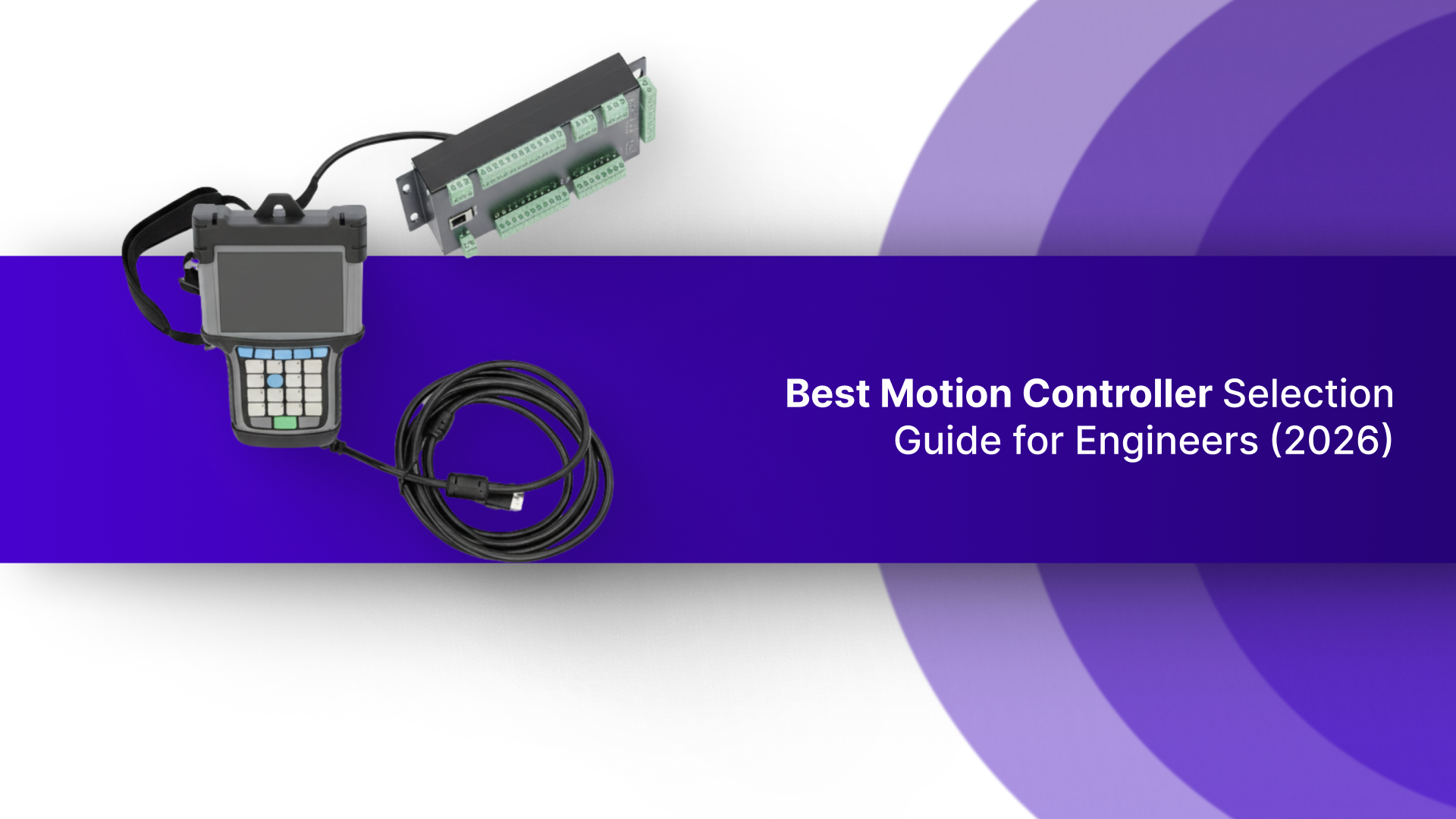
A motion controller is a critical component in industrial automation systems, designed to control the movement of machinery, motors, and actuators. It works by interpreting commands from control systems like PLCs or PACs and translating them into precise motions, whether linear, rotary, or both.
The role of the motion controller extends to adjusting speed, direction, acceleration, and positioning, ensuring that machines perform as required in complex processes like assembly lines, robotics, and CNC machining.
Understanding the basic operation of motion controllers is essential, as it forms the foundation for selecting the right controller for specific tasks. But how do you know which one is best suited for your system?
Key Features to Consider in a Motion Controller
When selecting a motion controller, it's crucial to focus on specific features that impact system performance and efficiency. The right features ensure precise control, scalability, and seamless integration with your machinery.
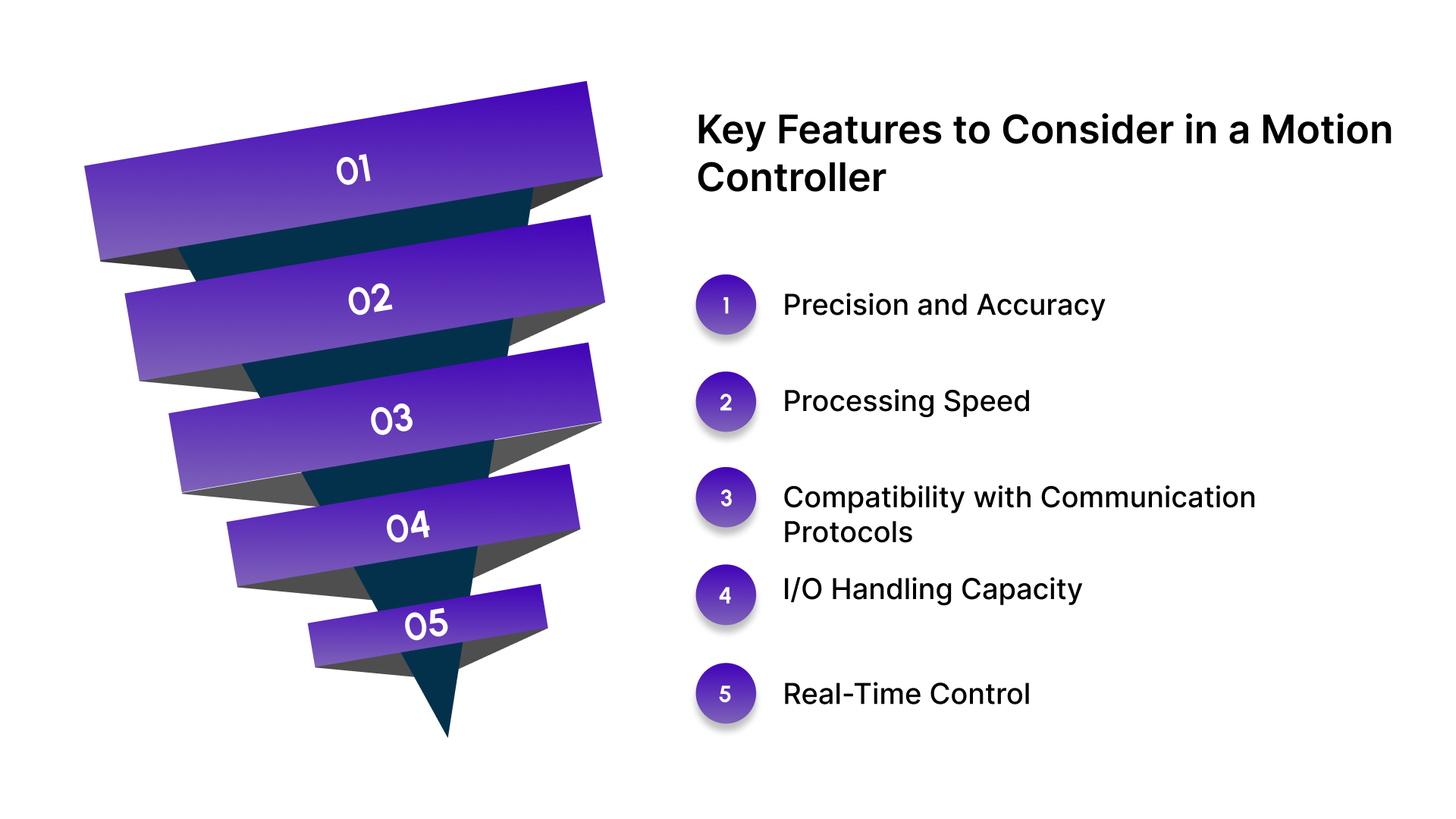
Let’s take a look at the key features and their importance:
Precision and Accuracy: Ensures the controller can make highly accurate adjustments in position, speed, and motion path.
Why it is important: Critical for applications requiring tight tolerances, such as CNC machines and robotics, where even small errors can lead to significant issues.
Processing Speed: The controller's ability to process commands quickly and make real-time adjustments.
Why it is important: High processing speed reduces latency, which is essential for high-speed production environments and for maintaining throughput without delays.
Compatibility with Communication Protocols: Ensures the controller supports industry-standard communication protocols such as Modbus, Ethernet/IP, or RS-232.
Why it is important: Seamless integration with existing systems reduces compatibility issues, simplifying setup and reducing the risk of system conflicts.
I/O Handling Capacity: Refers to the number and types of inputs and outputs the controller can handle at once.
Why it is important: A higher I/O capacity is essential for complex systems with multiple sensors and actuators, ensuring smooth, uninterrupted operation.
Real-Time Control: The controller's ability to adjust parameters in real-time based on feedback from sensors or inputs.
Why it is important: Ensures continuous optimization of operations, reducing errors and maintaining system efficiency in dynamic environments.
These features are essential for determining the right motion controller for your system's needs. Now let's move on to the factors that influence your choice of a motion controller.
Factors Affecting the Choice of Motion Controller
Choosing the right motion controller isn't just about features; it also depends on specific factors that relate to your application and production needs.
These factors ensure that your controller is the best fit for your systems, providing the right balance of performance, scalability, and compatibility.
Here are the key factors to consider:
Application Requirements: Every system has unique demands. For example, a multi-axis robotic arm requires more complex control than a single-axis conveyor belt.
Budget vs. Performance: While high-end controllers offer advanced features, they may not always be necessary for simpler tasks. Balancing cost with required performance ensures you get value without overspending.
Integration with Existing Systems: Compatibility with your current setup (e.g., PLCs, PACs) is crucial. A motion controller should easily integrate without requiring extensive modifications to your existing infrastructure.
Industry-Specific Needs: Different industries, like automotive or aerospace, have unique requirements that a motion controller must meet. For instance, aerospace may need controllers with extreme precision and fail-safe features.
Future Scalability: It's important to select a controller that can scale with your needs. Choosing a system that can grow with your production line helps avoid costly upgrades in the future.
Now that you know the key factors to consider, let’s look at how to select the motion controller based on industrial applications.
Selecting Motion Controllers for Key Industrial Applications
Selecting the right motion controller requires a careful evaluation of your system's unique requirements, features, and scalability needs. It's essential to balance performance with cost while ensuring the controller integrates seamlessly with existing systems.
Here's a comparison table to help you assess what factors are most relevant to your selection:
Application | Type of Controller Used | Key Features Required |
CNC Machining | Multi-axis controllers (e.g., 3-axis, 5-axis) | High precision, fast processing speeds, real-time control, I/O handling |
Robotic Arms (Assembly) | Servo controllers with real-time feedback | High precision, I/O capacity, multi-axis support, fast processing speed |
Packaging Lines | Single-axis controllers or basic multi-axis controllers | Speed control, reliability, scalability |
Automated Testing Systems | High-precision controllers with feedback loops | Real-time control, high accuracy, integration with testing equipment |
Aerospace & Automotive | High-end motion controllers with safety features | Extreme precision, fail-safe mechanisms, real-time control, robust communication |
Material Handling Systems | Basic or mid-range controllers | Integration with conveyors, multi-axis support, scalability for future needs |
Semiconductor Manufacturing | Advanced multi-axis controllers | Extremely high precision, high processing speed, real-time feedback |
Printing & Textile Machines | Single or multi-axis controllers | Speed, precision, compatibility with other machinery and I/O devices |
How These Applications Influence Controller Selection
Precision Needs: Applications like CNC machining and semiconductor manufacturing demand motion controllers that provide high precision and real-time feedback to ensure the highest quality and accuracy.
Multi-Axis Control: Complex operations, such as those in robotic arms and automated testing systems, require controllers capable of synchronizing multiple axes to perform complex, coordinated tasks.
Speed and Scalability: High-speed manufacturing processes like packaging and material handling rely on motion controllers that offer fast processing speeds and the flexibility to scale as production demands increase.
Understanding these industry-specific requirements will help you choose the most suitable motion controller to meet both current and future needs in your system.
Now that the key industrial applications are known, let's move on to common pitfalls to avoid when selecting a motion controller.
Common Pitfalls to Avoid When Choosing Motion Controllers
Selecting the right motion controller can be a complex decision, and engineers often face pitfalls that can lead to inefficiencies or costly mistakes. From overcomplicating the system to overlooking compatibility, these issues can result in increased downtime and operational disruptions.
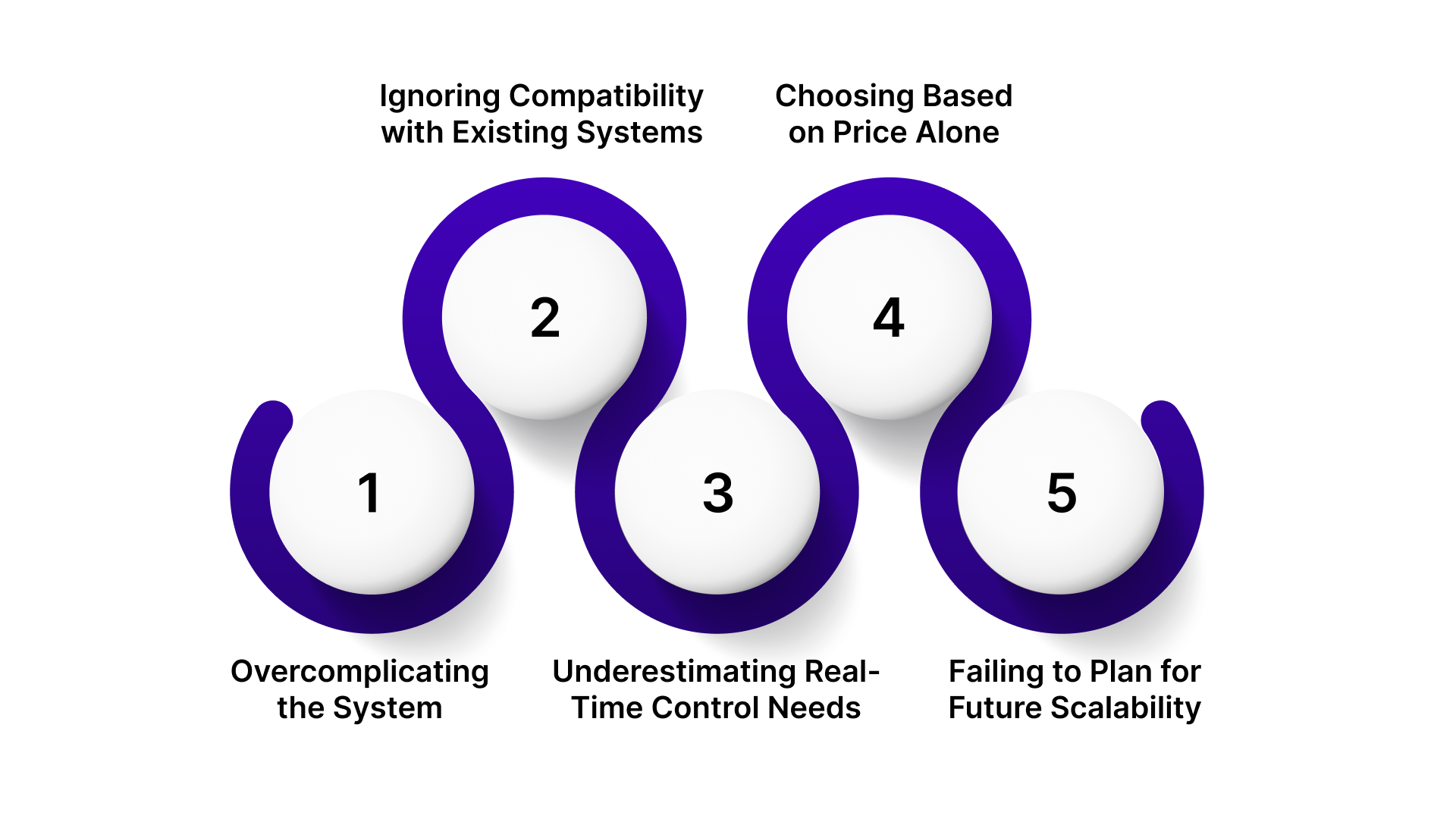
Here's a list of the most common pitfalls and how to avoid them.
Overcomplicating the System: Choosing a motion controller with more features than required can lead to unnecessary complexity.
How to avoid: Stick to controllers that meet your specific needs without adding unnecessary functionality.
Ignoring Compatibility with Existing Systems: A motion controller that doesn't integrate well with your current infrastructure can cause delays and system malfunctions.
How to avoid: Ensure the controller supports the communication protocols and is compatible with your existing control systems.
Underestimating Real-Time Control Needs: Failing to consider the need for real-time control can result in delayed feedback, which is critical in high-speed environments.
How to avoid: Prioritize controllers that offer real-time control capabilities, especially for fast-moving production lines.
Choosing Based on Price Alone: Focusing solely on the cost can lead to selecting a controller that compromises on essential features.
How to avoid: Balance cost with performance, considering the controller's reliability, scalability, and long-term benefits.
Failing to Plan for Future Scalability: Controllers that don't allow for future upgrades can become a bottleneck as your system grows.
How to avoid: Select controllers that offer scalability to accommodate future production needs without requiring a complete overhaul.
Having identified these pitfalls, it's crucial to choose the best controller for your manufacturing needs.
Let's now look at how to effectively test and evaluate motion controllers before making a final decision.
How to Test and Evaluate Motion Controllers Before Purchase
Before finalizing your motion controller purchase, it's essential to thoroughly test it in real-world scenarios.
Here's a streamlined checklist to help guide your evaluation process:
Prototype Testing: Test the controller with a sample system to evaluate integration and real-time performance, ensuring compatibility with your setup.
Stress Test Under Real Conditions: Run the controller under high-load or high-speed scenarios to assess its stability and performance during demanding operations.
Monitor Controller Response Time: Measure the response time to inputs to ensure there are no delays, especially in high-speed or time-sensitive processes.
Support & Warranty: Review the level of customer support available, warranty terms, and the availability of software updates. Strong support and a comprehensive warranty will ensure that the system remains reliable over time.
This checklist will help ensure that the motion controller you choose meets your needs and will perform well in your operational environment.
How Can Pico Systems Contribute to Your Motion Control Needs?
Pico Systems specializes in providing high-performance motion control solutions designed to improve manufacturing automation.
Our products are built for seamless integration and precision, making them ideal for engineers looking to optimize their motion control systems.
With a focus on reliability and scalability, we support a variety of industrial applications.
What We Provide:
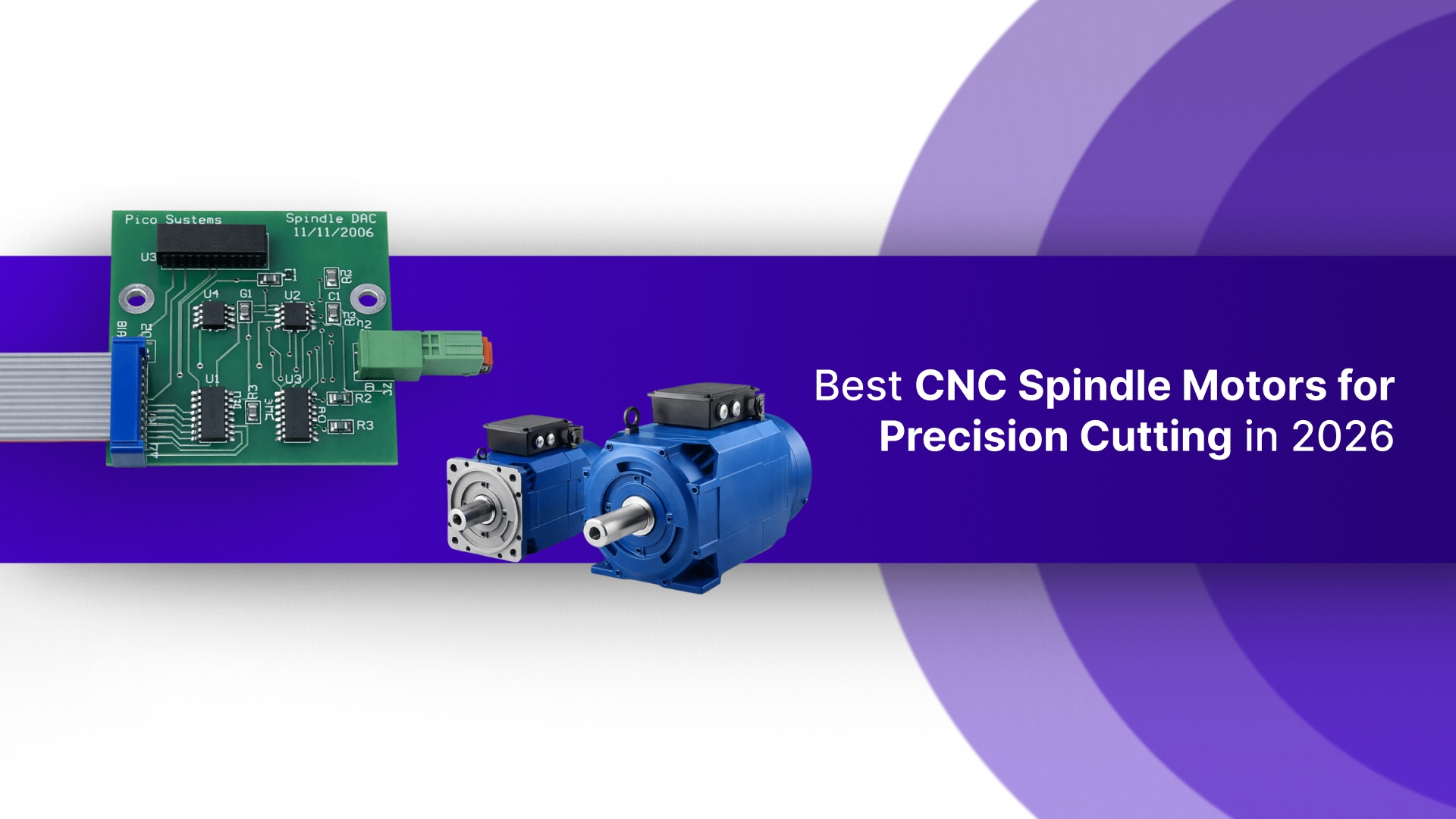
Motion Control Solutions: Includes the Universal Stepper Controller, Gecko Interface, and Spindle DAC, offering precise control for stepper motors, seamless communication, and accurate spindle speed regulation for CNC and multi-axis applications.
Scalable Integration: Customizable solutions that grow with your production needs, ensuring long-term reliability and flexibility.
These offerings are engineered to increase system performance, helping you achieve greater efficiency and precision in industrial motion control.
Wrapping Up
Choosing the best motion controller for your manufacturing system requires careful consideration of precision, scalability, and system integration needs.
Pico Systems provides high-performance solutions designed to meet the specific needs of your motion control systems, helping you achieve precision and scalability.
Ready to increase your manufacturing efficiency? Contact us today to explore how Pico Systems' products can improve your motion control needs and discover our full range of solutions.
FAQs
What factors should I consider when choosing a motion controller?
When selecting a motion controller, focus on factors like precision, processing speed, compatibility, scalability, and integration with existing systems. Consider your specific application needs to make the best choice.
Can a motion controller be upgraded for future scalability?
Yes, many modern motion controllers are designed with scalability in mind. Choosing a controller with expansion capabilities ensures it can grow with your production needs, avoiding costly future upgrades.
How does real-time control impact manufacturing processes?
Real-time control allows the controller to make immediate adjustments, improving operational efficiency and reducing errors, particularly in high-speed, time-sensitive environments.
Is it essential to test a motion controller before purchasing?
Yes, testing a motion controller ensures it performs well under real-world conditions. Prototyping and stress-testing help avoid compatibility issues and operational inefficiencies.
What is the difference between a PLC and a motion controller?
A PLC (Programmable Logic Controller) is used for general process control, while a motion controller is specifically designed to manage precise movements, like positioning, speed, and direction of motors and actuators.