Precision is crucial in industries relying on automation, where even small errors can lead to costly downtime. For engineers and technicians, achieving this level of accuracy can be a constant challenge.
Motion control encoders are key components in ensuring precise positioning and movement in motion control systems. As industrial systems become more advanced in 2026, their role in maintaining optimal performance is increasingly vital.
This guide will explore the importance of motion control encoders, how they work, and how to choose the right one for your industrial system, ensuring efficiency and reliability.
Overview
Motion control encoders are critical for precise positioning, speed tracking, and system performance in automation.
Incremental encoders track relative movement, while absolute encoders provide unique position values.
Key considerations for choosing an encoder include resolution, environmental factors, and signal compatibility.
Applications include robotics, CNC machining, conveyor systems, and automated manufacturing.
Proper selection ensures efficiency, accuracy, and reduced downtime in industrial operations.
What Are Motion Control Encoders?
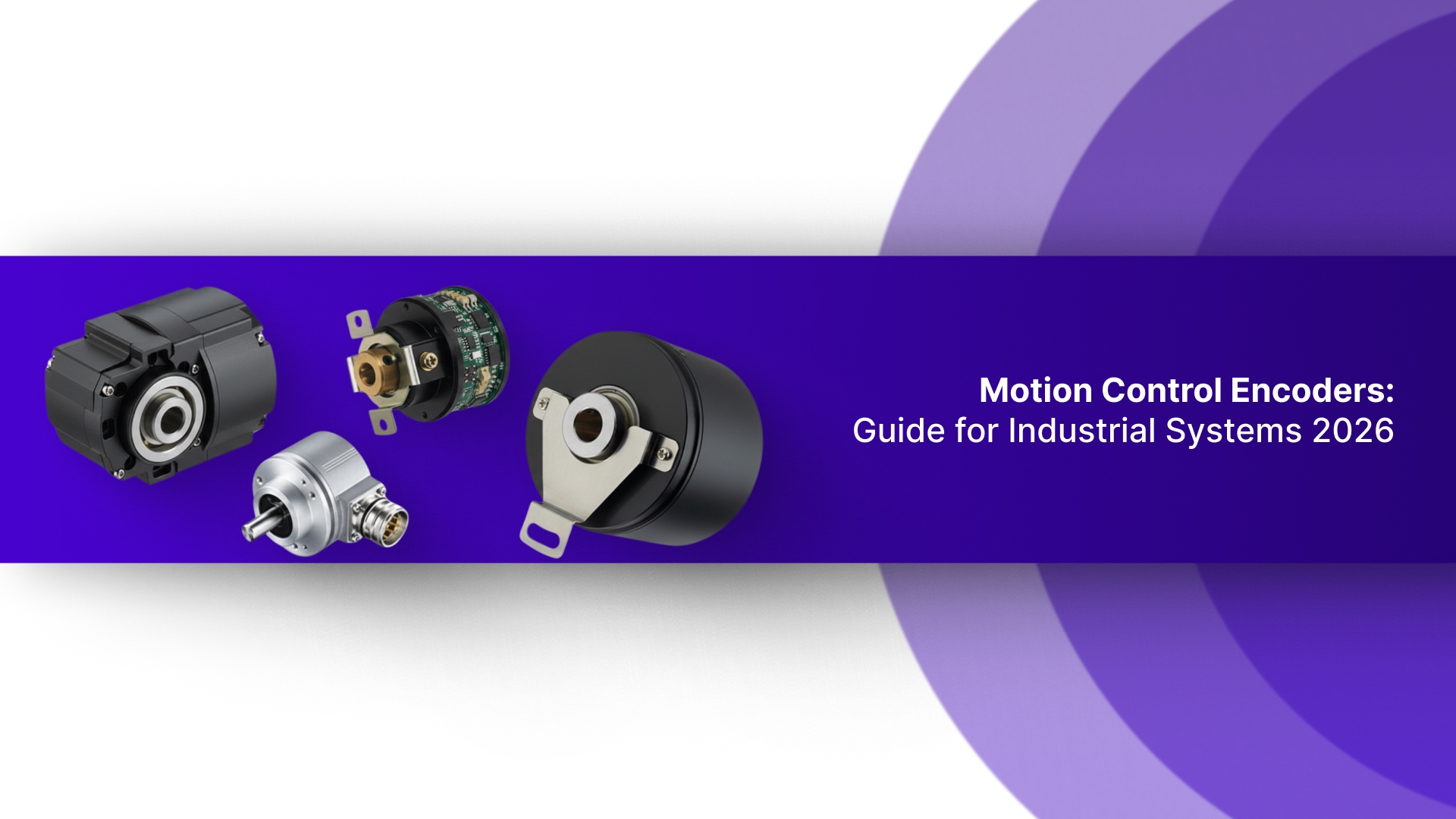
Motion control encoders are devices that convert the mechanical movement of a shaft into electrical signals, providing real-time feedback for control systems. They are essential in applications requiring precise positioning, such as robotics, CNC machines, and automation systems.
By accurately tracking motion, encoders help maintain system accuracy, enabling machines to perform complex tasks with minimal error.
Understanding how these encoders function is crucial to choosing the right type for your system and ensuring optimal performance. The next step is to explore how these encoders actually work to provide the necessary feedback in motion control systems.
How Do Motion Control Encoders Work?
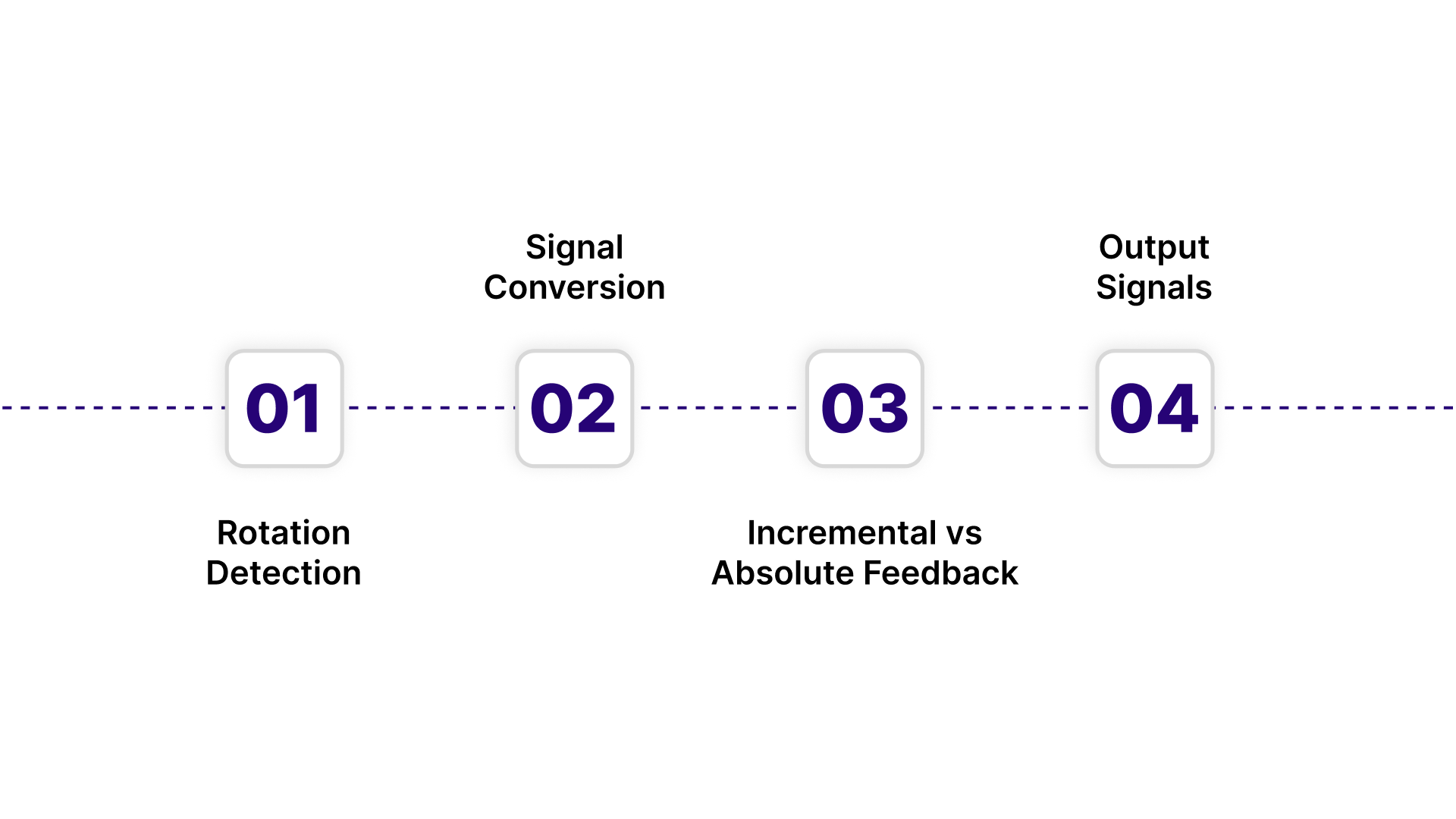
Motion control encoders function by converting mechanical motion into electrical signals that a control system can interpret. This feedback is essential for ensuring precise movement and accurate positioning in various applications.
Here's a breakdown of how motion control encoders work:
Rotation Detection: The encoder consists of a rotating disk or drum with patterns (optical or magnetic) that are read by a sensor, generating pulses corresponding to the motion.
Signal Conversion: These pulses are converted into electrical signals, which are then interpreted by the control system to track the position, speed, and direction of the movement.
Incremental vs Absolute Feedback: Incremental encoders measure changes in position, sending pulses each time the disk moves. Absolute encoders, on the other hand, provide a unique position value for every point in the rotation, ensuring accurate positioning at all times.
Output Signals: Encoders can produce different types of signals (TTL, HTL, analog), with each signal type offering specific advantages depending on the system's needs, such as noise immunity or longer-distance transmission.
This detailed process ensures that systems can respond to real-time feedback for precise control.
To better understand the types of encoders and how to select the right one for your system, you'll look into the different options available.
Types of Motion Control Encoders
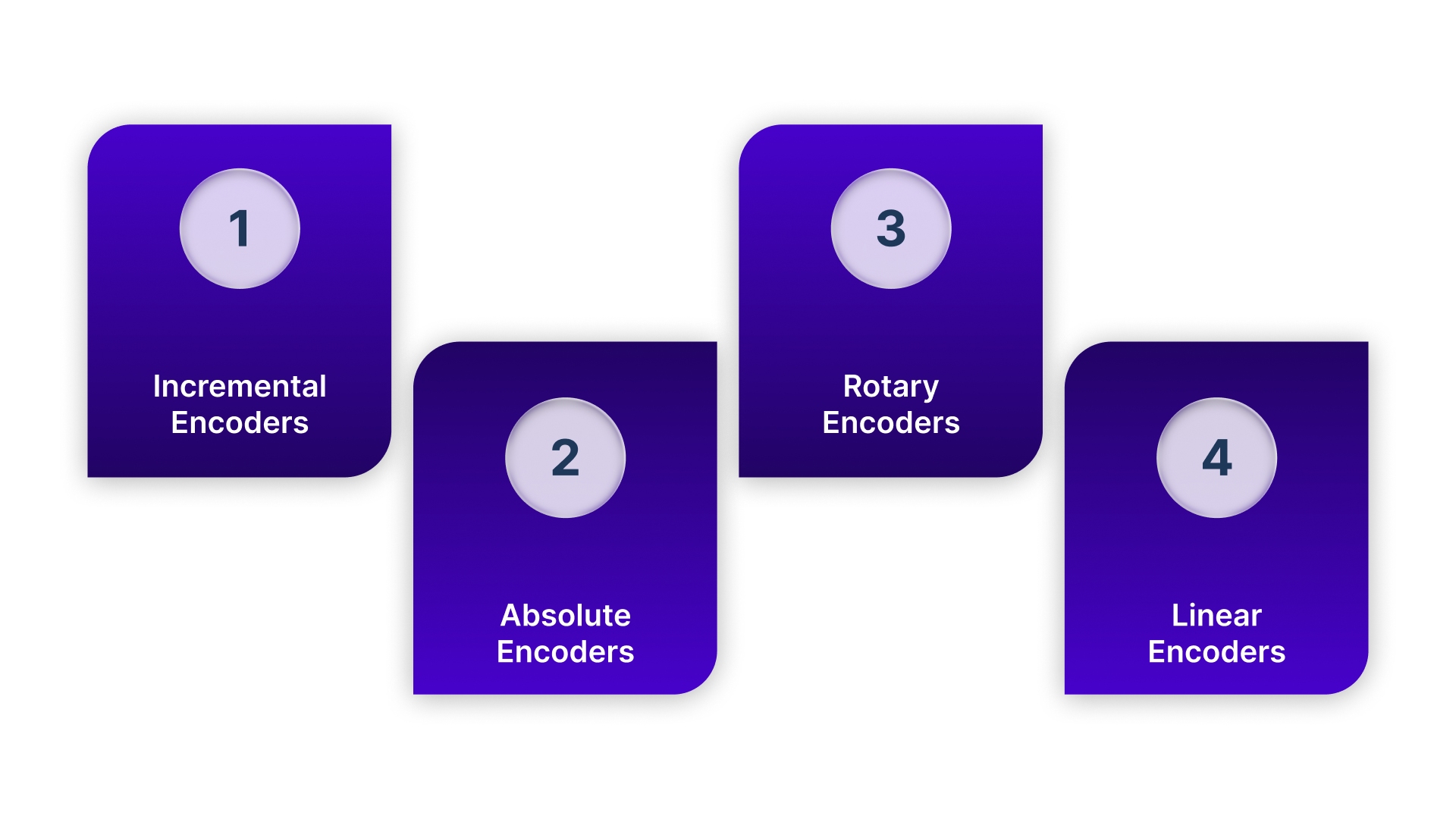
There are various types of motion control encoders, each offering unique advantages based on the specific requirements of the system. Choosing the right type ensures optimal performance and precision in motion control applications.
Incremental Encoders
Incremental encoders generate pulses for each unit of movement, providing relative position feedback. The number of pulses per revolution (PPR) defines the resolution, with values ranging from hundreds to thousands of pulses, ensuring precise control within a known reference.
Absolute Encoders
Absolute encoders provide a unique digital value for every position, offering absolute position feedback throughout the entire rotation.
They feature multiple tracks on the disk, with resolutions typically ranging from 12 to 24 bits, ensuring high-precision feedback without needing a reference point.
Rotary Encoders
Rotary encoders track the rotational movement of a shaft, offering either incremental or absolute feedback. They use different output signals like quadrature or sine-wave, with resolution measured in pulses per revolution (PPR), providing angular position accuracy.
Linear Encoders
Linear encoders measure displacement along a straight line, using a scale or tape read by a sensor. Resolution is defined by the pattern on the scale, and high-precision models can achieve micron-level accuracy for applications requiring straight-line motion control.
To ensure the best choice for your system, the next section will guide you through selecting the right encoder based on your requirements.
How to Choose the Right Encoder for Industrial Systems
Choosing the right motion control encoder is critical to achieving precision and reliability in industrial systems. The encoder's specifications should align with the specific requirements of your application, ensuring optimal performance.
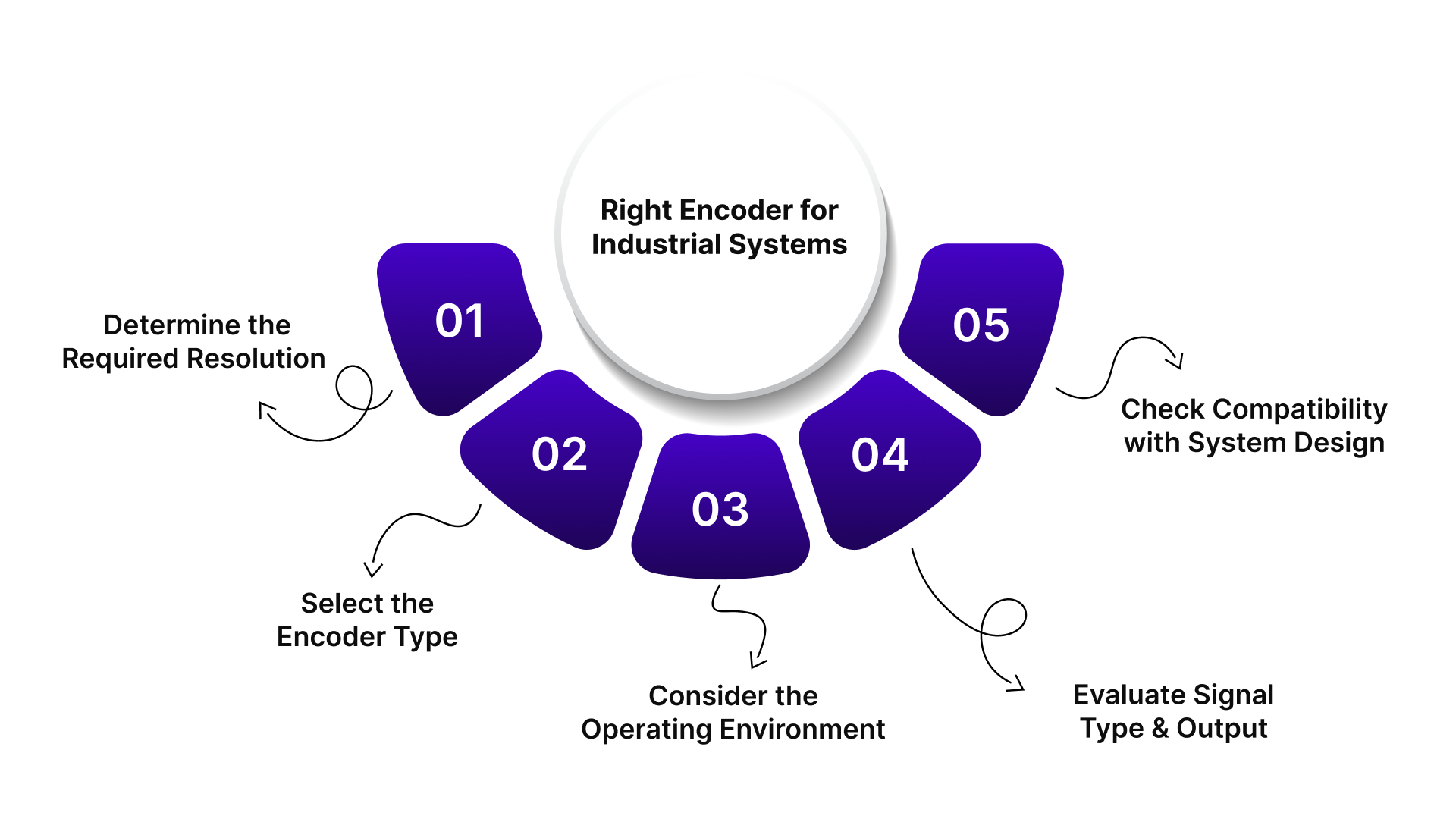
Determine the Required Resolution
Choose the encoder's resolution based on the level of precision needed. For high-precision applications, such as CNC machines, opt for encoders with higher PPR (pulses per revolution) or bit-depth (e.g., 24-bit absolute encoders).
Select the Encoder Type
Use incremental encoders for relative position tracking and absolute encoders for systems requiring continuous feedback without a home position.
Consider the Operating Environment
Select encoders designed for specific environmental conditions, such as high temperatures, humidity, or exposure to dust and moisture. Look for models with proper IP ratings for dust and water resistance.
Evaluate Signal Type and Output
Ensure the encoder's output signal matches your system's input requirements (e.g., TTL, HTL, analog, or quadrature signals), particularly for systems with long-distance data transmission or noise-sensitive environments.
Check Compatibility with System Design
Ensure the encoder is compatible with your system's power supply, interface, and control system to avoid integration issues. This includes matching the encoder's voltage and current ratings with the control system's specifications.
By understanding these key factors, you can make a more informed decision when choosing the right encoder.
Understanding the various applications of encoders will further help in refining your choice to meet system needs.
Applications of Motion Control Encoders in Industrial Systems
Motion control encoders are integral to various industrial applications, providing precision and reliability in automated systems. Their role in tracking and controlling movement is essential across different industries.
Here are some key applications of motion control encoders:
Industry | Role of Motion Control Encoders |
Robotics | Encoders provide precise feedback for controlling robotic arm movements, ensuring accuracy in complex tasks like assembly and welding. |
CNC Machining | Used for controlling the positioning of cutting tools, enabling high-precision milling, drilling, and turning operations. |
Automated Manufacturing | In manufacturing systems, encoders ensure accurate control of conveyor belts, robotic arms, and other machinery, maintaining smooth material flow. |
Packaging | Motion control encoders synchronize the movement of machines, ensuring precise packaging, labeling, and sealing of products. |
Test Equipment | Encoders enable accurate position tracking in automated test equipment, enhancing measurement precision in lab setups. |
Elevators & Lifts | Used to monitor the position and speed of elevators, ensuring smooth operation and precise stopping at each floor. |
These applications highlight the versatility of motion control encoders across industries that require high levels of accuracy.
Recognizing their advantages in improving system reliability and performance is crucial for selecting the right encoder for your needs.
Advantages of Motion Control Encoders in Industrial Systems
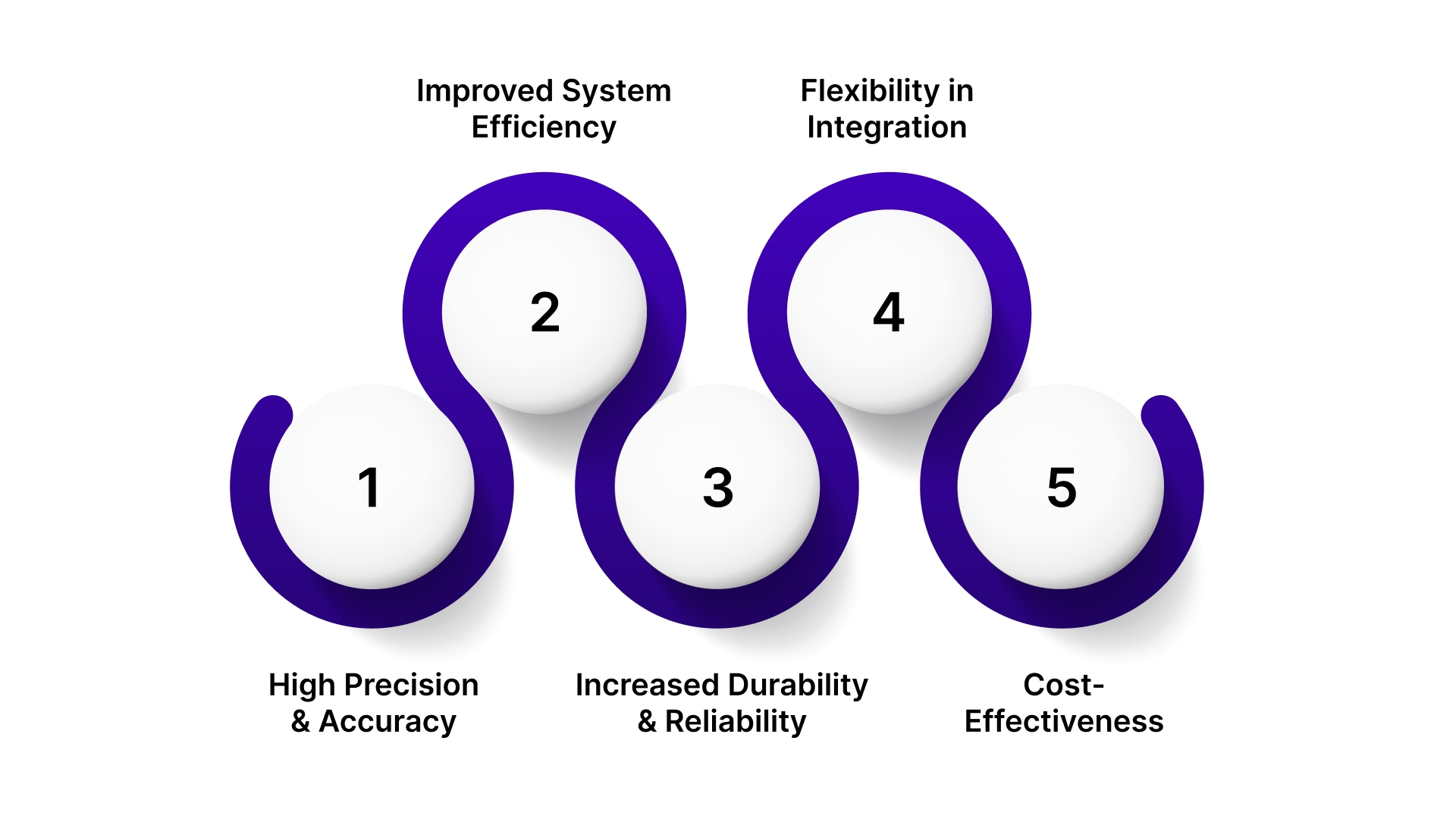
Motion control encoders offer several advantages that enhance the precision, reliability, and efficiency of industrial systems. Their role in optimizing system performance cannot be overstated, especially in applications requiring high accuracy.
These advantages include the following key factors that make encoders essential for reliable operation:
High Precision and Accuracy: Encoders provide precise feedback on position, speed, and direction, ensuring tight control and reducing errors in high-precision tasks such as CNC machining and robotics.
Improved System Efficiency: By providing real-time feedback, encoders help minimize downtime, optimize performance, and maintain smooth operation in automated systems.
Increased Durability and Reliability: Industrial-grade encoders are built to withstand harsh environments, such as extreme temperatures, dust, and moisture, ensuring long-term durability and reduced maintenance costs.
Flexibility in Integration: Encoders are compatible with a variety of control systems and can easily integrate with existing machinery, making them ideal for system upgrades or new installations.
Cost-Effectiveness: The reliability and longevity of encoders reduce the need for frequent repairs or replacements, making them a cost-effective choice for industrial systems in the long run.
These advantages make motion control encoders indispensable in industries where precision and reliability are critical.
How Does Pico Systems Contribute to Motion Control with Encoders?
Pico Systems specializes in providing high-quality motion control solutions, including precision encoders, to ensure optimal performance in industrial systems. Their products are designed to meet the demands of automation, robotics, and control applications.
Why Choose Pico Systems:
Specialized Encoder Solutions: Pico Systems offers precision encoders integrated with products like Analog Servo Interface (PPMC), ensuring high accuracy for industrial applications.
Comprehensive Product Range: From PWM Servo Systems to Stepper Controllers, Pico Systems provides a complete suite of motion control solutions that cater to different system needs.
Seamless Integration: Their encoders and accessories, including Channel Resolver Converters and Copley Interfaces, are designed to integrate smoothly into existing systems, enhancing flexibility and reducing setup time.
Proven Reliability: With a commitment to quality, Pico Systems provides durable and long-lasting components that perform reliably in harsh industrial environments.
Pico Systems' dedication to precision and system compatibility makes them a trusted partner for motion control solutions across industries.
Wrapping Up
Motion control encoders are essential for ensuring precision and efficiency in industrial systems, with various types offering specific advantages for different applications. Choosing the right encoder improves system performance, reduces downtime, and increases overall productivity.
Pico Systems provides reliable, high-quality motion control solutions, including encoders, PWM Servo Systems, and Stepper Controllers, designed to meet the needs of professionals in demanding industries.
Looking for the perfect motion control solution for your system? Contact us today to find out how we can help improve your operations!
FAQs
Can motion control encoders be used in outdoor environments?
Yes, motion control encoders designed for outdoor use can withstand extreme temperatures, dust, and moisture, provided they have proper environmental ratings (e.g., IP67).
How do I determine the resolution I need for my motion control encoder?
The required resolution depends on the precision needed for your application. Higher resolution encoders are essential for applications requiring fine positioning, like CNC machines or robotics.
Are there wireless motion control encoders available?
Yes, wireless motion control encoders are available, offering flexibility for applications where wired connections are not feasible, such as mobile or remote machinery.
Can motion control encoders be used in high-speed applications?
Yes, but it's important to select an encoder with a high enough pulse rate and resolution to handle the speed requirements of the application without compromising accuracy.
Do motion control encoders require regular maintenance?
No, motion control encoders generally require minimal maintenance, but regular checks for dust, dirt, or wear in harsh environments can help ensure consistent performance over time.