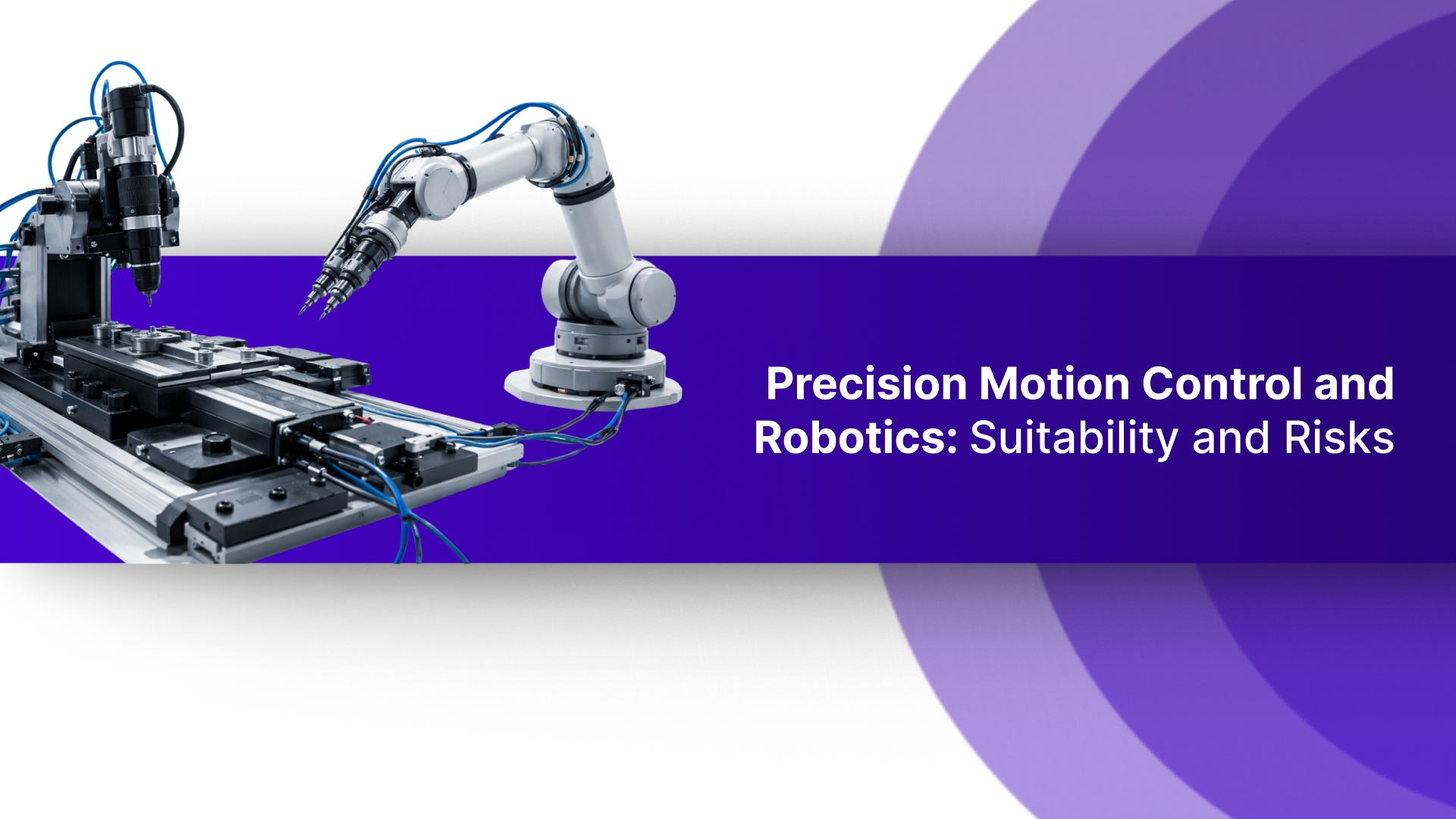
Precision motion control and robotics sit at the core of modern automation systems. They determine how accurately machines position, synchronize, and repeat tasks across production lines.
While component capability often looks sufficient on paper, real-world failures usually come from poor suitability to operating conditions rather than missing features.
In automated environments, even small motion inconsistencies can trigger cascading issues across multiple systems. These failures rarely appear during commissioning. They emerge under continuous operation, environmental stress, and production pressure.
In this guide, you will learn how environmental conditions affect precision motion control and robotics, where common failure risks originate, and how engineering and sourcing decisions influence long-term automation reliability.
Key Takeaways
Precision motion control and robotics must align with noise, temperature, vibration, and contamination conditions to remain stable in automation systems.
Small motion instabilities propagate across automated lines, affecting uptime, quality, and throughput.
Many motion control risks appear during continuous production, not during commissioning or testing.
Assessing interaction between motion, power, and control improves reliability more than isolated component checks.
Automation-aligned suppliers reduce lifecycle risk through consistent manufacturing, documentation, and long-term support.
Where Precision Motion Control and Robotics Operate in Automation Systems?
Precision motion control and robotics appear across a wide range of automation environments. These systems do not operate in isolation. They interact constantly with power electronics, control logic, feedback devices, and mechanical structures.
Common automation applications include:
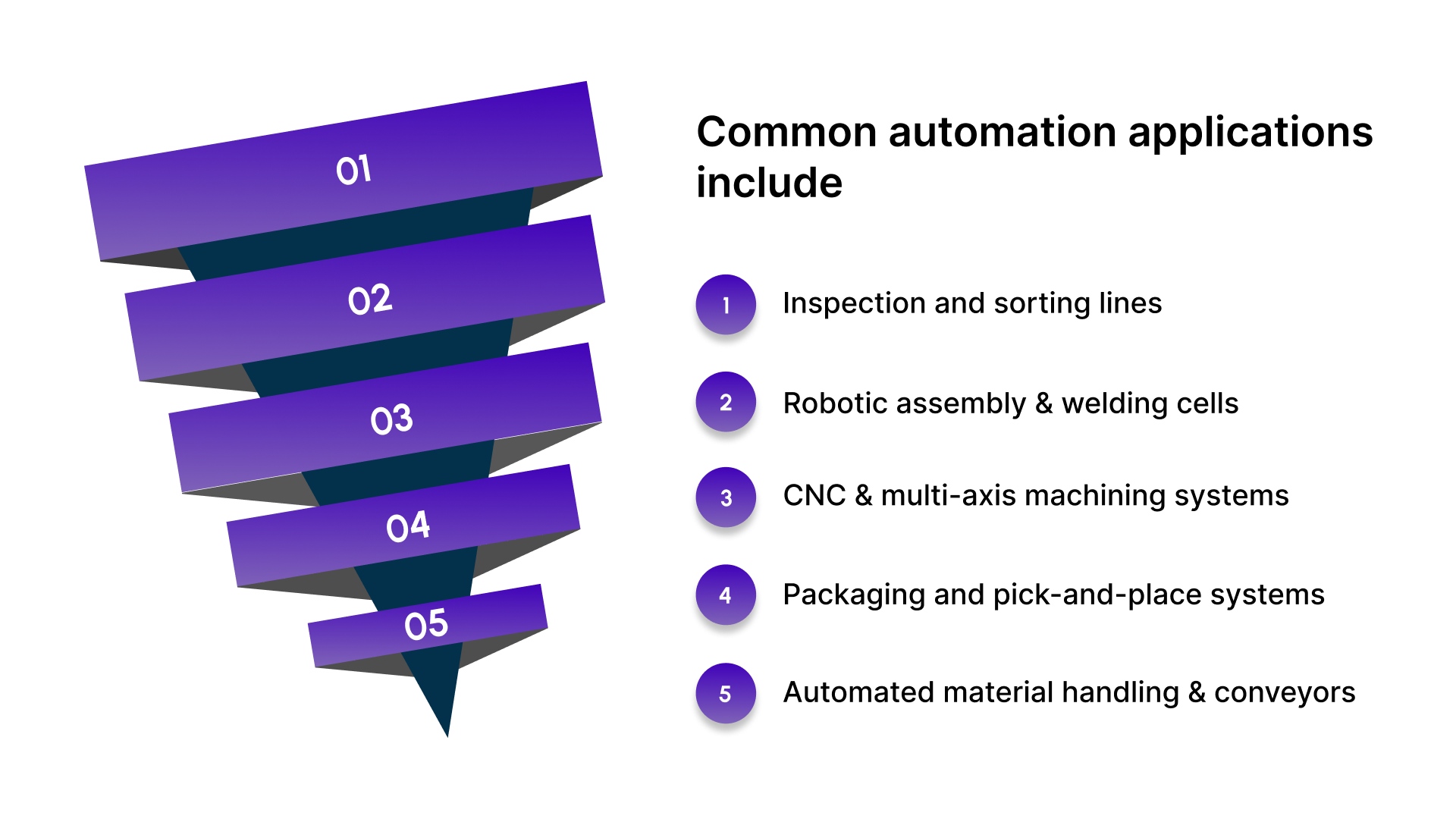
Inspection and sorting lines
Robotic assembly and welding cells
CNC and multi-axis machining systems
Packaging and pick-and-place systems
Automated material handling and conveyors
In these systems, motion accuracy depends on stable interaction between drives, controllers, feedback, and mechanical load. When suitability gaps exist, motion errors propagate quickly across the automation chain.
These environments expose motion systems to multiple stress factors, which directly influence reliability.
But what environmental conditions actually affect system suitability?
Environmental Conditions that Influence System Suitability
Not all automation environments stress motion systems in the same way.
The suitability of precision motion control and robotics depends on which conditions are present and how consistently they affect operation.
Some of those environmental conditions include:
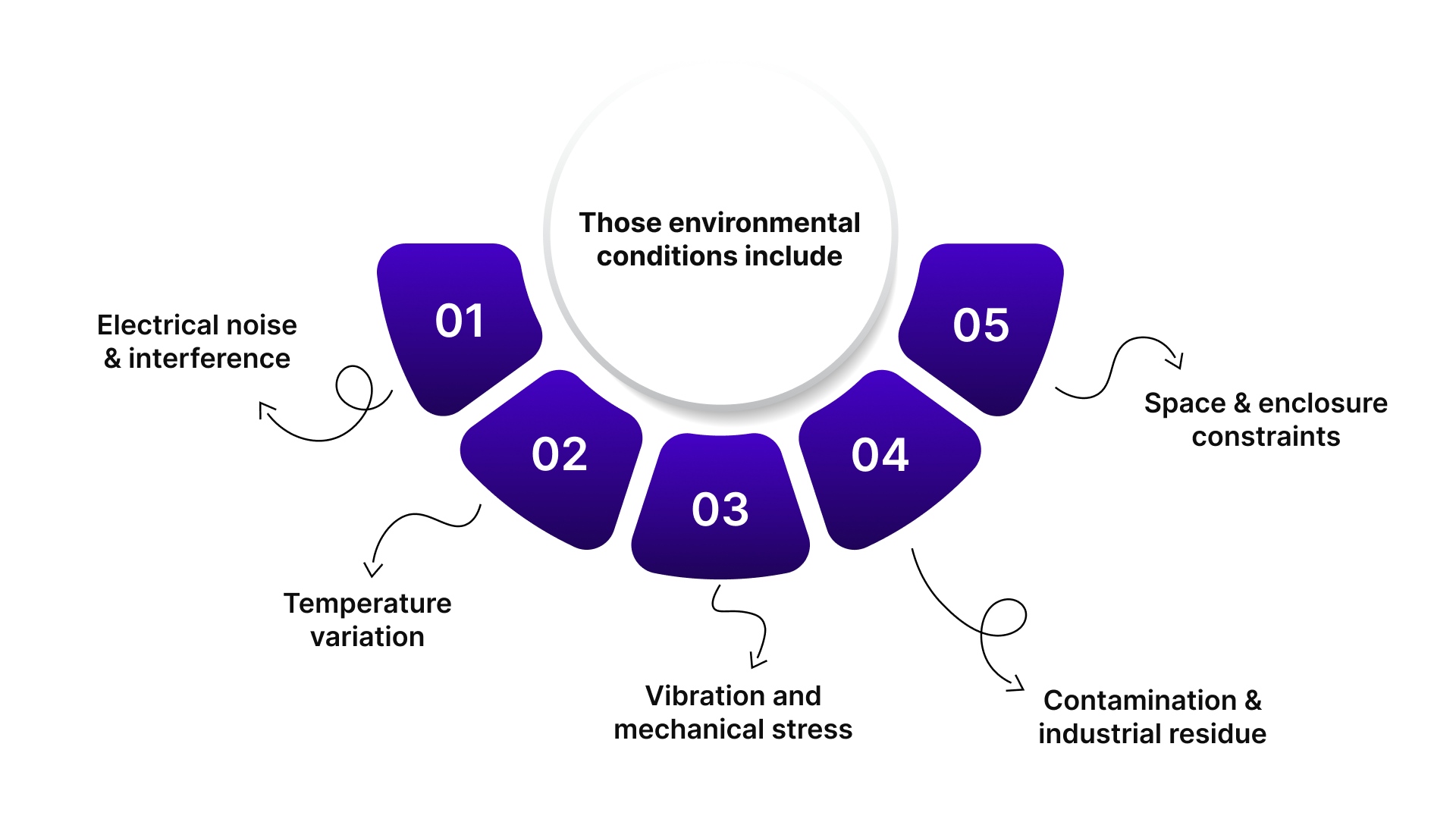
Electrical noise and interference: Automation systems often contain motors, drives, and switching power devices. Electrical noise can disrupt motion feedback and control signals, leading to unstable positioning or synchronization errors.
Temperature variation: Continuous operation and enclosed control panels introduce thermal stress. Over time, temperature changes can affect drive behavior, feedback accuracy, and timing stability.
Vibration and mechanical stress: Robotic arms, gantries, and high-speed machinery generate constant vibration. Mechanical stress can loosen connections and introduce intermittent motion errors that are difficult to trace.
Contamination and industrial residue: Dust, oil mist, and debris accumulate in production environments. These contaminants affect connectors, cooling paths, and electronic assemblies if systems are not designed for long-term exposure.
Space and enclosure constraints: Tightly packed automation cabinets restrict airflow and access. Poor layout increases thermal load and complicates maintenance, increasing the risk of motion instability.
Ignoring these conditions during system design increases the likelihood of failure.
Is electrical noise, thermal buildup, or vibration creating motion instability in your automation systems?
To integrate reliably into industrial motion architectures, Pico Systems supports demanding automation environments with solutions such as Universal PWM Controllers, Universal Stepper Controllers, Gecko Interfaces, Connector Panels, Spindle DACs, and more.
View our Stepper Controllers catalog to learn about motion control solutions built for harsh automation environments.
Now, let’s discuss some of the most common risks that appear when suitability is overlooked.
Common Failure Risks in Precision Motion Control and Robotics
When teams overlook environment fit, failures in precision motion control and robotics tend to appear gradually rather than as clear breakdowns.
Common risks include:
Loss of axis synchronization
Position drift and reduced repeatability
Intermittent faults during high-speed operation
Unexpected stops triggered by control instability
Accelerated wear across connected automation components
These issues rarely surface during testing or commissioning. They appear under sustained production loads, making them expensive to diagnose and disruptive to operations.
These failures directly affect plant performance and operational outcomes.
But how exactly do these risks translate into business impact?
Operational Impact of Motion Control Failures in Automation
For plant heads and operations leaders, motion control issues are not component problems. They are production risks.
Environment-driven failures in precision motion control and robotics can lead to:
Reduced equipment uptime from unplanned stops
Lower production predictability in automated lines
Scrap and rework caused by motion inconsistency
Delays that cascade across interconnected processes
Increased maintenance workload due to recurring faults
For business owners, these outcomes increase operational risk and limit confidence in scaling automation investments.
Reducing this risk requires better evaluation during system design, especially from an engineering perspective.
What Engineers Should Evaluate for Reliable Automation Systems?
Engineers should assess precision motion control and robotics based on application behavior, not theoretical capability.
Key evaluation areas include:
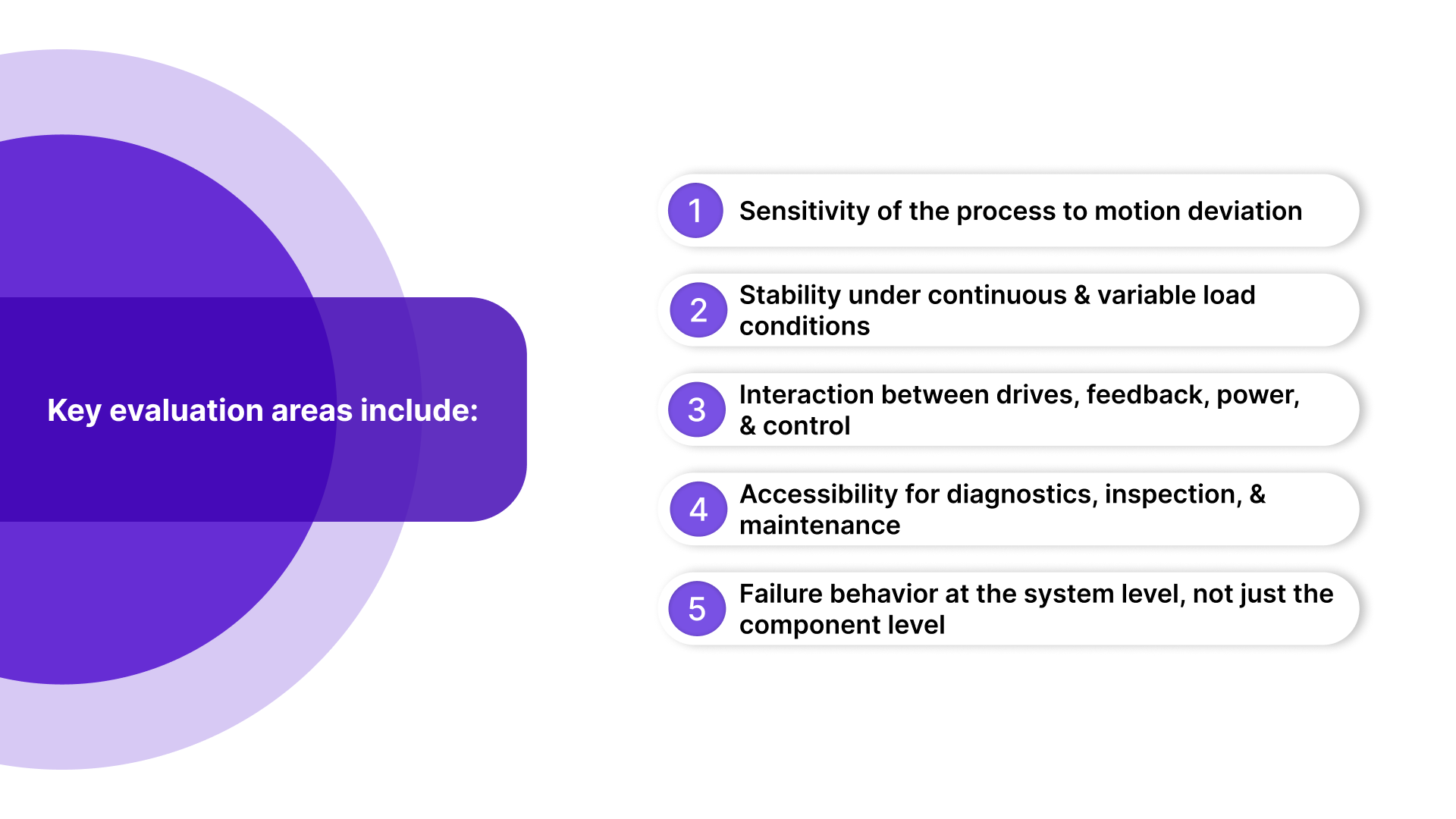
Sensitivity of the process to motion deviation
Stability under continuous and variable load conditions
Interaction between drives, feedback, power, and control
Accessibility for diagnostics, inspection, and maintenance
Failure behavior at the system level, not just the component level
Evaluating how a system behaves as conditions degrade helps engineers reduce long-term risk and avoid recurring issues.
Engineering decisions alone are not enough. Procurement choices also influence system stability.
What Procurement Teams Should Assess Beyond Product Performance?
Procurement decisions shape the long-term reliability of precision motion control and robotics systems. Supplier-related risks often surface long after installation.
Procurement teams should assess:
Manufacturing consistency and quality controls
Supplier focuses on industrial automation use cases
Responsiveness to technical and field support needs
Availability of application documentation and guidance
Long-term product availability and replacement planning
Selecting motion control solutions is both a technical and lifecycle decision. Aligning sourcing with automation requirements reduces operational risk.
These considerations matter most in motion-driven automation systems.
Now, let’s discuss how system-focused manufacturers approach reliability.
Precision Motion Control and Robotics in Industrial Automation Systems
Motion-driven automation systems demand stability across control, power, and feedback layers. Manufacturers focused on industrial automation, design precision, motion control and robotics with system integration in mind.

Manufacturers such as Pico Systems support automation environments by aligning motion solutions with real operating conditions. Our approach emphasizes reliable integration into industrial control architectures rather than generic motion applications.
This system-level focus helps reduce integration friction and long-term reliability risks, especially in harsh automation environments.
All of these factors lead to a clear conclusion on how teams should approach selection.
Conclusion
Selecting precision motion control and robotics for automation systems requires long-term reliability. It depends on how well motion systems align with environmental exposure, operational demands, and sourcing decisions.
Teams should evaluate environmental stress factors that influence motion stability, failure risks that emerge under real production conditions, system-level behavior as conditions degrade, and supplier reliability, documentation, and lifecycle support.
At Pico Systems, we support industrial automation with motion control solutions designed for demanding environments and long-term operation.
If you are planning or scaling automation systems, our team can help assess suitability, reduce risk, and support stable motion performance. Get in touch to discuss your application or explore our automation and motion control catalog.
Frequently Asked Questions
1. Is precision motion control and robotics suitable for all automation environments?
No, suitability depends on environmental stress, system sensitivity, and operating conditions. Automation environments with high noise, vibration, or thermal load require motion systems designed to maintain stability under continuous stress.
2. What are the early signs of motion control instability in robotics?
Common early indicators include position drift, intermittent faults, synchronization errors, and inconsistent cycle times. These issues often appear during sustained operation rather than during commissioning or testing.
3. How does the environment affect long-term automation reliability?
Harsh environments increase thermal stress, electrical interference, and mechanical wear. Over time, these factors degrade motion accuracy and increase maintenance effort if systems are not designed for environmental exposure.
4. Should procurement influence motion control decisions?
Yes, supplier focus, documentation quality, long-term availability, and support responsiveness directly affect maintenance planning, system upgrades, and operational risk.
5. When should automation teams reassess motion control architecture?
Teams should reassess when motion-related faults recur, production requirements change, or environmental conditions evolve. Early reassessment helps prevent escalating downtime and reliability issues.