CNC machines are essential for precision in manufacturing, but without a reliable motion control system, even the best machines fall short. Many manufacturers struggle with inefficiency, costly errors, and production delays due to inadequate motion control.
For engineers, technicians, and OEMs, selecting the right motion control system in CNC machines can directly impact the speed, accuracy, and cost-effectiveness of operations. Understanding these systems is key to overcoming common challenges in production.
This article explores the components and types of motion control systems, shedding light on their role in CNC operations and how they can improve your manufacturing processes.
Quick look
Motion control systems in CNC machines ensure precision by controlling motor movements based on feedback.
Key components include controllers, motors, drives, feedback systems, and power supplies.
Different types of motion control systems, open-loop, closed-loop, point-to-point, continuous path, and direct drive, offer varying levels of performance.
Factors like machine rigidity, wear, environmental conditions, and power stability influence CNC motion control systems.
Modern motion control systems improve speed, accuracy, efficiency, and reduce energy consumption in CNC operations.
What is a Motion Control System in CNC Machines?
A motion control system in CNC machines manages the movement of machine components with precision, using controllers, motors, drives, and feedback systems. It ensures accurate positioning by adjusting speed, torque, and direction based on real-time data from encoders and resolvers.
These systems can be open-loop or closed-loop, providing the necessary control for tasks ranging from simple cuts to complex, multi-axis operations.
The efficiency and precision of these systems directly impact the performance of CNC machines, making them essential in high-accuracy manufacturing.
Understanding how these systems work is key to optimizing CNC machine capabilities.
Key Components of Motion Control Systems
Motion control systems in CNC machines rely on five key components: controllers, motors, drives, feedback systems, and power supply.
These components work together to deliver smooth, precise motion. Let's look into each of these critical elements.
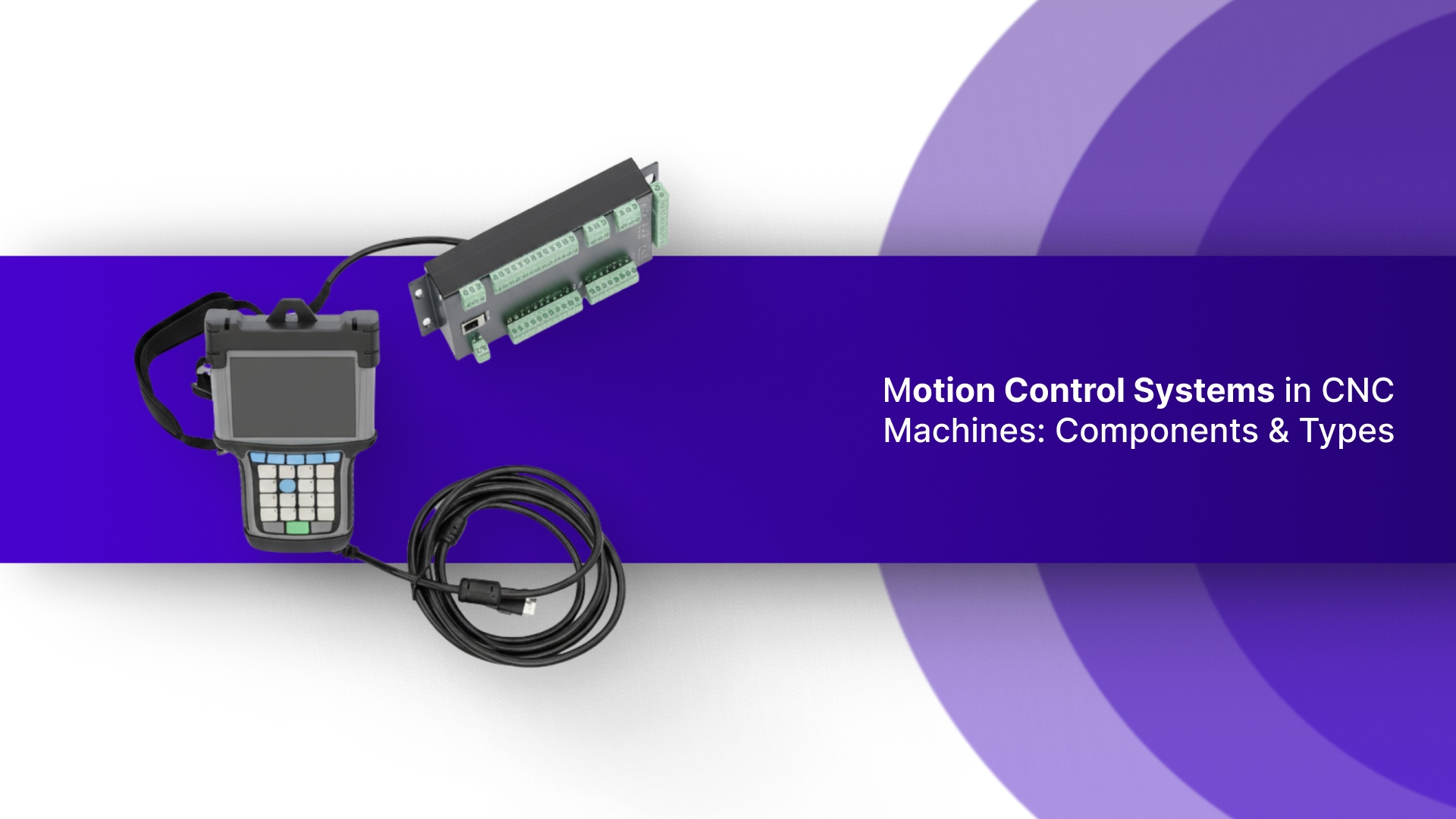
Controllers: Process input from CNC programs and send precise instructions to motors and drives for motion execution. They often feature advanced algorithms for real-time adjustments based on feedback.
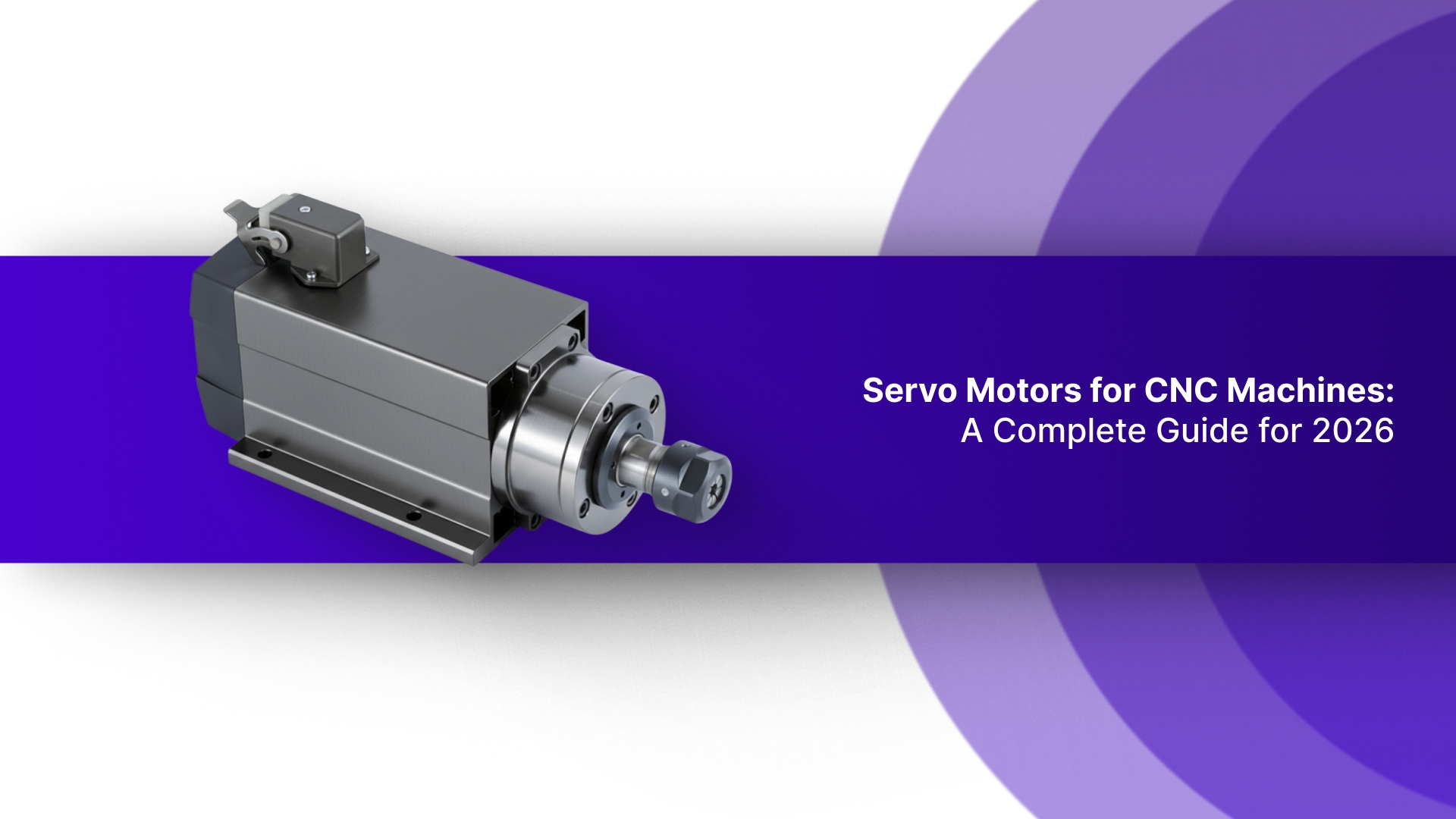
Motors: Typically, stepper or servo motors convert electrical energy into mechanical motion, providing the necessary torque and speed for machine movements.
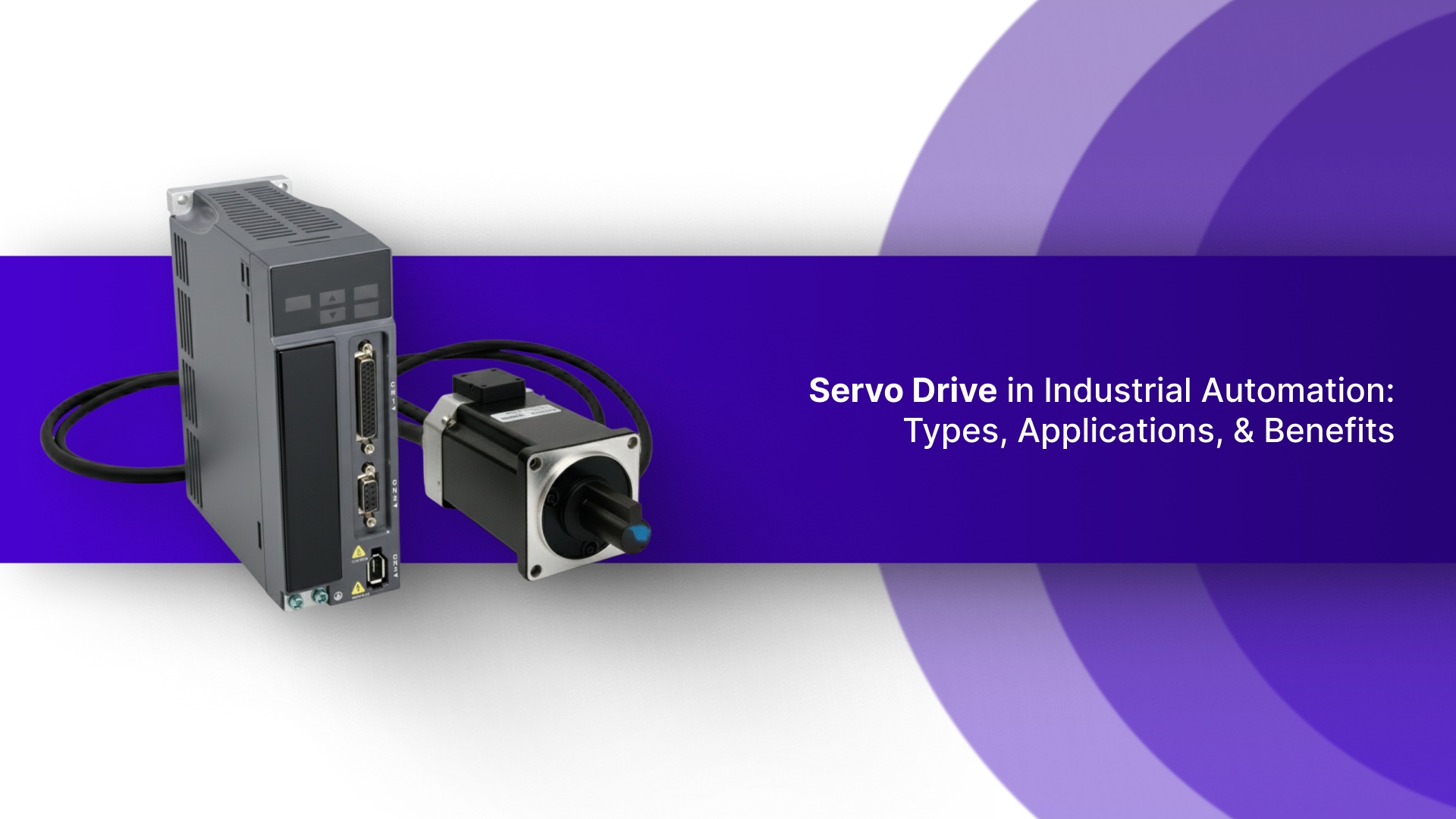
Drives: Control the speed, torque, and direction of the motors, translating the controller's instructions into action. Modern drives support high-efficiency power management for reduced energy consumption.
Feedback Systems: Use encoders or resolvers to provide continuous position data, allowing for real-time correction of any discrepancies between commanded and actual positions.
Power Supply: Provides stable electrical power to all system components, ensuring consistent performance under varying load conditions and minimizing disruptions.
Each of these components contributes to the seamless operation of motion control systems, ensuring precise and reliable performance in CNC machines.
With this understanding, we can now turn to the different types of motion control systems used in CNC applications.
Types of Motion Control Systems in CNC Machines
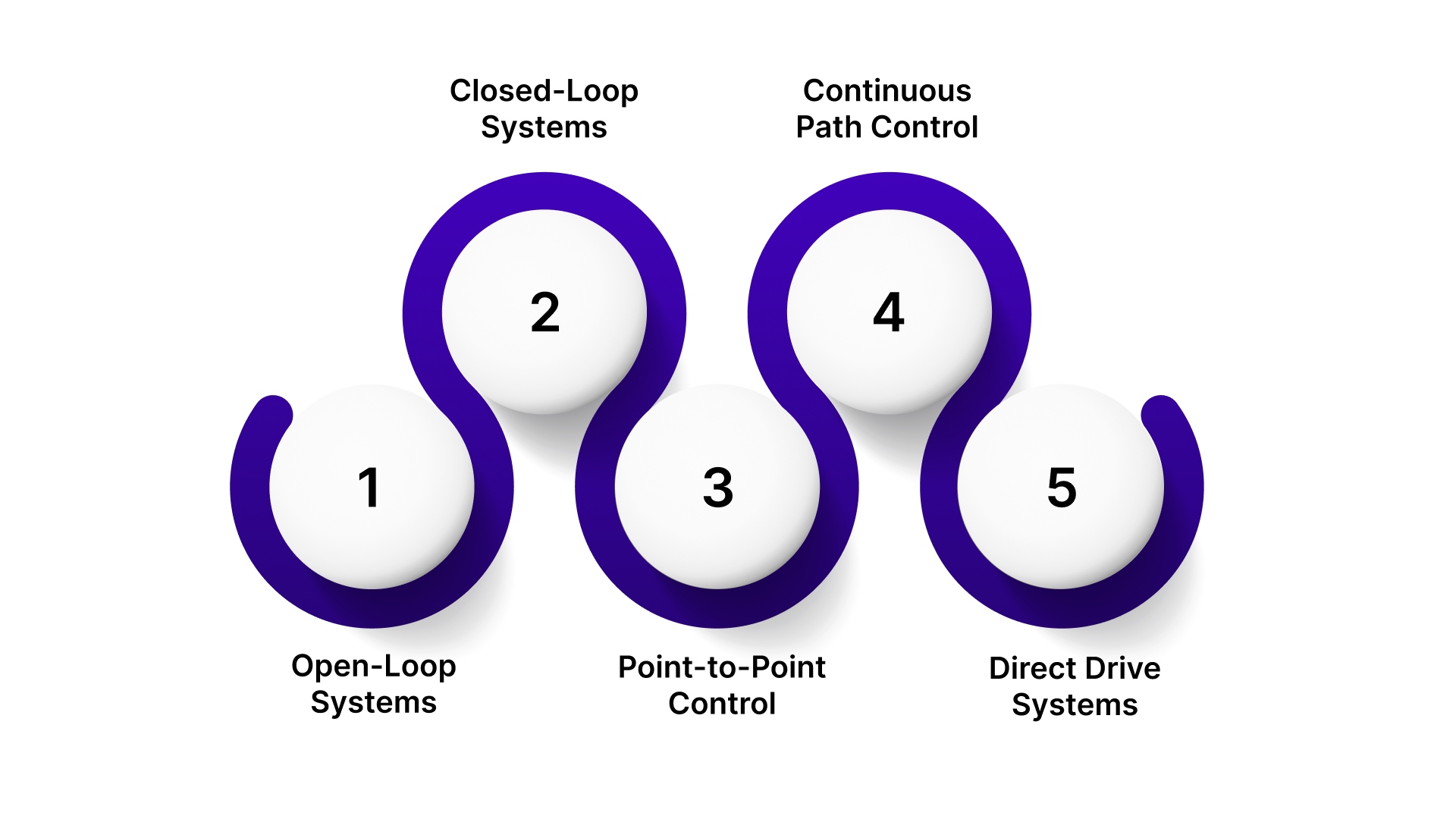
There are several types of motion control systems in CNC machines, each designed to meet specific operational requirements.
Understanding the distinctions between these systems helps determine the best fit for different manufacturing needs.
Open-Loop Systems
Open-loop systems operate on predetermined commands without real-time feedback. The system relies on timing pulses to control motor movement, with no correction for errors.
These systems are commonly driven by stepper motors, which rotate in fixed increments, offering good precision in simpler tasks.
However, open-loop systems lack error compensation, making them less reliable for high-precision or high-torque applications.
Closed-Loop Systems
Closed-loop systems continuously monitor the machine's position using feedback from encoders or resolvers. The controller compares the actual position with the desired position and makes real-time adjustments, ensuring high accuracy.
These systems use servo motors with built-in encoders that provide continuous feedback, allowing for precise control over speed and position.
The use of digital signal processors (DSP) improves the ability to correct errors and maintain consistency even under variable loads or speeds.
Point-to-Point Control
Point-to-point control systems move the CNC tool or workpiece between defined positions, often in linear or simple curves. These systems rely on pulse-width modulation (PWM) signals to drive motors, enabling movement along discrete axis points.
The system is designed to execute a set number of movements per cycle, relying on minimal communication between the controller and the motors.
With lower complexity, this system typically lacks continuous motion control but ensures accuracy for straightforward tasks like drilling or turning.
Continuous Path Control
Continuous path control systems allow the machine to move along a smooth, uninterrupted path without stopping. This is achieved by continuously adjusting the tool's position along multiple axes simultaneously, driven by advanced control algorithms.
The system uses servo motors coupled with linear encoders to track position continuously and adjust movements accordingly. This results in smooth, fluid motion, essential for 5-axis CNC machines where the path follows intricate curves and angles.
The precision comes from real-time interpolation between axes, ensuring consistent motion without step interruption.
Direct Drive Systems
Direct drive systems bypass intermediate mechanical elements like gears or belts, coupling the motor directly to the moving part. This results in improved accuracy, torque, and speed due to reduced mechanical losses and backlash.
The direct coupling of the motor to the load ensures faster response times and greater force transmission, making it ideal for high-speed CNC applications.
These systems use high-precision brushless DC motors (BLDC) and high-resolution encoders, offering more reliable and smoother performance compared to traditional drive systems.
To optimize their performance, it's important to understand how factors like machine rigidity, environmental conditions, and feedback accuracy come into play.
Factors Affecting CNC Motion Control Performance
The performance of motion control systems in CNC machines is influenced by several key factors, each impacting precision, efficiency, and system longevity.
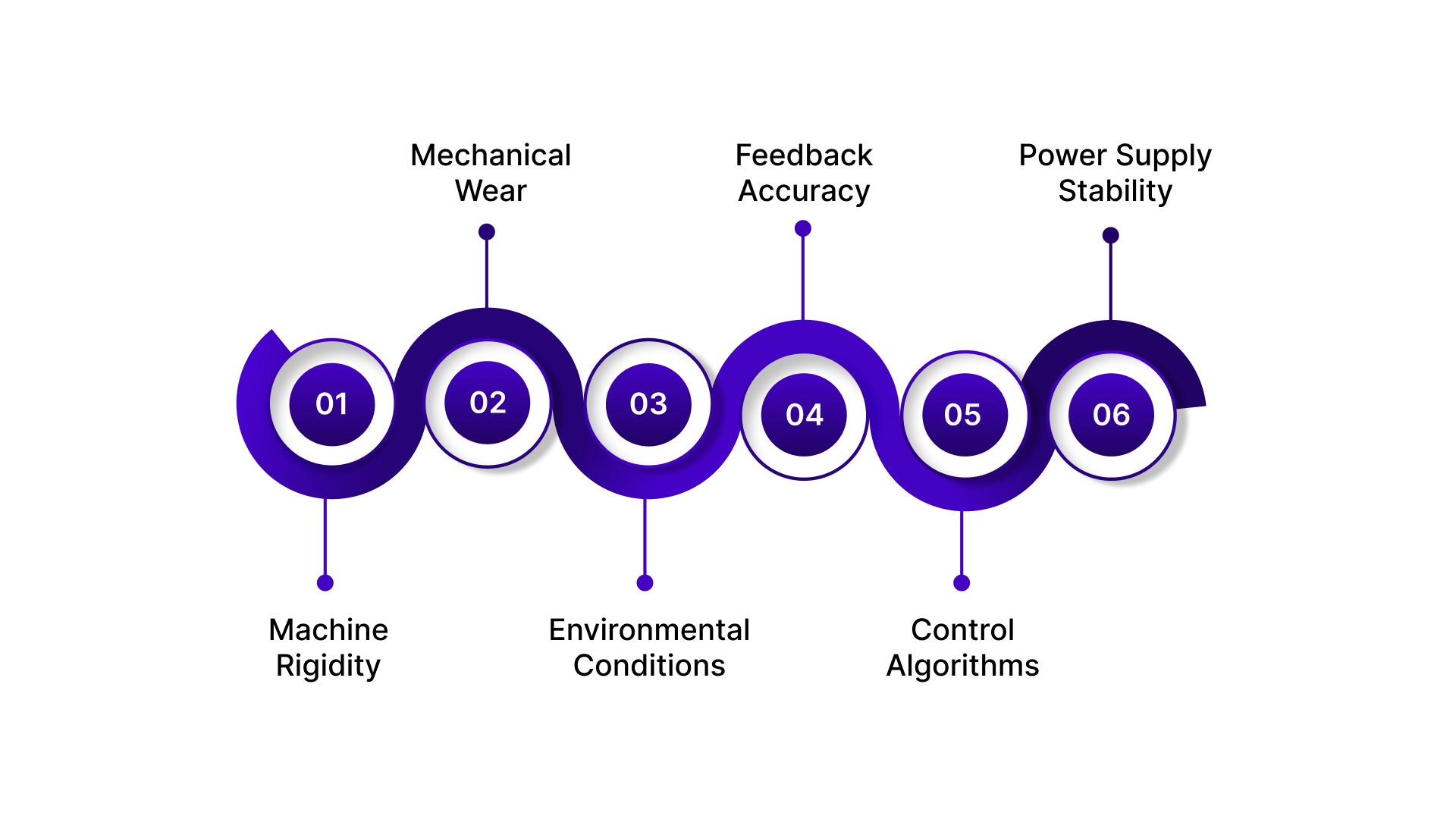
Machine Rigidity: The stiffness of the machine structure affects its ability to maintain accuracy. Any flexing or vibration during high-speed operation can cause positional errors and affect part quality.
Mechanical Wear: Continuous use leads to wear in components like motors and bearings, introducing backlash or friction that compromises precision and repeatability in long-term operations.
Environmental Conditions: Temperature changes, humidity, and dust can degrade sensitive components such as encoders and motors. Heat can alter motor performance, while humidity accelerates corrosion of electrical parts.
Feedback Accuracy: The precision of feedback systems, like encoders, is crucial. Inaccurate feedback can cause errors in positioning, leading to discrepancies in the final product.
Control Algorithms: The effectiveness of control algorithms, such as PID controllers, determines how well the system adapts to real-time adjustments, ensuring smooth, stable motion.
Power Supply Stability: Voltage or current fluctuations can disrupt the system's performance. A stable power supply is essential to avoid motion errors and maintain consistent control.
Understanding these factors helps in maintaining and optimizing CNC motion control systems.
With this insight, we can further explore how motion control systems are applied in CNC operations.
The Role of Motion Control Systems in CNC Applications
Motion control systems are vital for achieving precision and efficiency in CNC applications. These systems are implemented in various industries to drive consistent, high-quality output.
Below is a table outlining key applications and the role motion control systems play in each.
Application | Role of Motion Control Systems | Impact on CNC Performance |
Aerospace Manufacturing | Controls multi-axis movements for complex parts like turbine blades. | Ensures precise cuts and smooth surface finishes for critical components. |
Automotive Parts | Coordinates high-speed, multi-axis machining for engine components. | Increases throughput while maintaining tight tolerances. |
Medical Devices | Manages delicate operations such as milling and drilling on implants. | Guarantees consistent precision for patient safety and part quality. |
Electronics | Ensures accurate routing and milling for PCB designs. | Improves manufacturing speed and component quality. |
Tool and Die Making | Controls precise shaping and tooling of molds and dies. | Improves part accuracy and reduces material waste. |
Is your CNC machine's motion control system optimized for your production needs?
Pico Systems offers personalized motion control solutions that help improve the accuracy, efficiency, and reliability of your CNC operations, ensuring better results in every batch. Explore the products!
The next step is to consider the benefits of modern motion control systems.
Benefits of Modern Motion Control Systems in CNC Machines
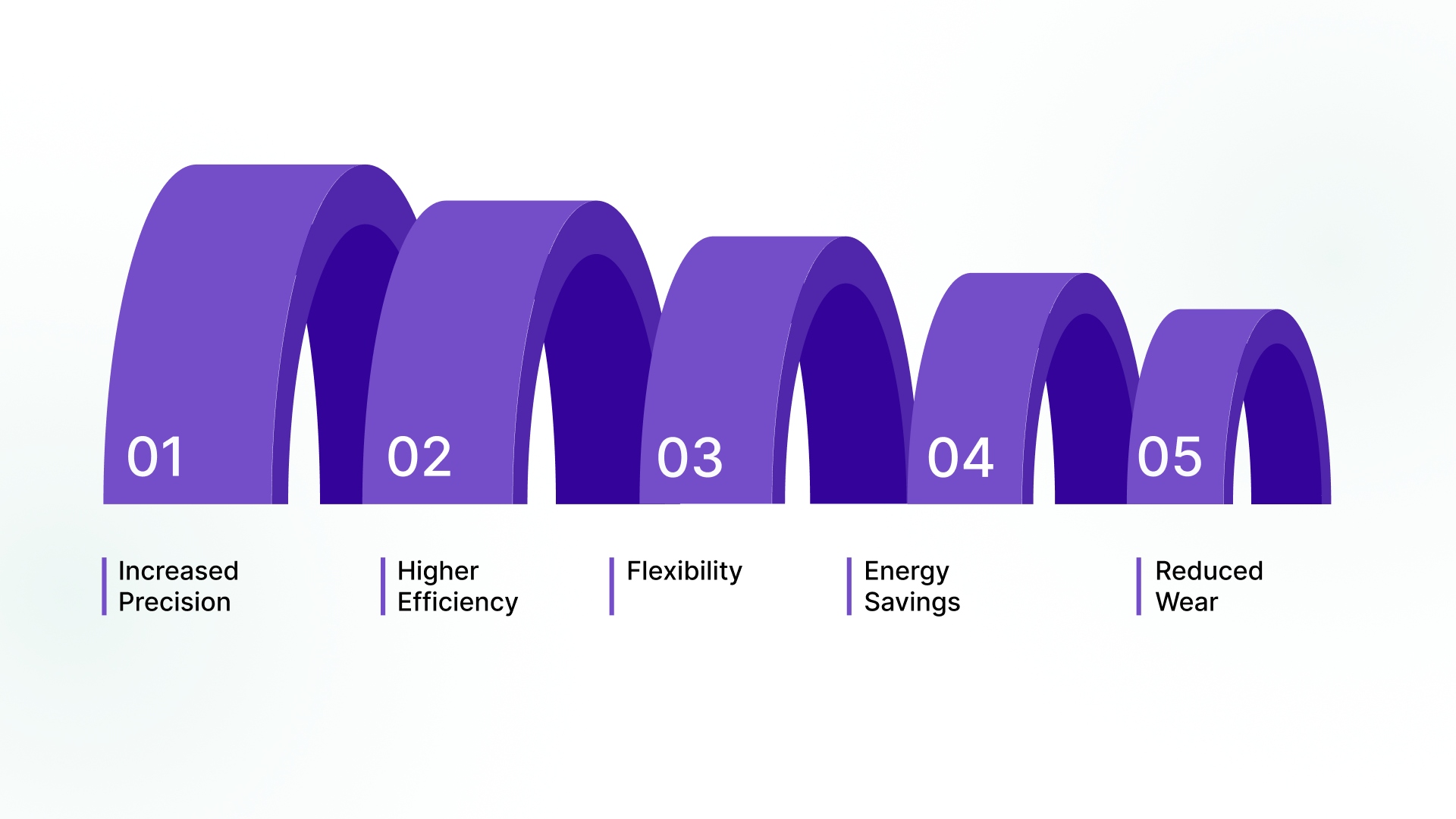
Modern motion control systems provide several advantages, enhancing the precision and efficiency of CNC operations.
Here are the key benefits:
Increased Precision: Advanced feedback loops and control algorithms ensure positional accuracy within microns, reducing error margins in complex tasks.
Higher Efficiency: Real-time adjustments to speed, torque, and direction minimize downtime and optimize processing time, increasing throughput.
Flexibility: Supports complex multi-axis operations, allowing for a wider range of machining tasks without compromising on performance.
Energy Savings: Intelligent control of motors and drives reduces energy consumption by adjusting power based on demand, lowering operational costs.
Reduced Wear: Continuous monitoring and feedback minimize mechanical stress, extending the lifespan of critical machine components and reducing maintenance needs.
These benefits highlight the importance of selecting the right motion control system for optimizing CNC machine performance.
How Pico Systems Contribute to CNC Motion Control?
Pico Systems provides advanced motion control solutions designed to optimize CNC machine performance, ensuring precision, reliability, and efficiency. They offer a range of high-quality products for professionals in industrial automation and machine control.
Their product lineup includes:
Analog Servo Interface (PPMC): Precision control for servo motors in CNC machines.
Beagle Bone: Embedded control solutions for custom applications.
PWM Servo Systems: For efficient and reliable servo motor control.
Stepper Controllers: For high-accuracy stepper motor management in CNC machines.
8-Channel Resolver Converter
Copley Interface
D.C. Solid State Relay
EPROM Update
Resolver Converter
With these specialized components, Pico Systems enables users to improve CNC machine capabilities, improving overall productivity and performance.
Wrapping Up
Motion control systems are essential for precision and efficiency in CNC machines, with various components and types designed to improve performance. Understanding these systems helps manufacturers optimize their production processes.
Pico Systems offers high-quality motion control solutions, including servo interfaces, stepper controllers, and more, to boost CNC machine accuracy and reliability.
Ready to optimize your CNC operations? Get in touch with Pico Systems today to see how we can help improve your motion control systems!
FAQs
How do motion control systems improve CNC machine speed?
Yes, motion control systems improve CNC machine speed by optimizing motor performance and reducing downtime. They adjust speed and torque in real-time, ensuring quicker transitions between operations.
What are the most common types of motors used in motion control systems?
The most common motors are servo motors for high precision and stepper motors for accurate position control. Both types provide efficient movement for CNC applications, with servo motors being ideal for continuous motion.
Can motion control systems be upgraded in older CNC machines?
Yes, motion control systems can often be upgraded in older CNC machines. Modern controllers, feedback systems, and drives can be retrofitted to improve precision and extend the machine's lifecycle.
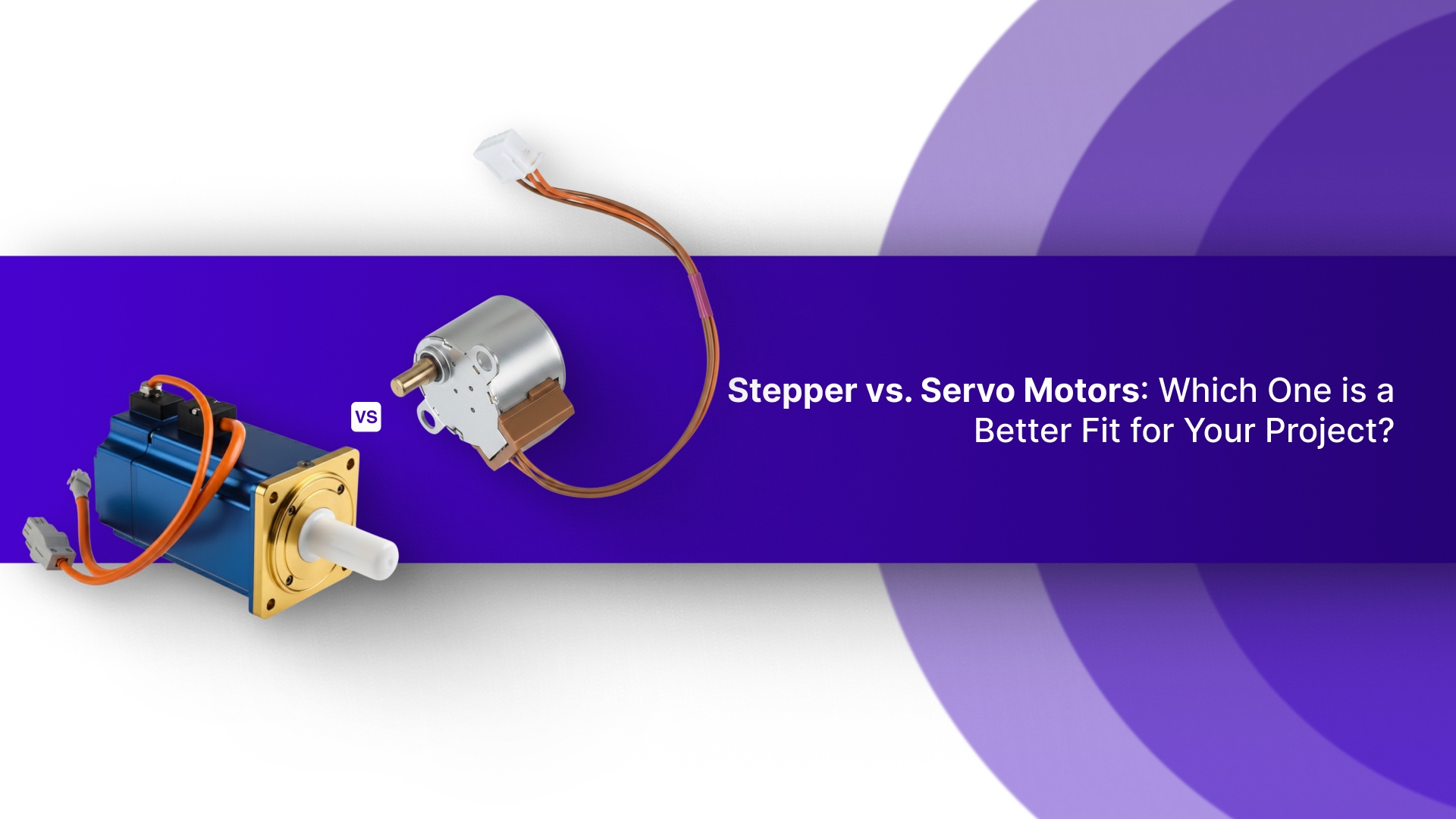
What is the difference between stepper and servo motors in CNC machines?
Stepper motors provide precise position control through incremental steps, making them ideal for less complex tasks. Servo motors offer continuous rotation with feedback, providing better performance in high-accuracy, high-speed applications.
How does temperature affect motion control systems in CNC machines?
Temperature changes can affect motor efficiency, feedback accuracy, and the integrity of electronic components. Maintaining a stable environment or using temperature-resistant components can help mitigate these effects.