Are you still using outdated motors in your CNC machines? If so, you're likely facing issues with precision, speed, and efficiency. The servo motor market is projected to reach USD 20.13 billion by 2030, growing at a CAGR of 6.9% and for good reason. These motors are changing the performance of CNC systems worldwide.
For engineers and technicians, choosing the right servo motor can make all the difference between smooth operation and costly downtime. Without the right motor, CNC machines can't reach their full potential, leading to errors and inefficiencies.
This guide breaks down everything you need to know about servo motors for CNC machines, from understanding how they work to selecting the right one for your system.
At a glance
Servo motors are essential for CNC machines, providing precision, speed, and reliability for high-performance operations.
They operate using a closed-loop feedback system, offering real-time adjustments for accuracy.
AC servo motors are ideal for high-speed, high-torque applications, while DC and brushless motors serve more specific needs.
Proper selection of a servo motor requires consideration of torque, speed, and compatibility with the CNC system.
Regular maintenance, including cleaning, lubrication, and calibration, is crucial for maximizing motor lifespan and performance.
What is a Servo Motor?
A servo motor is a specialized motor designed for precise control of position, speed, and torque. It uses a feedback mechanism, typically an encoder, to adjust its movements and maintain accuracy, even under varying loads.
Unlike regular motors, servo motors can achieve high levels of efficiency, reliability, and responsiveness, making them ideal for CNC systems that require consistent, accurate motion control.
These unique characteristics make servo motors crucial for maximizing CNC machine performance, providing the precision needed for complex tasks.
Understanding their role helps highlight why they are essential for modern CNC machines.
Why Servo Motors Are Essential for CNC Machines
Servo motors are critical to CNC machines because they ensure precision, speed, and efficiency in machining processes.
Here are the key reasons why servo motors are essential for CNC machines:
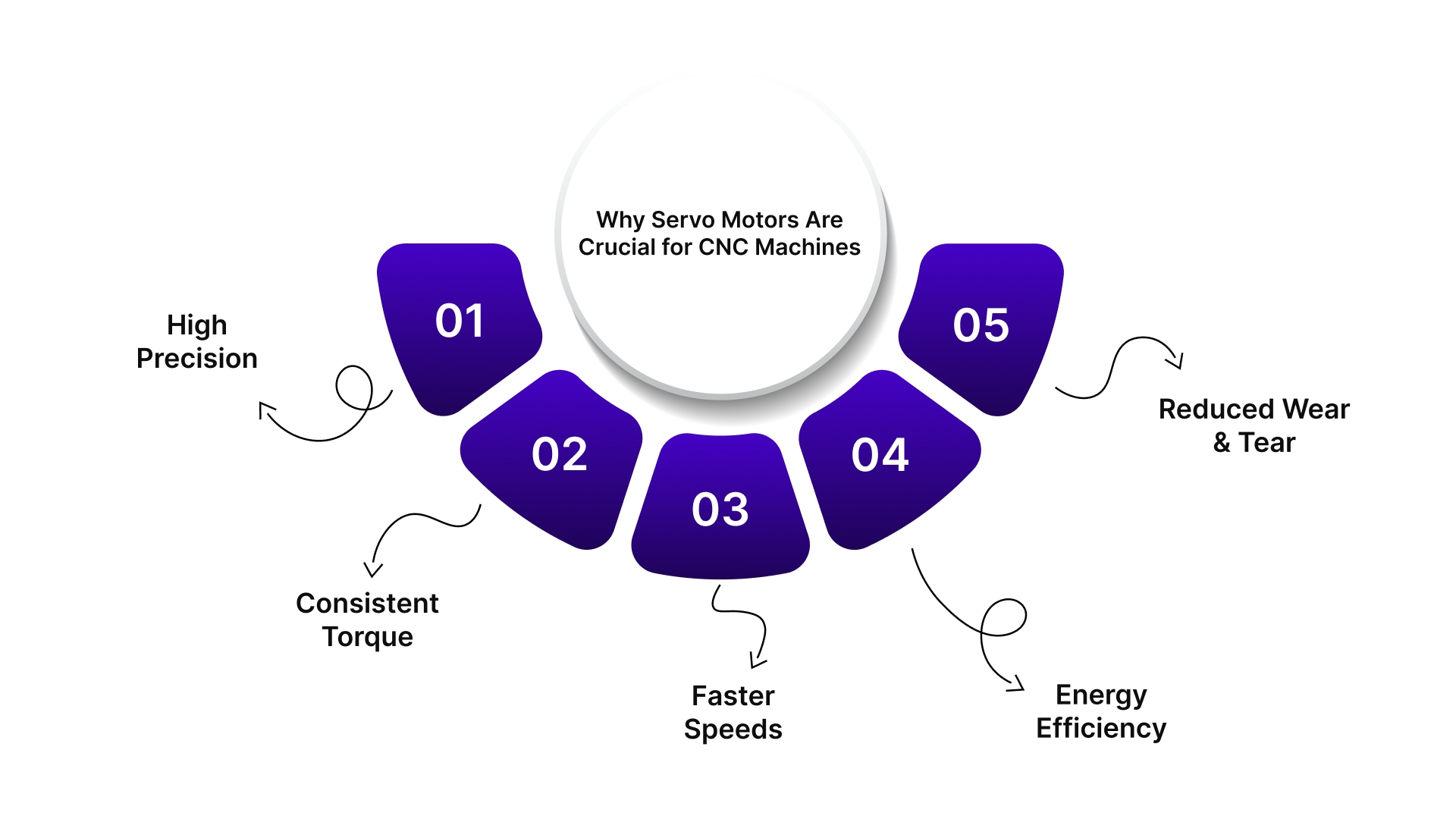
High Precision: Servo motors provide feedback with encoders and resolvers, ensuring micron-level accuracy in CNC machining. This level of precision is essential for intricate cuts and complex designs.
Consistent Torque: Unlike stepper motors, servo motors maintain consistent torque across a wide range of speeds, ensuring steady performance even under varying load conditions.
Faster Speeds: With their closed-loop system, servo motors deliver high-speed operation without sacrificing accuracy, making them ideal for time-sensitive tasks.
Energy Efficiency: Servo motors adjust power output based on load, improving energy consumption compared to other motors, which often run at full power regardless of the task.
Reduced Wear and Tear: The smooth operation of servo motors reduces mechanical stress on CNC machine components, extending the overall lifespan of the equipment.
Understanding the types of servo motors available will help you make the best choice for your CNC needs.
Types of Servo Motors for CNC Machines
There are different types of servo motors, each designed to meet specific performance needs in CNC machines.
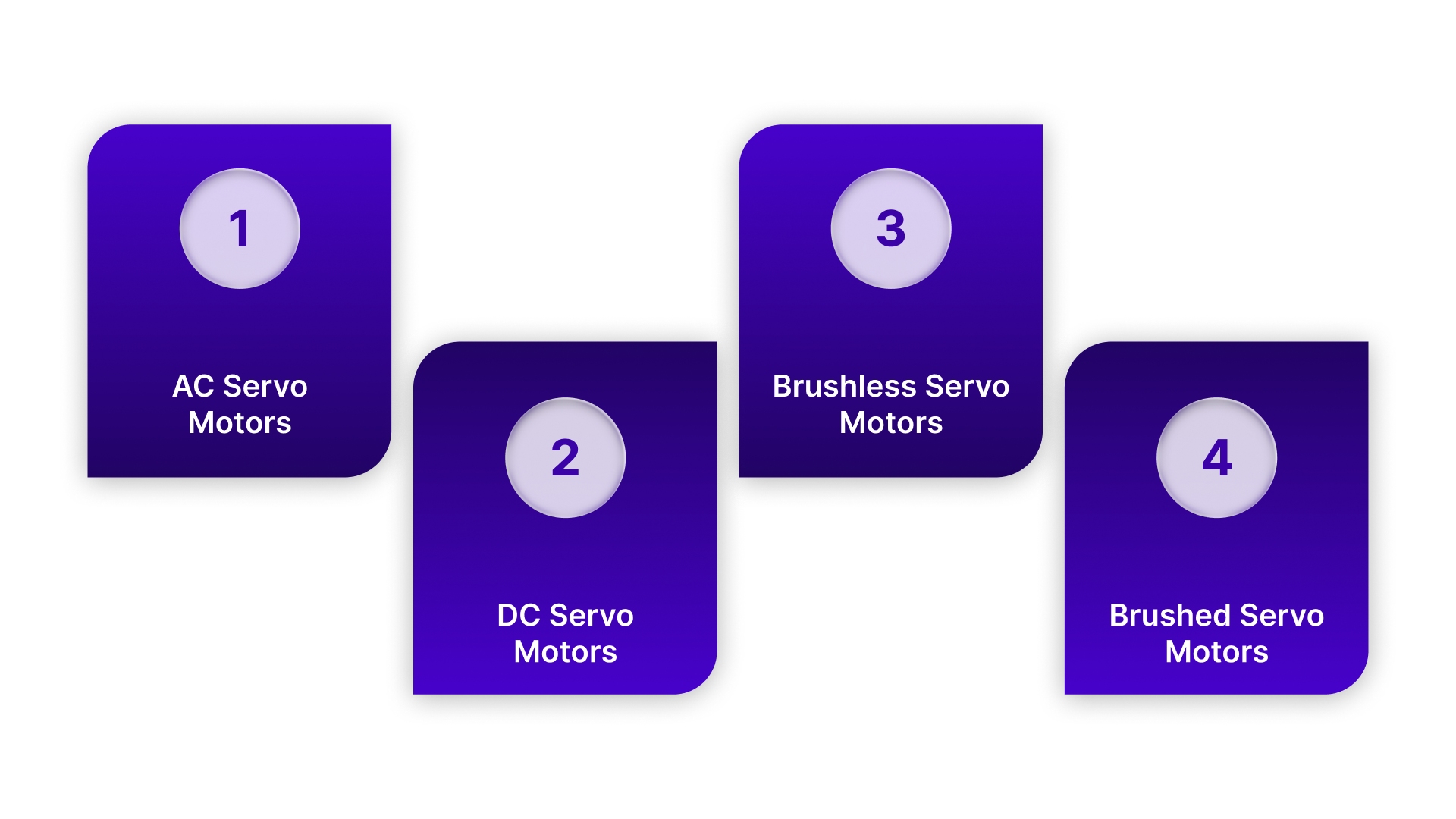
Here are the common types of servo motors used in CNC machines:
AC Servo Motors: These motors are known for their high efficiency and ability to provide precise control at high speeds. They are commonly used in CNC milling and machining centers where precision and continuous motion are essential.
DC Servo Motors: While generally smaller and less efficient than AC motors, they offer high torque at low speeds, making them ideal for applications like CNC lathe machines and smaller machines requiring moderate power.
Brushless Servo Motors: These are a subtype of AC motors that eliminate the need for brushes, offering reduced maintenance and longer lifespan. They are used in high-precision CNC applications such as aerospace component manufacturing.
Brushed Servo Motors: While less common, these are used in simpler CNC machines and applications where cost-effectiveness and lower performance demands are key.
With the types defined, it's crucial to understand how these motors function within CNC machines to optimize their performance.
How Servo Motors Work in CNC Machines
Servo motors in CNC machines operate using a closed-loop feedback system, providing precise control over motion and position.
Here's how servo motors function in CNC machines:
Closed-Loop System: The motor receives feedback from an encoder or resolver that continuously monitors the motor's position, speed, and torque, adjusting as necessary to meet the required specifications.
Pulse Width Modulation (PWM): The CNC controller sends signals in the form of pulses that determine the motor's speed and direction, offering fine control over motion.
Real-Time Adjustments: Based on feedback, the motor adjusts its movement in real time, ensuring that any discrepancies, such as resistance or lag, are corrected immediately.
Continuous Monitoring: The system constantly checks the motor's performance, ensuring that it remains within the specified limits for speed, torque, and position, which is critical for CNC operations requiring high precision.
The way these motors operate directly impacts the quality of the machining process.
With this understanding of motor function, selecting the right servo motor becomes easier by considering the performance requirements for your CNC machine.
How to Choose the Right Servo Motor for Your CNC Machine
Choosing the right servo motor is crucial for maximizing the efficiency and precision of your CNC machine. The right motor ensures optimal performance and minimizes downtime by matching the motor's capabilities with your machine's requirements.
Here's a practical checklist for selecting the right servo motor:
Torque Requirements: Calculate the maximum torque needed for your machine. Choose a motor with at least 20-30% higher torque capacity to account for fluctuations.
Speed (RPM): Match the motor's RPM with the machine's required cutting speeds. For high-speed operations, select a motor with 3000-5000 RPM.
Voltage & Current Compatibility: Ensure the motor’s voltage (e.g., 220V or 480V AC) matches your CNC system's power supply to avoid inefficiency or damage.
Feedback System: Select a motor with an encoder resolution of 1000-2000 lines per revolution for precision. Higher resolutions offer better accuracy.
Motor Size: Confirm the motor's dimensions and shaft configuration fit within your CNC machine's design (e.g., flange size, mounting type).
Environmental Rating: For harsh environments, choose a motor with an IP65 or higher rating to protect against dust and moisture.
Ensuring the motor meets these specifications will improve CNC machine performance and minimize future issues.
With the right servo motor in place, understanding common problems and solutions will help you keep your system running smoothly.
5 Common Problems with Servo Motors in CNC Machines and How to Solve Them
Servo motors are critical for the smooth operation of CNC machines, but they can experience issues that affect performance.
Here's a list of common problems and how to avoid them:
Overheating: When a servo motor operates at higher than optimal temperatures, it can cause damage and reduce its lifespan.
Solution: Ensure proper cooling systems are in place, and avoid overloading the motor beyond its rated torque capacity.
Loss of Position: This occurs when the motor loses synchronization with the machine, leading to inaccuracies.
Solution: Regularly calibrate the motor and ensure proper feedback from the encoder or resolver.
Excessive Vibration: Unbalanced motors can cause vibrations, leading to poor machining quality.
Solution: Ensure proper installation, check for alignment, and maintain the motor's balance by using vibration-damping mounts.
Motor Stalling: Servo motors may stall if they are underpowered or if the load exceeds their rated capacity.
Solution: Match the motor's specifications with the load demands and use proper motor control settings to avoid overloads.
Electrical Noise: Electrical interference can affect the servo motor's performance, leading to erratic motion.
Solution: Use shielded cables and grounding techniques to minimize electrical noise.
By addressing these common issues early, you can ensure your servo motor operates at peak efficiency.
Proper maintenance can significantly reduce the risk of encountering these problems in the first place.
6 Effective Tips for Maintaining Servo Motors in CNC Machines
Proper maintenance of servo motors is essential to maximize their lifespan and keep CNC machines performing at their best. Regular maintenance can prevent common issues such as overheating, stalling, and loss of precision.
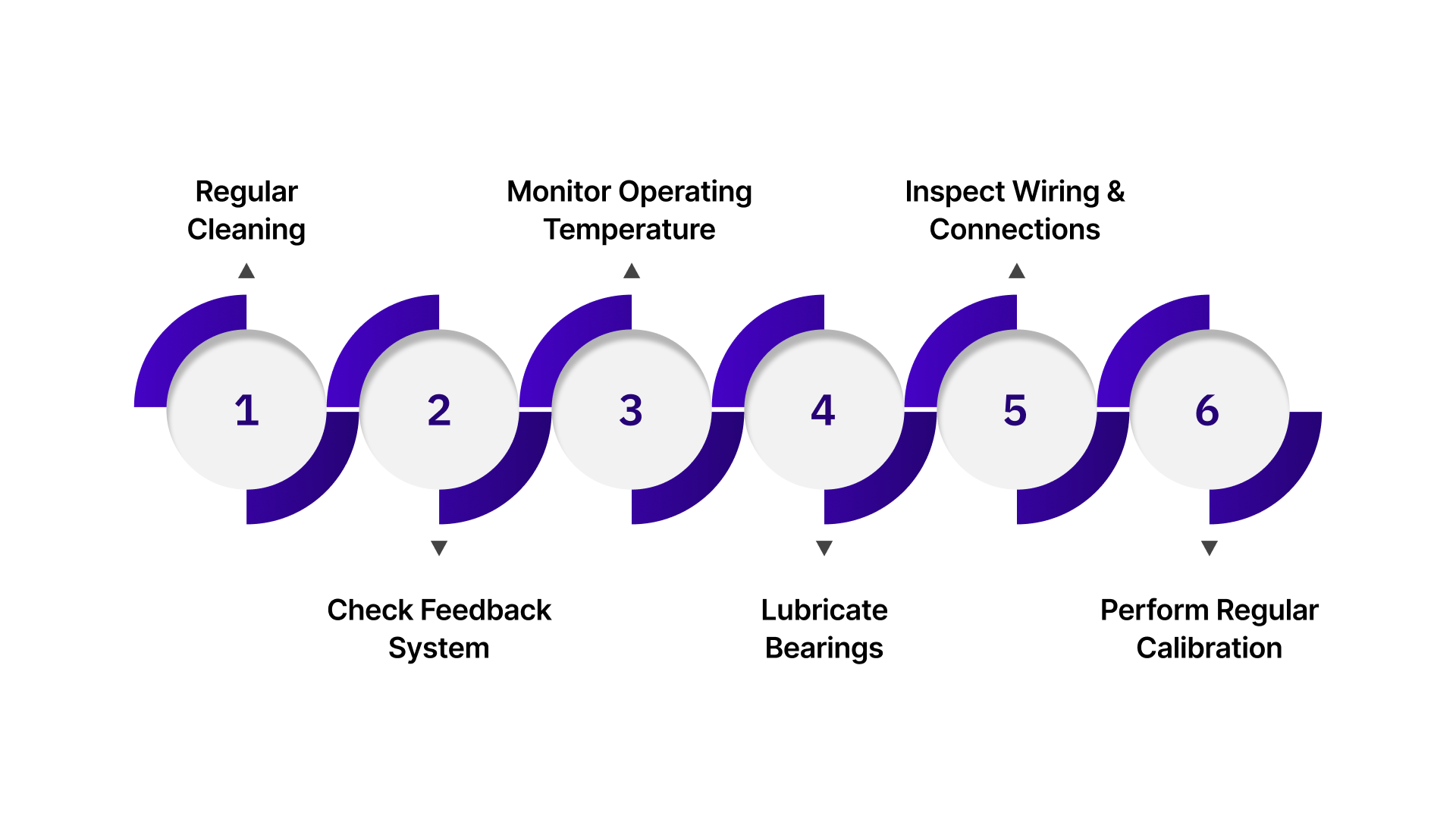
Here's a checklist for maintaining your servo motors:
Regular Cleaning: Clean the motor housing and cooling fans every 3-6 months to prevent dust and debris buildup, which can cause overheating.
Check Feedback System: Inspect encoders and resolvers every 6 months to ensure accurate feedback. Replace any worn-out components to maintain precision.
Monitor Operating Temperature: Ensure the motor's temperature remains within the recommended range (typically 40°C-60°C). Install additional cooling systems if necessary.
Lubricate Bearings: Apply lubrication to the motor's bearings as recommended by the manufacturer to reduce friction and prevent wear.
Inspect Wiring and Connections: Check all electrical connections for wear or corrosion every 3-6 months, ensuring no loose connections or damaged cables.
Perform Regular Calibration: Calibrate the motor system periodically to maintain precise control and avoid position loss or drift.
By following these tips, you can ensure your servo motor operates smoothly and efficiently for years. With regular care, your CNC machine's performance will be optimized, and its lifespan extended.
Why Choose Pico Systems for Your CNC Needs?
Pico Systems offers a range of high-quality, precision-engineered components personalized for CNC systems, ensuring maximum performance and reliability.
Their products are designed to meet the needs of professionals and manufacturers who require specialized hardware for motion control and automation.
Wide Range of Precision Products: From PWM Servo Systems to Analog Servo Interfaces, Pico Systems provides a variety of components designed for high-accuracy CNC applications.
Specialized Accessories: Their selection of accessories includes essential products like the 8-Channel Resolver Converter and Copley Interface, ensuring smooth integration and improved control for your CNC system.
Robust Stepper Controllers: With reliable stepper controllers, Pico Systems supports seamless motion control for both high and low-power applications.
High-Quality Components: All products, including PWM Servo Systems and Analog Servo Interfaces, are engineered for durability and long-lasting performance in demanding industrial environments.
By choosing Pico Systems, you're ensuring your CNC machine operates with top-tier, reliable components that maximize efficiency and precision.
Wrapping Up
Choosing the right servo motor is essential for optimizing the performance and precision of your CNC machine, ensuring smooth and efficient operations.
With Pico Systems offering reliable, high-quality components like PWM Servo Systems and specialized accessories, you can improve your CNC setup for better results.
Ready to upgrade your CNC performance with the best components? Contact us today and let us help you find the perfect solution for your needs!
FAQs
Can a servo motor improve the speed of my CNC machine?
Yes, servo motors can significantly increase the speed of CNC machines. They provide faster acceleration and deceleration compared to other motor types, improving cycle times and overall productivity.
What factors affect the lifespan of a servo motor in CNC applications?
Factors like operating temperature, load cycles, maintenance frequency, and environmental conditions influence the lifespan of a servo motor. Keeping motors clean and well-lubricated can extend their life.
Are servo motors suitable for high-torque applications in CNC?
Yes, servo motors are ideal for high-torque applications in CNC machines. They can maintain consistent torque at various speeds, making them perfect for tasks like heavy-duty cutting and milling.
How do servo motors handle dynamic loads in CNC systems?
Servo motors are equipped with closed-loop systems that adjust in real-time to varying loads, ensuring stable performance even during dynamic conditions, such as rapid position changes or fluctuating load forces.
Can servo motors in CNC machines be upgraded for higher performance?
Yes, upgrading to a higher-rated servo motor with better specifications (e.g., increased torque or faster speeds) can improve CNC machine performance, improving precision and reducing cycle times.