In industrial settings, power-related failures rarely announce themselves clearly. They show up as intermittent faults, unstable machine behavior, or unplanned downtime that is hard to trace.
In harsh operating environments, these issues often originate from components that were selected without fully considering environmental exposure.
A PWM power converter is one such component. While widely used across industrial systems, its suitability depends heavily on where and how it operates.
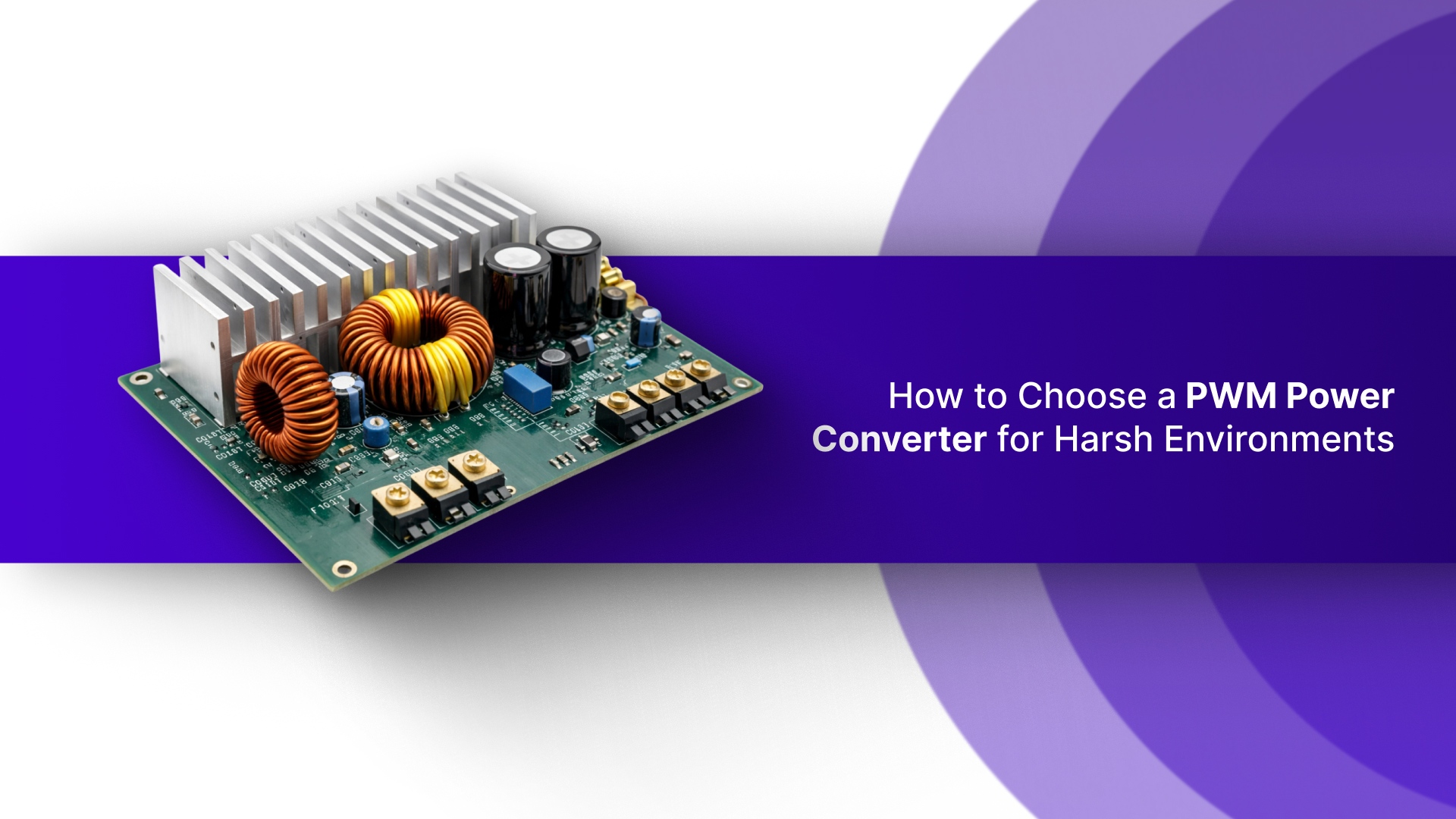
This guide focuses on how engineers, plant leaders, and procurement teams can evaluate a PWM power converter for harsh environments by understanding environment-driven risks and their operational impact.
Key Takeaways
A PWM power converter may operate correctly during commissioning but fail under real operating conditions when teams ignore environmental exposure.
Temperature variation, vibration, contamination, and electrical noise often introduce intermittent issues instead of immediate failures.
Power instability disrupts connected motion, control, and automation systems, increasing downtime and troubleshooting effort.
Long-term reliability depends on technical suitability as well as supplier consistency, support quality, and lifecycle availability.
Evaluating how a PWM power converter degrades as conditions worsen improves uptime, maintenance predictability, and scalability.
What Is a PWM Power Converter and How Does It Work?
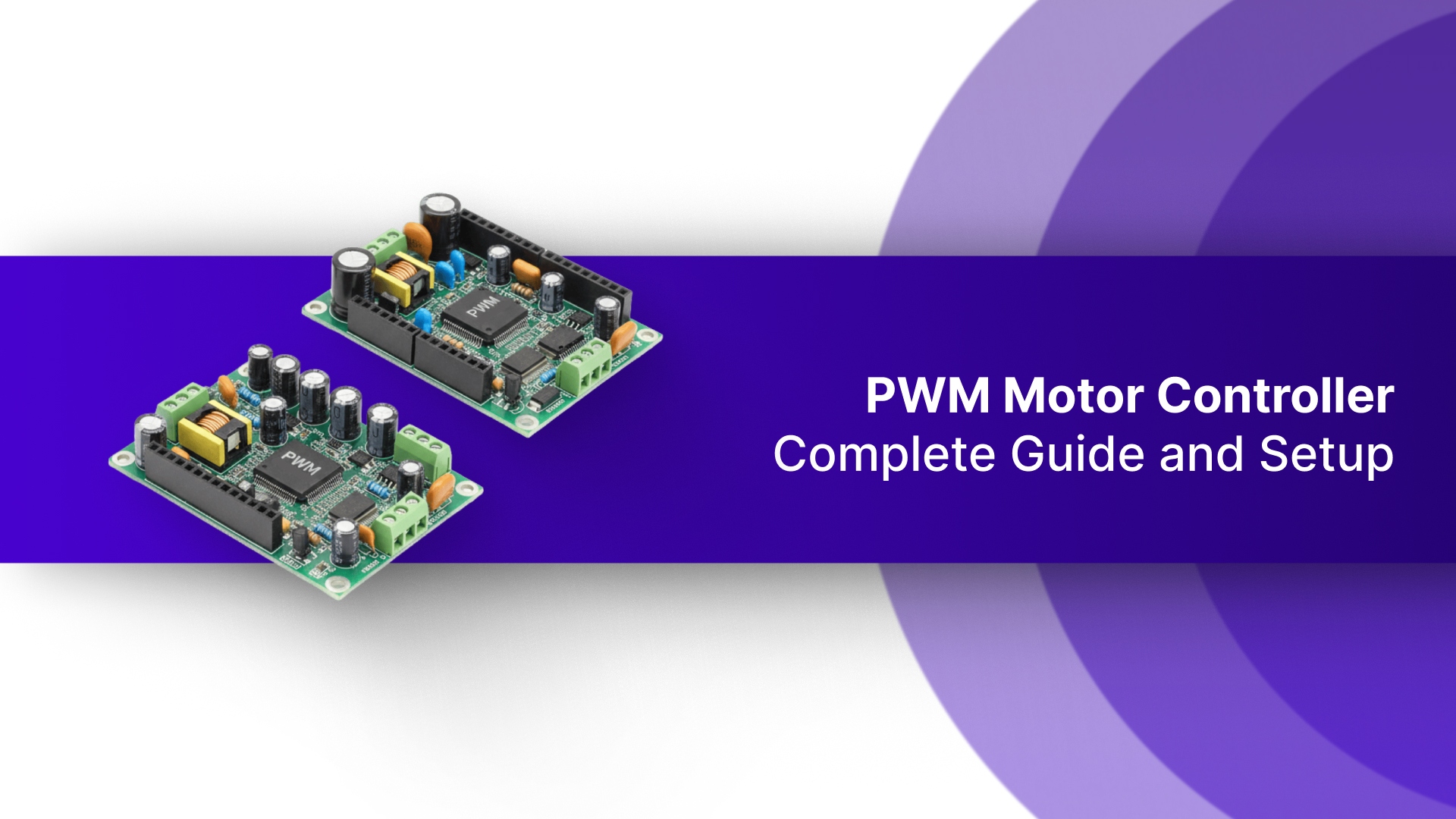
A pulse-width modulation (PWM) power converter regulates and converts electrical power using high-speed switching instead of continuous energy dissipation. This approach allows precise control of output voltage or current while limiting unnecessary power loss, making it suitable for industrial and automation systems.
A PWM converter manages power by rapidly turning a semiconductor switch (like a MOSFET or IGBT) ON and OFF. Two primary parameters define its behavior:
Duty Cycle: The percentage of time the switch is "ON" during one full period. A 50% duty cycle provides half the maximum average power to the load.
Switching Frequency: The rate at which the ON-OFF cycle repeats (measured in Hz). Higher frequencies, often in the kHz range, help minimize harmonic distortion and allow for smaller filtering components.
This switching-based control allows efficient power regulation across a wide range of industrial applications.
But, where PWM power converters are commonly used and how the application context influences selection.
Applications of PWM Power Conversion
Industrial and commercial systems use PWM power converters to cover raw power sources and sensitive electronic loads. By regulating power through pulse-width modulation instead of voltage dissipation, these converters support efficient and controlled operation across key sectors.
Precision Industrial Motion Control: PWM converters are important for robotic automation and CNC machinery, where they provide the granular voltage control necessary to regulate motor speed and torque with sub-millimeter accuracy.
Electric Vehicle (EV) Powertrains: In the automotive sector, these converters efficiently manage energy flow from high-voltage battery packs to traction motors, extending driving range by minimizing switching losses.
Sustainable Energy Integration: For solar and wind installations, PWM technology is essential for converting fluctuating DC outputs into stable, grid-compatible AC power, ensuring maximum energy harvest from renewable sources.
High-Efficiency Computing Power Supplies: From data centers to consumer electronics, PWM-based switched-mode power supplies (SMPS) deliver ultra-stable DC voltages while maintaining a compact footprint and reducing heat generation.
Advanced Solid-State Lighting: PWM is the gold standard for LED dimming and control, allowing for precise brightness adjustments without the color shifting or overheating often associated with traditional current-limiting methods.
While these applications highlight the flexibility of PWM power conversion, real-world performance depends heavily on operating conditions. Engineers must account for environmental stress factors to ensure long-term reliability and consistent system behavior.
Environmental Conditions That Influence Converter Suitability
Not all harsh environments look the same.
PWM power converter suitability starts with understanding which environmental factors are present and how persistent they are.
Harsh environmental conditions include:
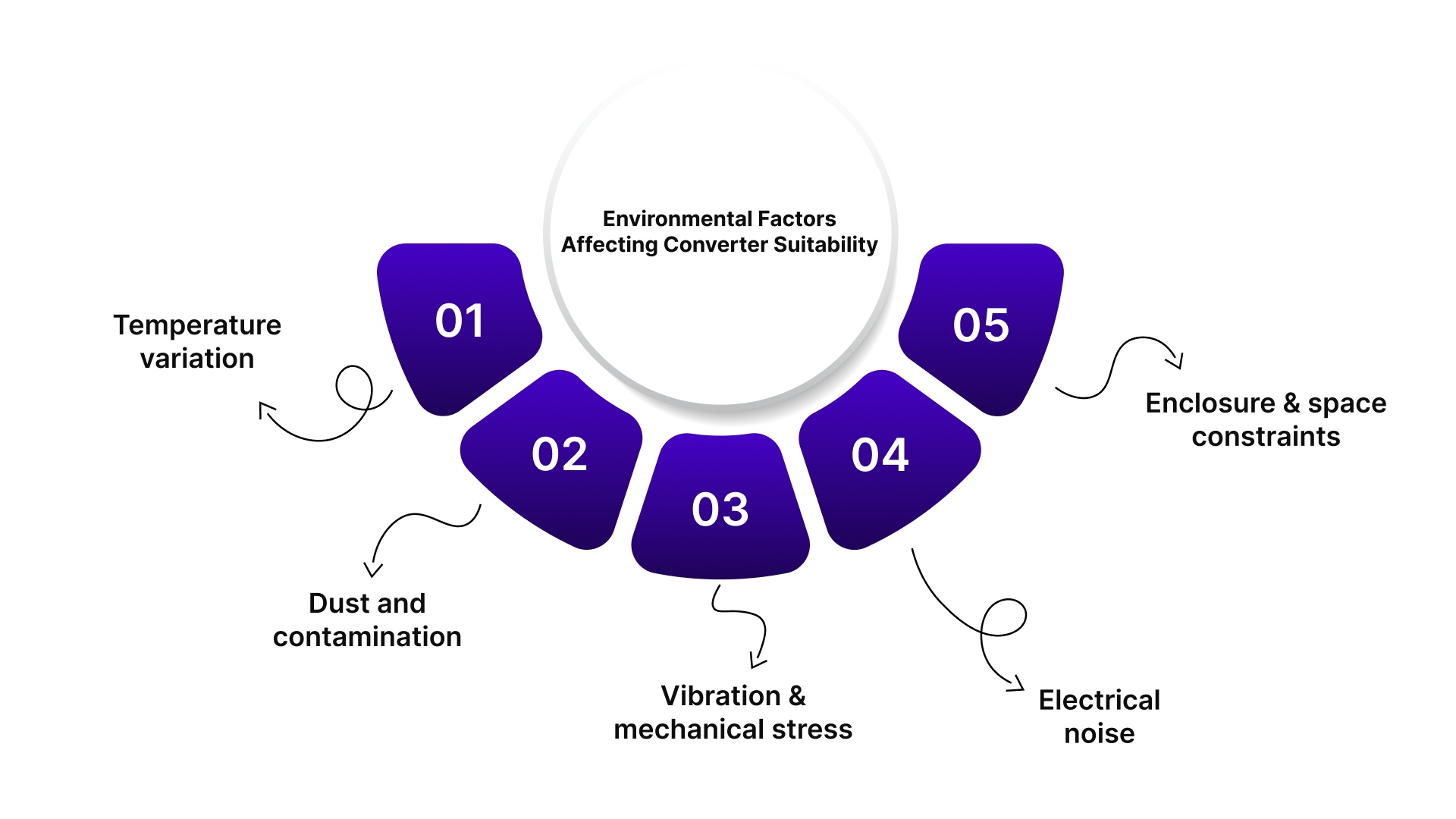
Temperature variation: Frequent temperature changes place stress on power electronics. Over time, this can affect stability and consistency, especially in systems that operate continuously or experience frequent start-stop cycles.
Dust and contamination: Dust, oil mist, and other airborne contaminants are common in manufacturing plants. These can affect long-term reliability and increase maintenance effort if not accounted for during selection and installation.
Vibration and mechanical stress: Motion-driven machinery, conveyors, and heavy equipment vibrate and can impact electrical components. PWM power converters exposed to constant mechanical stress may develop intermittent issues that are difficult to reproduce during testing.
Electrical noise: Industrial environments often contain multiple sources of electrical interference. Poor power conditioning in such environments can affect downstream control systems, leading to unpredictable responses rather than clear failures.
Enclosure and space constraints: Tightly packed control panels and enclosed installations can amplify environmental stress. Limited airflow and restricted access complicate both operation and maintenance.
Understanding these conditions helps teams assess whether a PWM power converter is a suitable long-term fit or just a functional one.
Is the power conversion system designed for how your equipment actually operates?
For motion-driven and automation applications, Pico Systems supports industrial teams with PWM servo systems built for real-world manufacturing environments. We range across PWM Servo Amplifiers, Universal PWM Controllers, Heat sinks for PWM servo amplifiers, and more.
View our PWM servo systems catalog to assess suitability across different industrial conditions without over-engineering or guesswork.
Common Failure Risks When Environment Fit is Overlooked
When teams fail to evaluate environmental suitability early, failures emerge gradually and inconsistently across operations.
Common risks include:
Power instability intermittently disrupts control systems.
Components wear out faster, forcing repeated replacements.
Systems trigger nuisance faults and false alarms more frequently.
Stress shifts to connected components, increasing overall system risk.
Maintenance teams struggle to isolate root causes during breakdowns.
These problems rarely surface during commissioning. They appear under real operating conditions, where they cause longer downtime, repeated troubleshooting, and regular production disruption.
Operational Impact of Environment-Driven Failures
When environmental stress affects power systems, operations often experience:
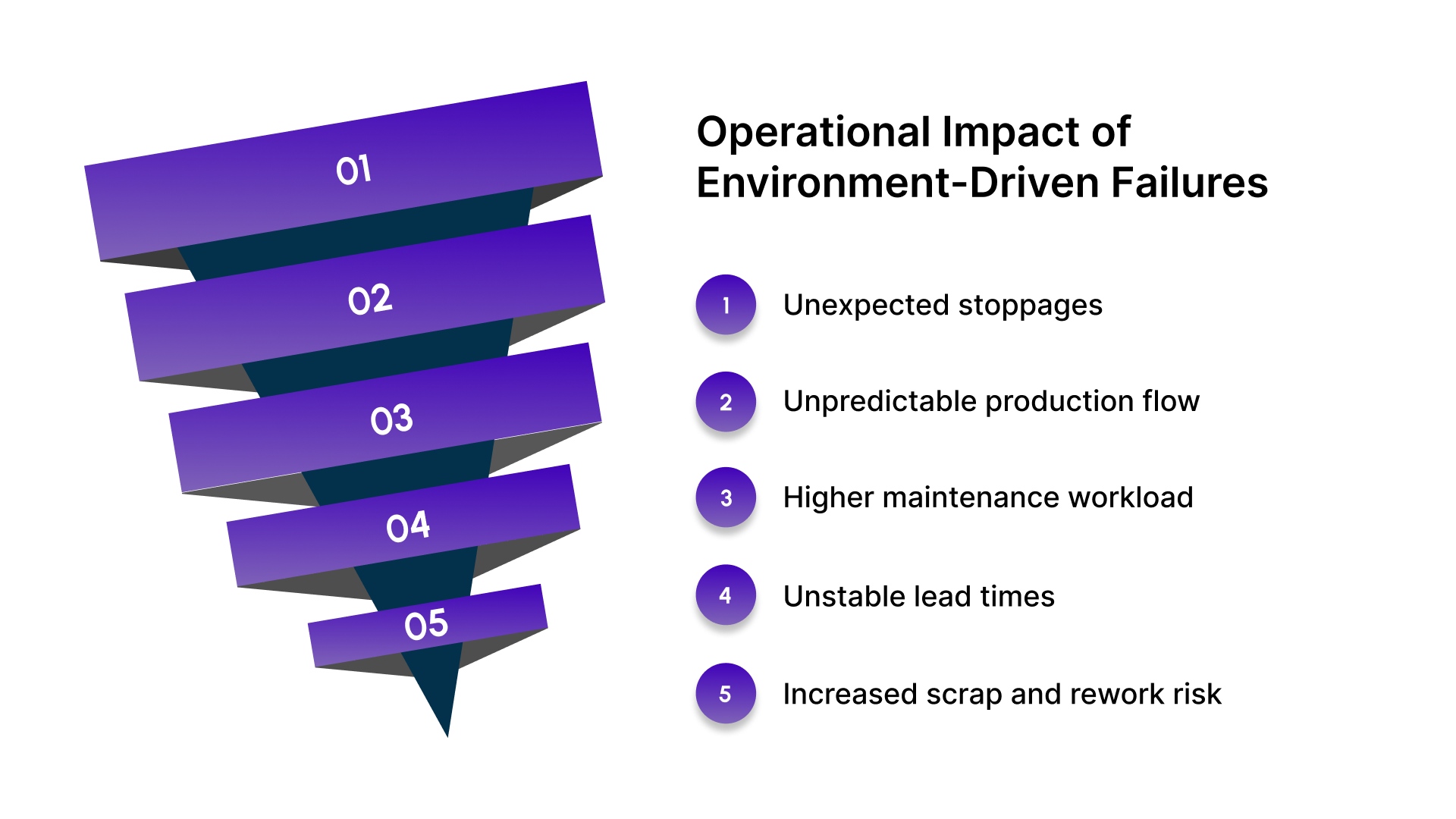
Unexpected stoppages that reduce equipment uptime.
Unpredictable production flow, especially in continuous operations.
Higher maintenance workload as teams chase recurring, unclear faults.
Unstable lead times, as small delays cascade across production schedules.
Increased scrap and rework risk when power instability disrupts process consistency.
These operational issues increase overall risk and limit confidence in scaling production.
What Engineers Should Evaluate When Choosing for Harsh Environments?
Engineers should base selection decisions on the actual application environment, not just theoretical capability.
Key factors to evaluate include:
How power variation affects the connected system during normal operation
How failures would appear at the system level, not just at the component level
Whether the application involves fixed loads or frequent, dynamic load changes
How easily teams can access the unit for inspection, servicing, and replacement
Whether the installation environment subjects the converter to continuous stress
Always frame decisions around what happens as performance degrades over time, to reduce long-term reliability risk and limit downstream operational impact.
What Procurement Teams Should Assess Beyond Product Fit?
Procurement decisions directly affect system reliability long after installation. In harsh environments, supplier-related risks can impact operations as much as environmental conditions.
Procurement teams should evaluate:
Responsiveness to field issues and support requests
Long-term supply continuity and replacement planning
Whether the supplier consistently delivers reliable products
Availability of clear documentation and application guidance
Fit for industrial automation applications, rather than generic electronics.
Always choose a PWM power converter based on technical suitability and operational stability.
PWM Power Converters in Motion-Driven Systems by Pico Systems
Motion-driven industrial systems respond directly to power stability. Even minor fluctuations can disrupt positioning accuracy, drive behavior, and control responsiveness.
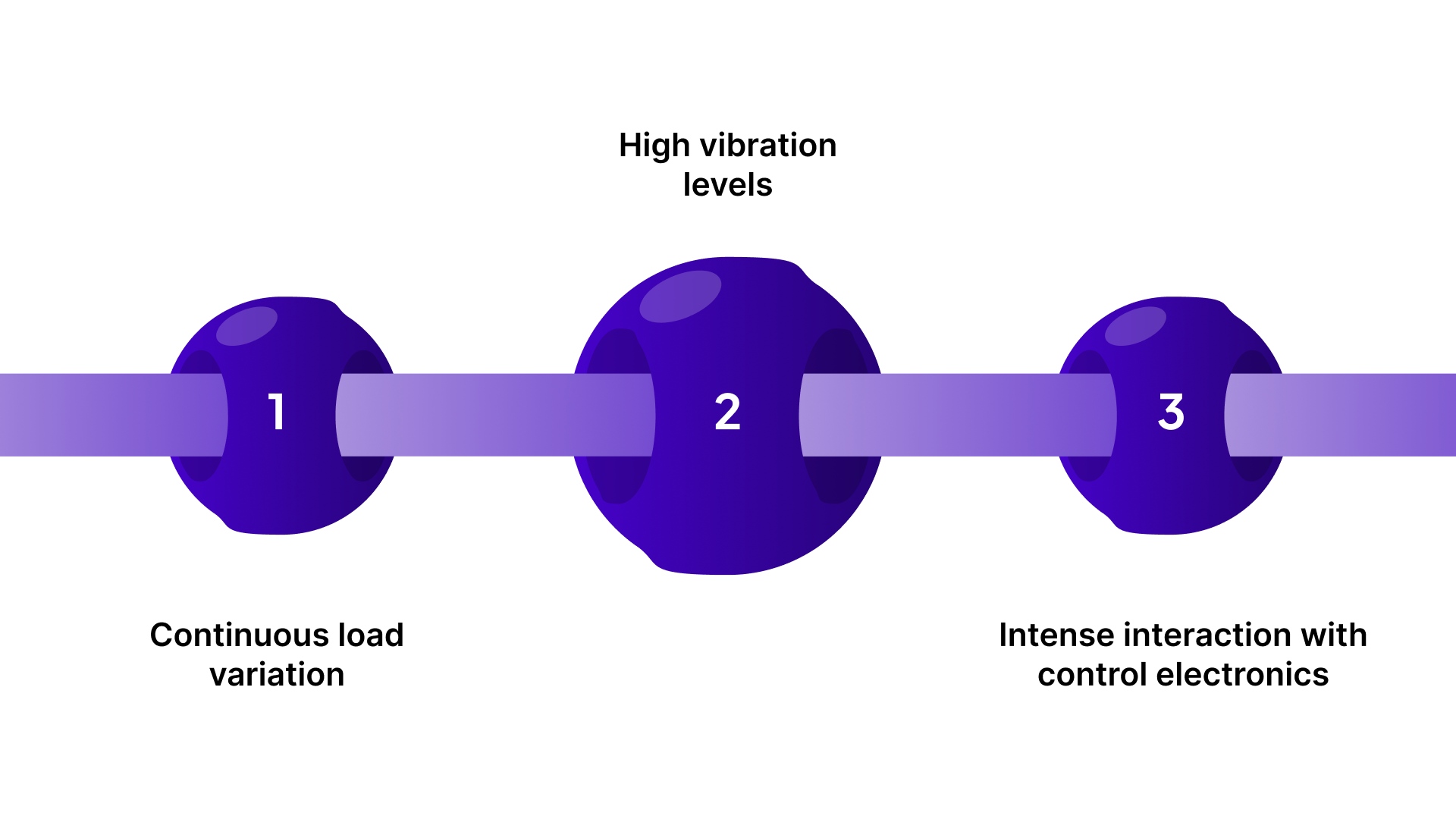
In these demanding environments, PWM power converters face:
Continuous load variation from dynamic motion
High vibration levels are common in machinery and conveyors.
Intense interaction with control electronics, increasing stress on both components and the system
Pico Systems manufactures PWM power converters with these industrial realities in mind. Our solutions integrate smoothly into motion and control systems used by OEMs and industrial manufacturers, avoiding one-size-fits-all approaches.
Our design focus helps teams reduce integration friction, limit operational risk, and maintain consistent system performance in harsh industrial environments.
Conclusion
Selecting a PWM power converter in harsh industrial environments is a decision that shapes reliability, uptime, and operational confidence over the long term.
Industrial teams should look for environmental suitability, system-level impact, maintenance and access considerations, load characteristics, and supplier and lifecycle reliability.
By carefully considering these factors, engineers, plant leaders, and procurement teams can minimize operational risk, reduce maintenance challenges, and improve production predictability.
At Pico Systems, we manufacture PWM servo systems with these real-world challenges in mind. Our inventory is designed carefully to smoothly integrate into motion-driven industrial applications and demanding environments.
Get in touch to discuss our catalog and see how our PWM power solutions can support reliable, efficient, and long-term operations in your facility.
Frequently Asked Questions
1. Is a PWM power converter suitable for all industrial environments?
No, suitability depends on environmental exposure, system sensitivity, and operating conditions. Harsh environments such as high vibration, contamination, or electrical noise increase failure risk. Teams must evaluate whether the converter can support stable operation under real plant conditions.
2. What are the early signs of environment-related power issues?
Environment-related power issues often appear as intermittent faults, unexplained alarms, or inconsistent machine behavior. These symptoms usually worsen under load or extended operation, making them difficult to diagnose during commissioning and more disruptive during regular production.
3. Should procurement be involved in power component selection?
Yes, procurement influences long-term reliability by evaluating supplier consistency, support quality, documentation, and lifecycle availability. These factors affect replacement planning, lead times, and risk exposure, especially in harsh environments where component failure impacts operations more frequently.
4. How does the environment affect long-term maintenance planning?
Harsh environments increase maintenance complexity by driving more frequent inspections, earlier replacements, and longer fault investigations. Power-related issues often require cross-team troubleshooting, which raises downtime risk and places additional strain on maintenance resources over time.
5. When should alternatives be considered?
Teams should consider alternatives when environmental stress repeatedly causes instability, faults, or premature failures. If mitigation measures fail to improve reliability, reassessing the power architecture can reduce long-term operational risk and improve system predictability.