Are you tired of dealing with costly errors caused by improper torque application in your manufacturing processes? For engineers and technicians managing high-precision operations, even a slight miscalculation in torque can lead to product defects, safety risks, and expensive downtime.
Precision torque control is the solution that can eliminate these risks and increase manufacturing efficiency. With rising demands for accuracy and speed, getting torque right every time has never been more crucial in industries like automotive, aerospace, and electronics.
In 2026, implementing precision torque control systems is no longer optional for industrial facilities. This guide will walk you through how these systems can improve product quality, streamline operations, and reduce costs, ensuring your manufacturing processes remain competitive and reliable.
Quick look
Precision torque control ensures accurate, reliable force application in industrial processes, preventing costly errors.
It plays a crucial role in industries like automotive, aerospace, and electronics by maintaining safety, quality, and operational efficiency.
Key technologies, such as torque sensors and feedback systems, enable real-time adjustments to ensure optimal performance.
Common challenges include calibration, integration with older systems, and environmental factors, but these can be overcome with proper training and maintenance.
Adopting best practices like system sizing, regular calibration, and proactive diagnostics helps maximize the benefits of torque control systems.
What is Precision Torque Control?
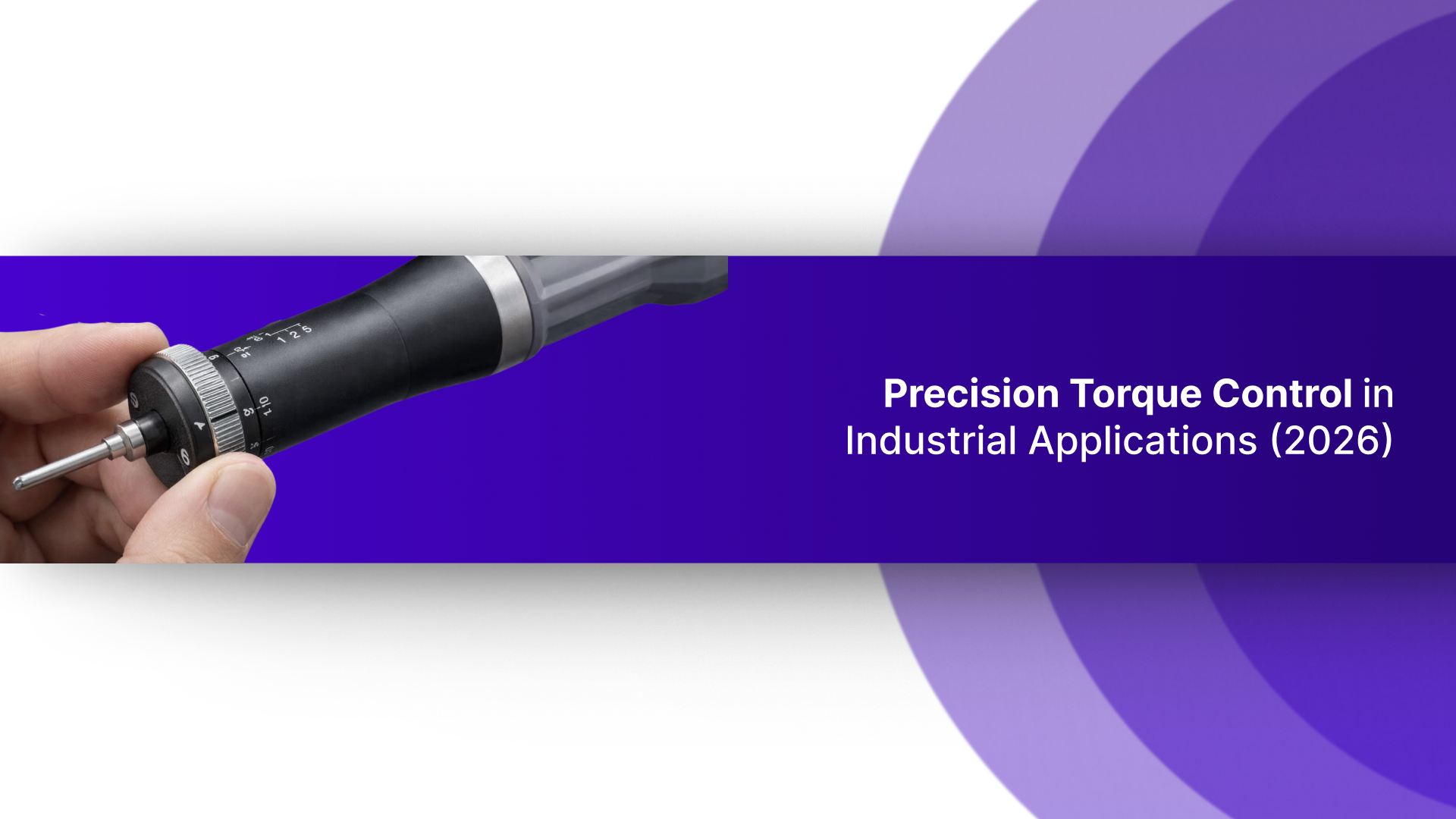
Precision torque control is the application of exact, controlled rotational force to components during assembly or maintenance processes. It ensures that every fastener is tightened to the precise specification, minimizing the risk of over-tightening or under-tightening.
This level of accuracy is essential for maintaining the integrity and performance of machinery, particularly in critical industries like automotive, aerospace, and electronics.
By incorporating advanced feedback systems and sensors, precision torque control systems can adjust in real-time to ensure optimal results.
Understanding how these systems work is key to realizing their full potential. Next, let's explore why precision torque control is so crucial in modern manufacturing environments.
The Importance of Precision Torque Control in Manufacturing
Precision torque control is a fundamental aspect of ensuring high-quality, efficient manufacturing processes. It directly impacts product reliability, safety, and operational costs by ensuring the correct amount of force is applied every time.
Let's now take a closer look at the specific ways precision torque control improves manufacturing operations:
Improves Product Quality: Ensures uniformity in fastener tightness, reducing the risk of defects such as leaks, poor structural integrity, or electrical failures.
Improves Safety: Prevents under-tightening that could lead to product malfunctions or over-tightening that can damage components, ensuring safer operations.
Increases Operational Efficiency: Automated torque control systems streamline the tightening process, reducing the time spent on manual checks and rework.
Reduces Waste and Downtime: By eliminating incorrect torque application, there's less material waste and fewer assembly errors, leading to faster turnaround times.
Supports Regulatory Compliance: Meets industry-specific standards for torque settings in sectors such as aerospace, automotive, and electronics, ensuring compliance with safety and quality regulations.
Let’s now look into the key industrial applications of precision torque control and explore how it is applied across different manufacturing sectors to ensure quality, safety, and efficiency
Key Industrial Applications of Precision Torque Control
Precision torque control is integral to various industrial sectors where accuracy and reliability are critical. It helps ensure that mechanical components are fastened with the exact amount of torque required, minimizing errors and improving product quality.
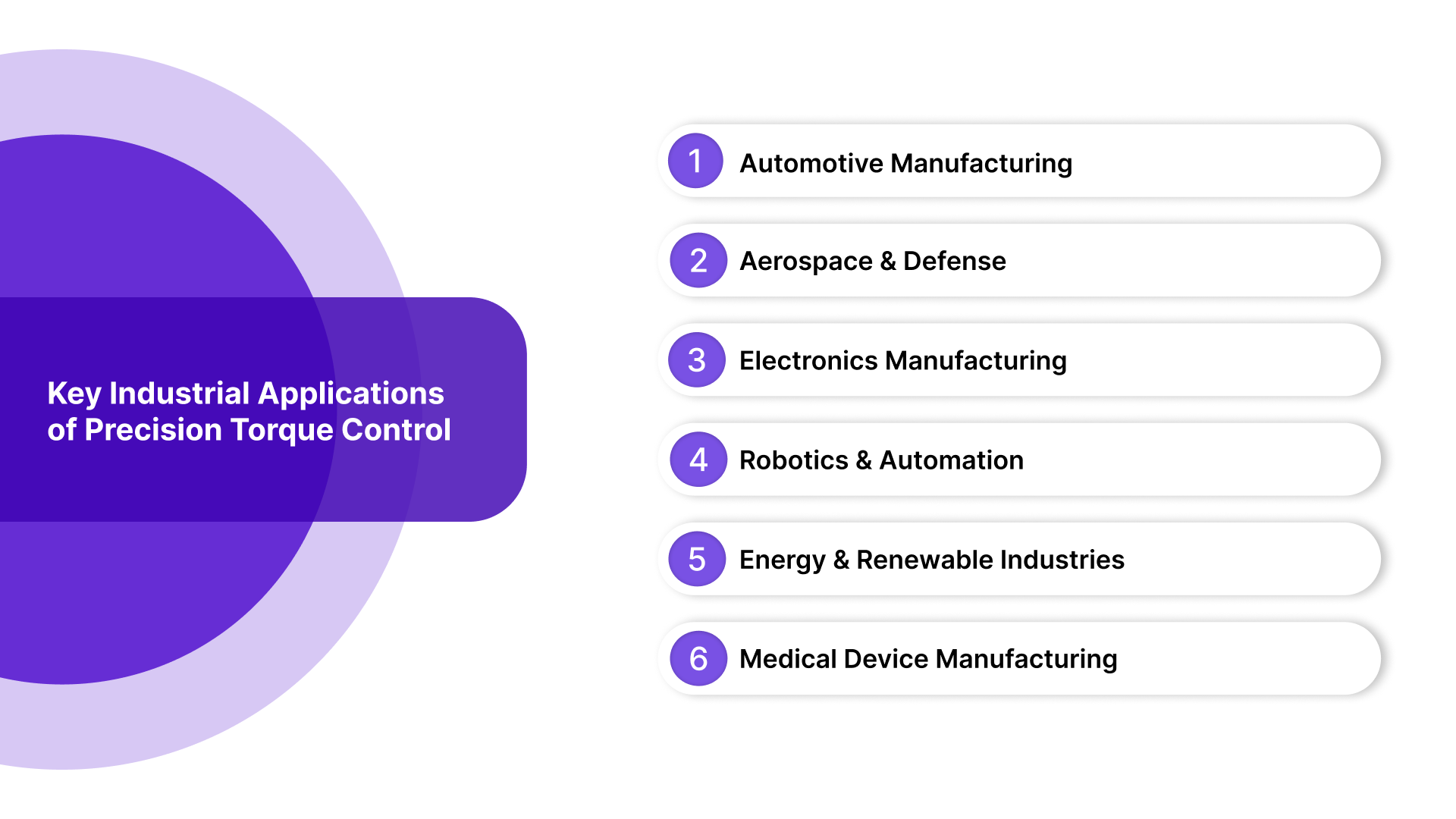
Here’s a closer look at how precision torque control is applied across different industries:
Automotive Manufacturing
Precision torque control is applied in vehicle assembly lines, specifically in securing components like engine blocks, wheel lug nuts, and body panels.
How it helps:
Reduces the risk of component failure and structural damage.
Improves vehicle safety by ensuring all bolts are tightened to optimal levels.
Prevents operational issues like brake malfunctions and engine failures.
Aerospace & Defense
In aerospace manufacturing, precision torque control is applied to components like turbine engines, wing structures, fuselages, and landing gear. These parts require extreme precision to withstand harsh operating conditions and maintain safety.
How it helps:
Ensures that the correct torque is applied to maintain structural integrity.
Guarantees safety and performance by reducing the risk of mechanical failure during flight.
Meets stringent aerospace regulations for reliability and durability.
Electronics Manufacturing
Precision torque control is critical in electronics assembly, specifically for securing sensitive components such as printed circuit boards (PCBs), microchips, and connectors in consumer electronics, medical devices, and industrial sensors.
How it helps:
Prevents damage to fragile electronics during assembly.
Ensures secure, reliable electrical connections and mechanical fastening.
Reduces the risk of failure in high-performance electronic devices.
Robotics & Automation
In robotics and automation, precision torque control is used in securing components of robotic arms, actuators, and automated machinery. It’s essential for robotic assembly lines, including the installation of motors and joints.
How it helps:
Ensures proper calibration and assembly of complex robotic systems.
Increases system longevity by preventing wear and damage to critical components.
Improves operational accuracy, reducing the chances of malfunctions during automated tasks.
Energy & Renewable Industries
In the renewable energy sector, torque control is applied in assembling and maintaining wind turbines, solar panel mounts, and power grid components.
For example, the assembly of turbine blades and the installation of large-scale energy systems require precise torque.
How it helps:
Reduces wear and tear on key energy components like turbines and solar panels.
Increases the durability and efficiency of energy systems.
Lowers maintenance costs by preventing over-tightening and improving long-term reliability.
Medical Device Manufacturing
Precision torque control is crucial in the assembly of medical devices such as surgical instruments, implants, diagnostic tools, and equipment, where precision is directly linked to patient safety. Components are often tiny and delicate, requiring exact torque to avoid malfunction.
How it helps:
Ensures that critical components meet stringent regulatory and safety standards.
Prevents damage or malfunction of medical instruments, which could affect patient safety.
Reduces the risk of errors in high-precision medical procedures and diagnoses.
With these critical applications in mind, let’s explore the core technologies that make precision torque control possible and how they improve operational performance.
Core Technologies Behind Precision Torque Control
The effectiveness of precision torque control relies on several advanced technologies that allow for real-time adjustments and highly accurate measurements. These systems integrate sensors, feedback loops, and automated control mechanisms to ensure the correct amount of force is applied at every step.
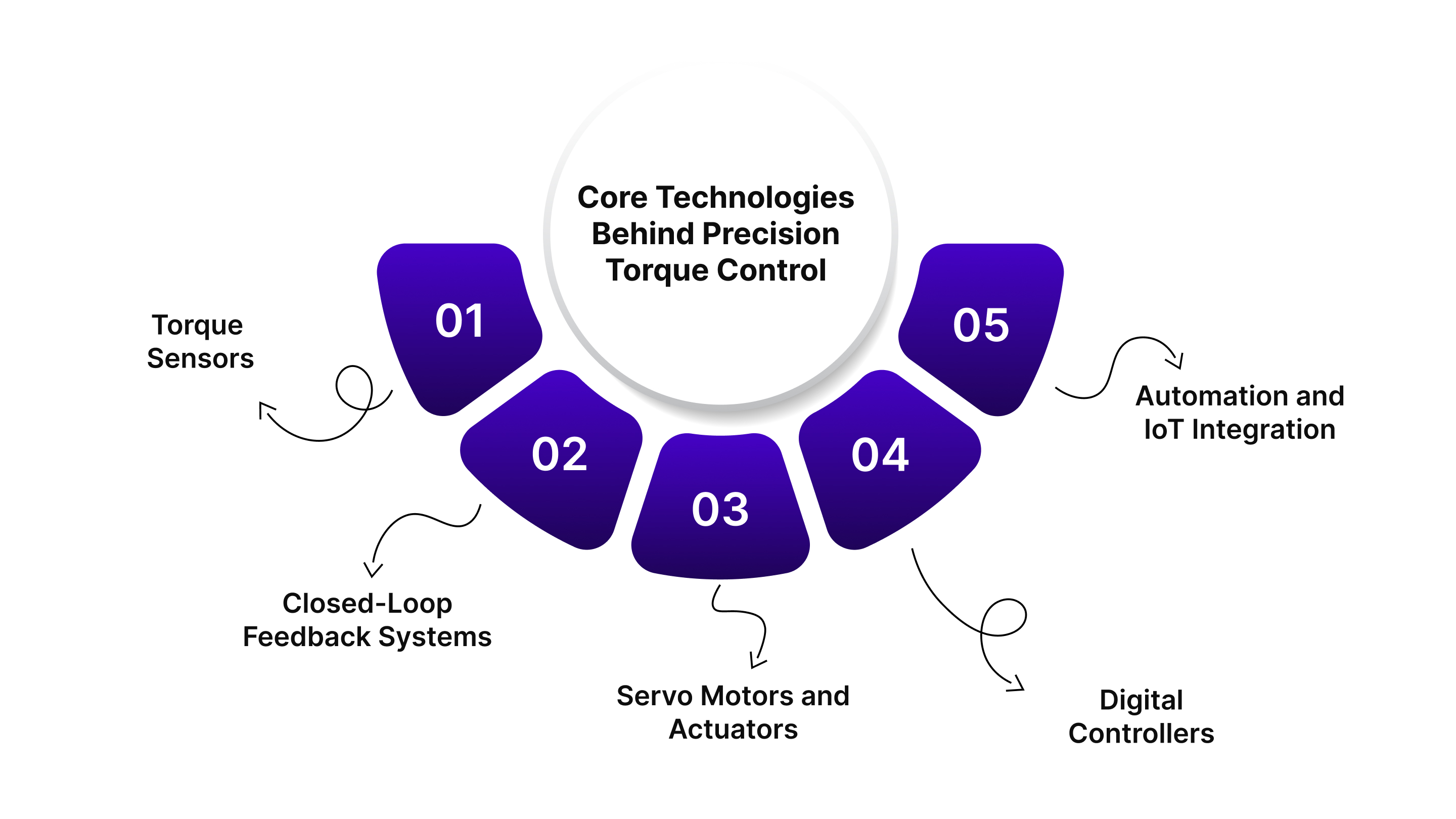
Let’s look into the technologies that power precision torque control:
Torque Sensors
Torque sensors measure the amount of rotational force applied to a component. They are typically used to provide real-time data during assembly or maintenance processes.
Why is it important:
Enables precise measurement of torque, ensuring that the correct force is applied to prevent over-tightening or under-tightening.
Closed-Loop Feedback Systems
These systems use real-time data from torque sensors to adjust the motor or actuator, maintaining the exact torque specification throughout the operation.
Why is it important:
Allows for automatic adjustments, ensuring consistent torque control across multiple components and processes.
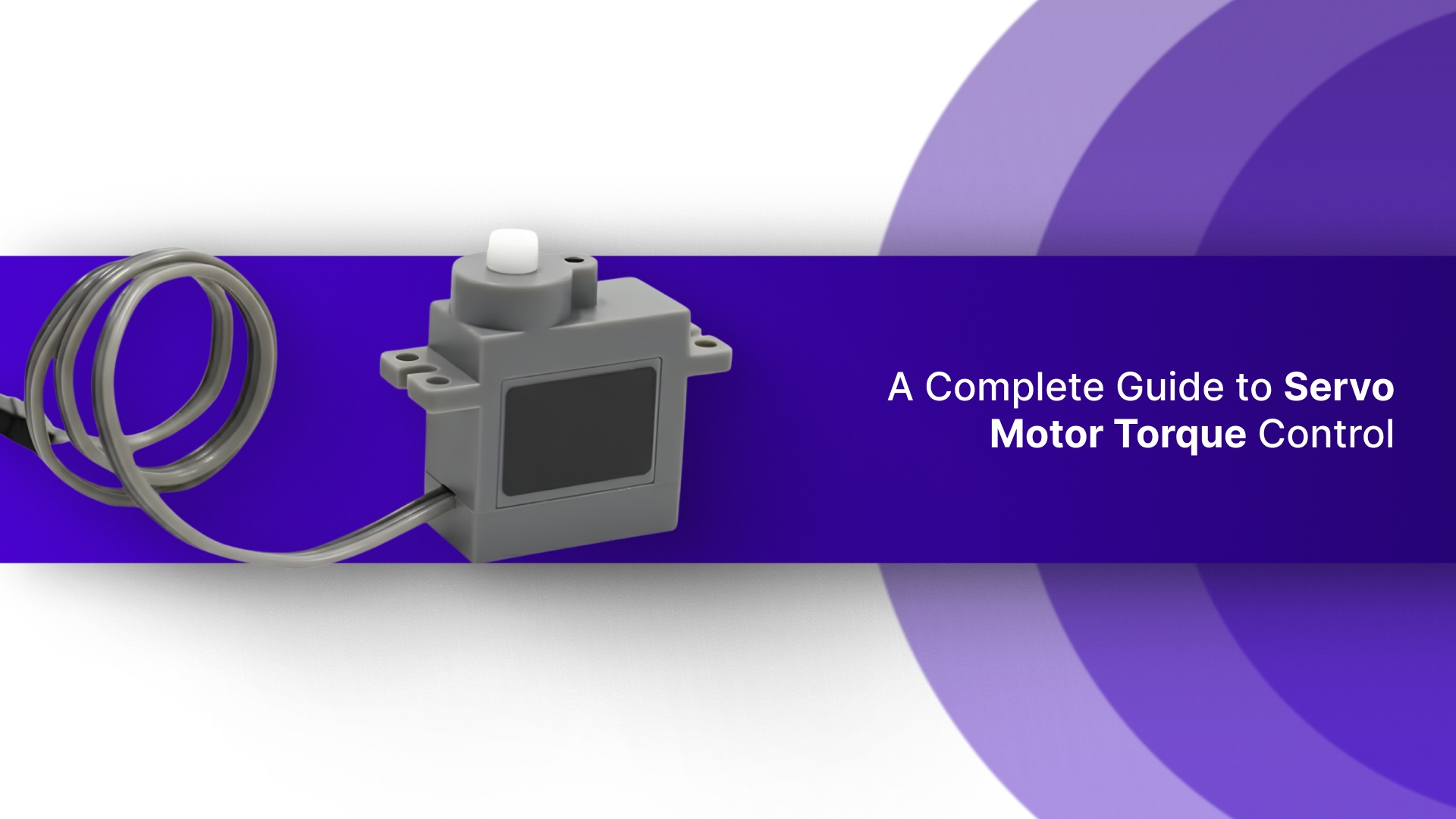
Servo Motors and Actuators
Servo motors provide precise control over rotational movement and are often paired with torque sensors in automated systems.
Why is it important:
Delivers high-precision movement and torque application, essential for maintaining accuracy in critical operations.
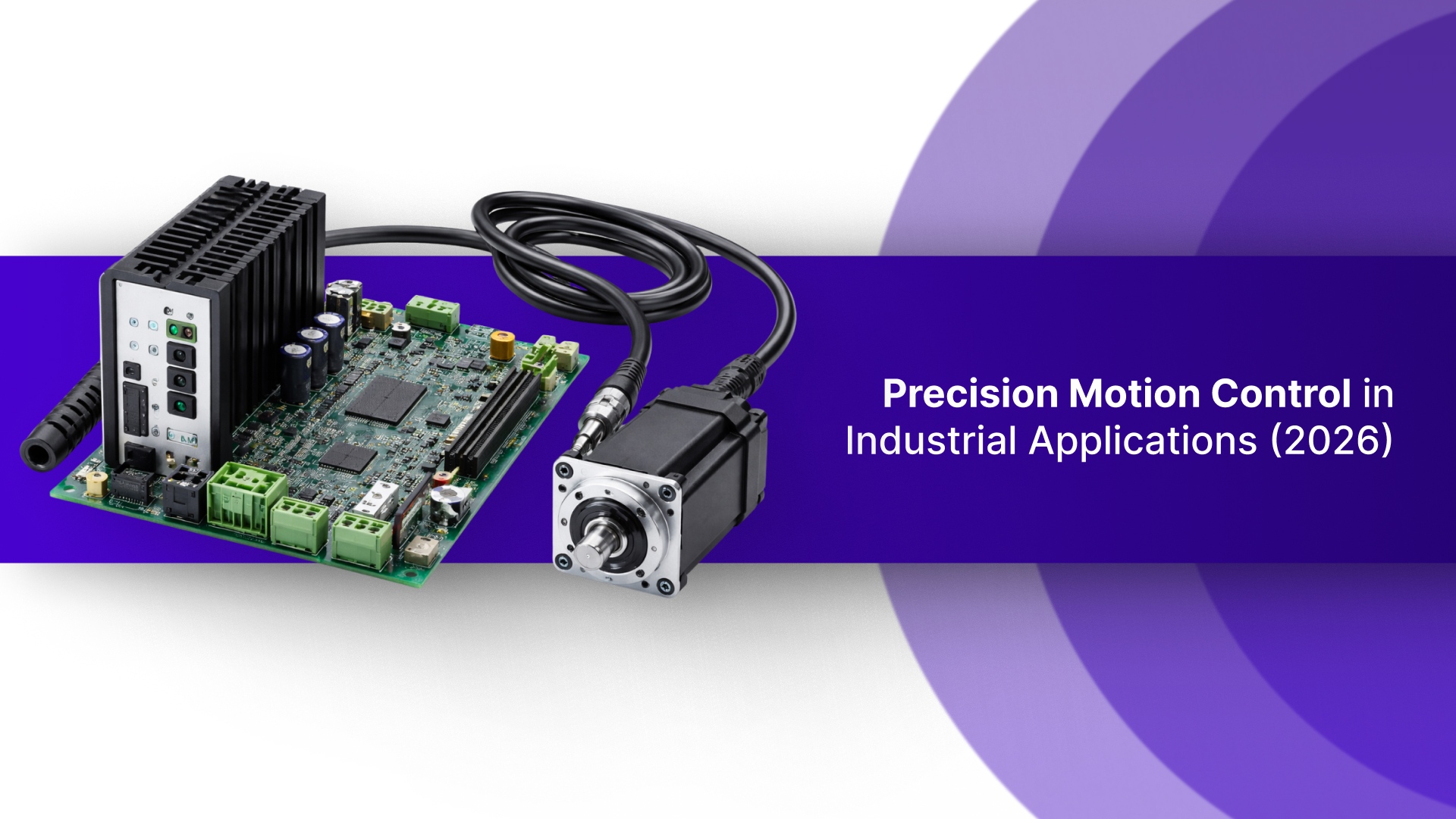
Digital Controllers
Digital controllers are used to program and monitor torque control systems, allowing operators to set precise torque values and track performance.
Why is it important:
Improves user control and customization, ensuring that torque settings can be personalized to specific manufacturing needs.
Automation and IoT Integration
Torque control systems integrated with automation and the Internet of Things (IoT) allow for advanced data collection, analysis, and remote monitoring.
Why is it important:
Supports predictive maintenance, real-time tracking, and remote diagnostics, improving overall system performance and reducing downtime.
Are you looking for reliable and precise torque control solutions to optimize your industrial processes?
Pico Systems offers a range of advanced products like Stepper Controllers, PWM Servo Systems, and Analog Servo Interface (PPMC) to ensure seamless integration of precision torque control into your operations.
With these technologies in place, precision torque control can change manufacturing processes. Now, let's explore the common challenges in precision torque control systems.
Common Challenges in Precision Torque Control and How to Overcome Them
Implementing precision torque control systems can come with a range of challenges, especially when integrating them into existing systems or ensuring consistent performance across production lines.
Here are the key challenges and how to overcome them:
Calibration Issues: Ensuring that torque control systems are accurately calibrated is critical for consistent performance. Incorrect calibration can lead to torque discrepancies.
How to overcome:
Regularly calibrate torque sensors and control systems.
Implement automated calibration processes to reduce human error and improve accuracy.
Integration with Legacy Systems: Older equipment may not be compatible with modern precision torque control systems, making integration complex.
How to overcome:
Use retrofit kits or adapters to integrate newer torque control systems with legacy machinery.
Consider phased upgrades to replace outdated components over time.
Environmental Factors: Temperature fluctuations, humidity, and dust can affect the performance of torque control systems, especially in harsh environments.
How to overcome:
Use protective casings for sensors and control units.
Invest in systems rated for harsh industrial environments to ensure durability and accuracy.
Operator Training and Skill Gaps: Insufficiently trained personnel may struggle to manage or troubleshoot torque control systems, leading to inefficiencies.
How to overcome:
Offer comprehensive training programs for operators and technicians.
Implement a knowledge-sharing system for continuous learning and support.
Data Overload and Analysis: Precision torque systems generate large amounts of data, making it difficult to analyze and extract actionable insights in real time.
How to overcome:
Utilize IoT-enabled systems that automatically analyze and report key metrics.
Use advanced software for predictive analytics to identify potential issues before they arise.
With these challenges addressed, manufacturers can open the full potential of precision torque control systems.
Let's now look at the best practices for implementing these systems in your facility to maximize their effectiveness.
Best Practices for Implementing Precision Torque Control in Your Facility
Implementing precision torque control systems effectively requires careful planning, proper system selection, and ongoing maintenance. Adopting best practices ensures that the systems perform consistently, providing the necessary torque accuracy and improving overall manufacturing efficiency.
Here’s a table of best practices for implementing precision torque control:
Best Practice | How to Implement | How It Helps |
Proper System Sizing | Assess torque requirements and match system specifications to your needs. | Ensures efficiency and avoids unnecessary costs. |
Ongoing Calibration and Monitoring | Set up automated calibration and monitoring for real-time performance tracking. | Maintains accuracy over time, reducing errors |
Seamless System Integration | Integrate new systems with existing equipment to ensure compatibility. | Reduces downtime and ensures smooth transition. |
Standardized Operating Procedure | Create clear guidelines for system operation, including checks and adjustments. | Improves consistency and minimizes human error. |
Proactive Diagnostics and Reporting | Use diagnostic tools for early detection of issues, with automated alerts. | Reduces breakdowns and allows for timely interventions. |
Environmental Adaptability | Use rugged systems designed for extreme conditions (e.g., dust, temperature). | Increases durability and ensures reliable performance in harsh environments. |
By implementing these best practices, you will optimize the precision and efficiency of your torque control systems, ensuring smoother, more reliable operations.
Is Your Facility Ready to Take Advantage of Precision Torque Control?
Precision torque control is essential for maintaining product quality, safety, and efficiency in manufacturing. By implementing the right systems and technologies, your operations can benefit from improved accuracy and reduced downtime.
Pico Systems provides advanced solutions like Stepper Controllers, PWM Servo Systems, and Analog Servo Interface (PPMC), enabling your facility to integrate precision torque control seamlessly.
Contact us today to discover how we can help optimize your production processes with advanced torque control solutions.
FAQs
What industries benefit the most from precision torque control?
Precision torque control is especially valuable in industries like automotive, aerospace, robotics, and electronics, where accuracy and reliability are critical for safety and performance.
Can precision torque control be used for small-scale manufacturing?
Yes, precision torque control systems are scalable and can be implemented in both large industrial settings and smaller manufacturing operations, improving efficiency and consistency.
How does precision torque control improve assembly line speed?
By automating torque application, precision torque control systems reduce the time spent on manual adjustments and rework, increasing throughput without sacrificing quality.
What is the role of torque sensors in precision torque control?
Torque sensors measure the applied force in real-time, providing feedback that allows for immediate adjustments to ensure the correct torque is applied to each component.
Is it difficult to integrate precision torque control into existing systems?
Integration can be straightforward with the right retrofit kits or adapters, allowing modern torque control systems to work seamlessly with older machines and production lines.