Most motion control projects start with position requirements. But some applications require precise force control more than exact positioning.
Torque control changes the approach. Instead of a commanding position, you command a rotational force. The servo adjusts to varying loads while maintaining your target force. This matters for tensioning, force-limited assembly, and working against variable resistance.
This article covers control theory, practical setup, and troubleshooting for torque-controlled systems.
Key Takeaways
Torque mode commands force directly through current regulation, making it fundamentally different from position or velocity control, where force is a byproduct.
The current loop is your innermost control layer - position and velocity loops build on top of it, but torque mode gives you direct access.
Motor runaway is a real risk without external speed limiting since torque commands provide continuous acceleration with no inherent velocity ceiling.
Thermal management becomes critical in stall conditions because you're drawing sustained current without the cooling benefit of motor rotation.
Your torque constant changes with temperature, so enable thermal compensation in your drive or expect inconsistent force output during extended operation.
What Is the Torque Control of a Servo Motor?
Torque control is a servo operating mode where you command rotational force instead of position or speed.
The drive regulates the motor current to produce your target torque. More current means more force. The relationship is linear and predictable through the motor's torque constant.
How It Differs From Other Modes
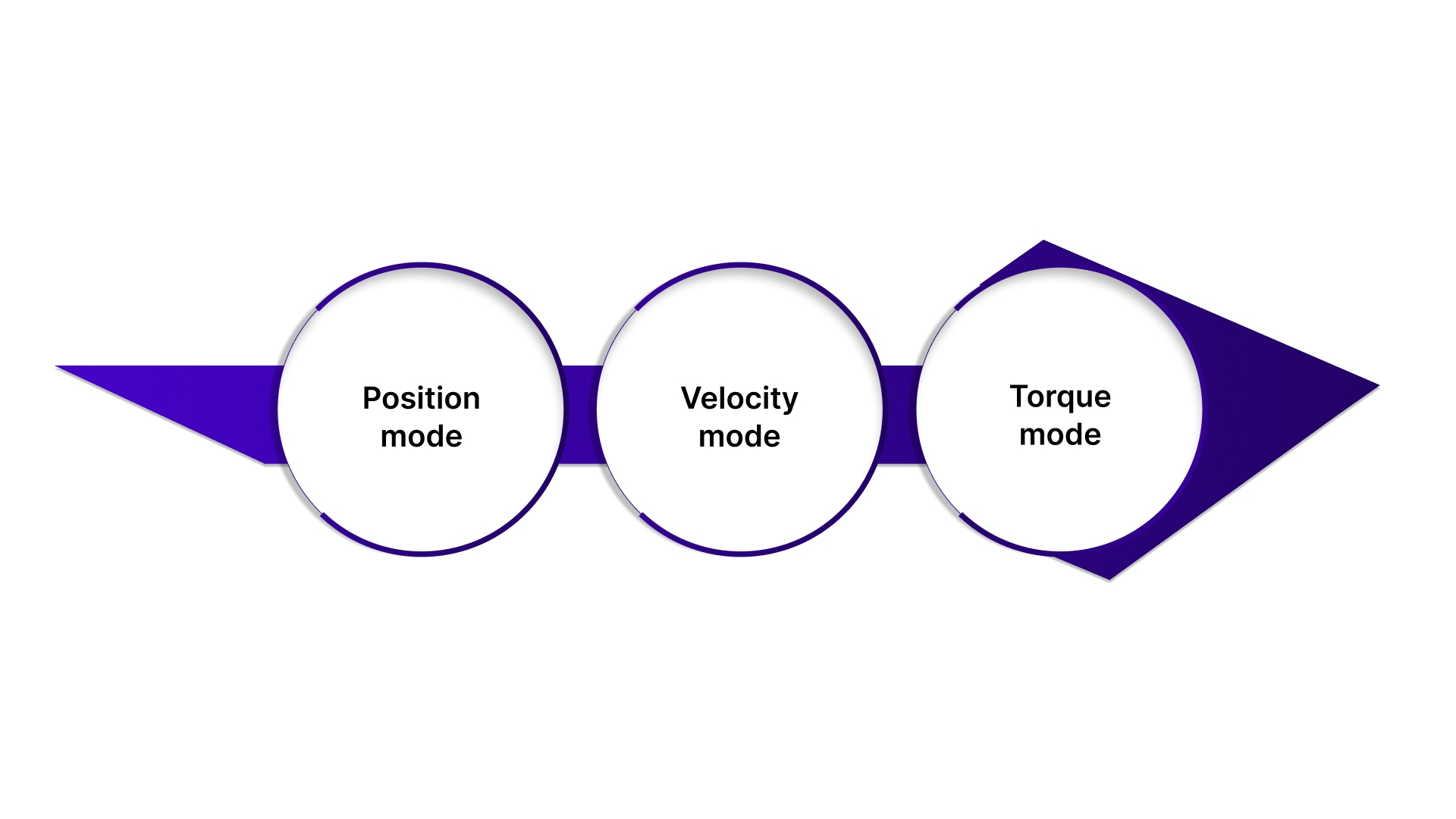
Here's what makes it different:
Position mode: The servo moves to a location and stops
Velocity mode: It maintains a speed
Torque mode: It applies a specific force regardless of whether it's moving or stationary
Think of it like this. You set a torque value, and the motor pushes with that exact force. If the load increases, the motor slows down but keeps pushing at your commanded torque. If the load decreases, it speeds up while maintaining the same force.
How the Control Loop Works
The control happens in the current loop. Your drive measures the actual current flowing through the motor windings. It compares this to the target current needed for your desired torque. Then it adjusts the voltage to close the gap.
This is the innermost control loop in your servo system. Position and velocity loops sit on top of it. When you run in pure torque mode, you're commanding this layer directly.
Feedback Systems in Torque Control
Accurate torque control requires real-time feedback to adjust motor current and ensure the motor produces the desired force.
Feedback systems, such as encoders and resolvers, help you monitor the motor's performance, providing the drive with the necessary data to regulate torque effectively.
Types of Feedback Systems
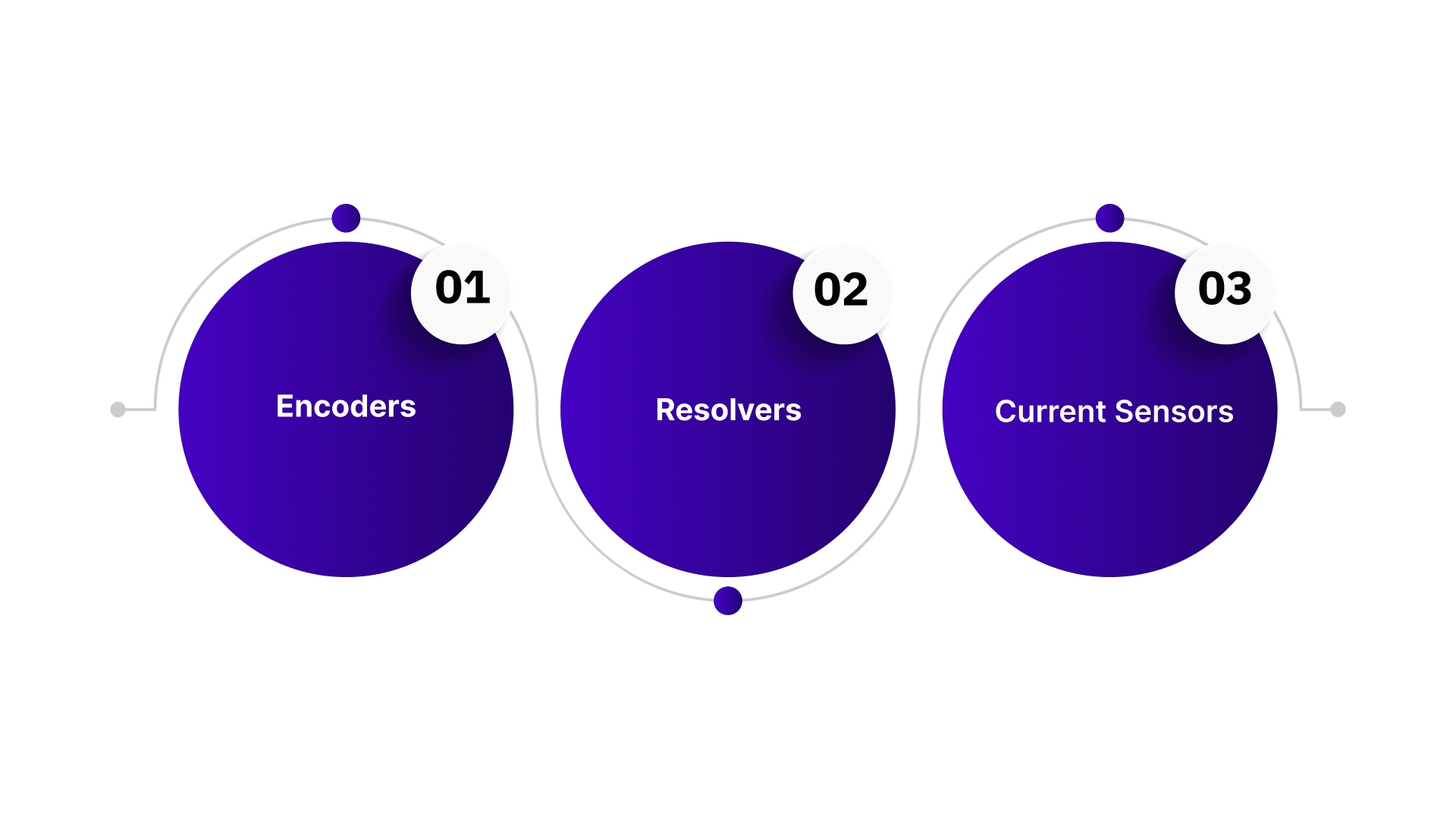
Encoders: These devices measure the position of the motor shaft and convert it into electrical signals that the drive can process. In torque control, encoders provide critical position feedback that helps to adjust the torque when load changes occur.
Resolvers: Similar to encoders, resolvers provide feedback on motor position but are typically more robust in harsh environments. They are often used in high-precision, high-performance applications where reliability is crucial.
Current Sensors: These directly monitor the motor current, providing feedback that is crucial for controlling torque in systems where precise force regulation is needed.
At Pico Systems, we offer a range of solutions, including encoder converters and resolver-to-quadrature converters, to help you integrate different feedback systems into your control setup.
Our 8-Channel resolver converter provides an all-in-one solution for complex systems, streamlining your feedback management for better torque control.
Explore our products at Pico Systems to find the right solutions for integrating accurate feedback into your motion control systems.
How Feedback Enhances Torque Control
Precision: Feedback allows for real-time adjustments to the motor’s force output, ensuring accurate torque application.
Adaptability: As the load changes, feedback systems help the motor adapt by adjusting speed and power to maintain a consistent force.
Efficiency: By constantly monitoring and adjusting, feedback systems reduce energy waste and prevent the motor from applying too much or too little force.
The Torque Constant
The torque constant ties everything together. It's the ratio between current and torque, measured in Nm per Amp.
Example: If your motor has a torque constant of 0.5 Nm/A and you command 4 amps, you get 2 Nm of torque.
Servo Motor Torque Control System Requirements
Running torque mode needs specific hardware and feedback capabilities. Here's what your setup requires:
Drive compatibility: Your servo drive must support torque mode operation. Check the manufacturer's specifications before committing to this control strategy.
Current feedback: The drive needs real-time measurement of motor phase currents. This data feeds directly into the torque calculation and regulation loop.
Control integration: Decide between standalone torque control or hybrid approaches. Some machines use pure torque mode while others layer it with position loops.
Key Advantages of Torque Control
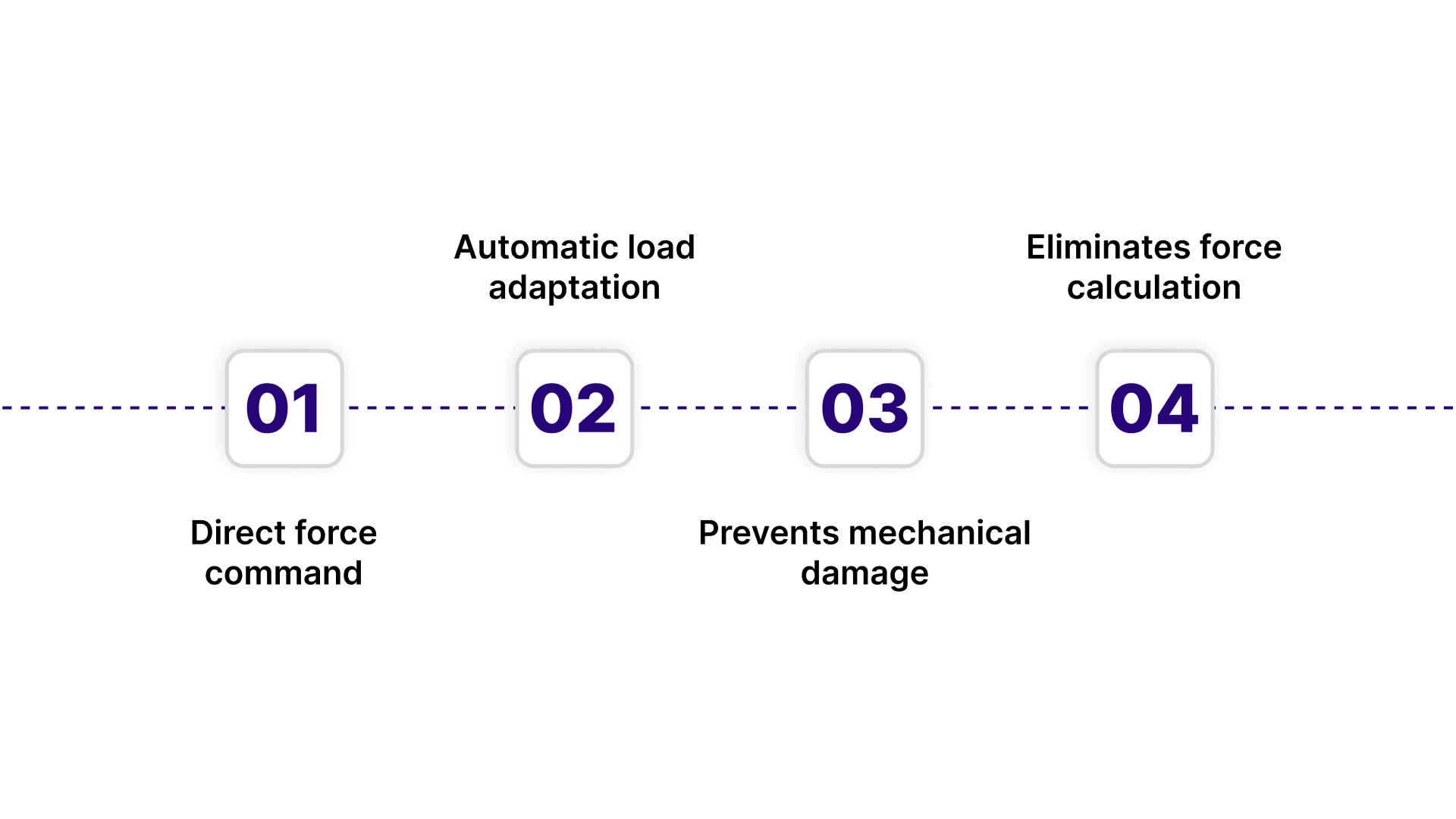
Torque control gives you direct authority over rotational force. Here's what that means for your application:
Direct force command: You set the exact rotational force you need. The motor maintains that torque output consistently, responding to load changes without position or velocity calculations.
Automatic load adaptation: The motor adjusts speed based on resistance while holding force constant. It slows under heavy loads and speeds up when loads lighten, all without changing torque.
Prevents mechanical damage: Force limiting protects components from excessive stress. You can grip delicate parts, assemble press-fit components, or tension materials without crushing, stripping, or breaking anything.
Eliminates force calculation: You work in torque units from the start. No need to infer force from spring constants, position errors, or current spikes during tuning or operation.
Practical Applications of Servo Motor Torque Control
Servo motor torque control is widely used in industrial applications where precise force management is crucial.
This control mode ensures that motors maintain a consistent force regardless of changes in load or speed, making it ideal for tasks that require high precision, stability, and the ability to adapt to varying conditions.
Below are some key industries and applications where torque control is essential:
Application | Industry | Why Torque Control is Used |
|---|---|---|
Robotic Arms | Robotics | Allows for precise handling of delicate parts and assembly tasks, ensuring the right force is applied without damaging components. |
CNC Machines | Manufacturing, Engineering | Ensures consistent force during cutting, pressing, and material handling, improving accuracy and preventing damage to parts. |
Material Tensioning | Textile, Manufacturing | Maintains a constant tension in fabrics or wires, preventing breakage and ensuring uniform material feed. |
Force-Limited Assembly | Automotive, Electronics | Applies controlled force during assembly to avoid component damage, particularly in press-fit operations or delicate fitting. |
Packaging Systems | Food, Pharmaceuticals | Controls the sealing and labeling force to ensure consistent packaging without damaging sensitive items. |
Common Challenges and Solutions
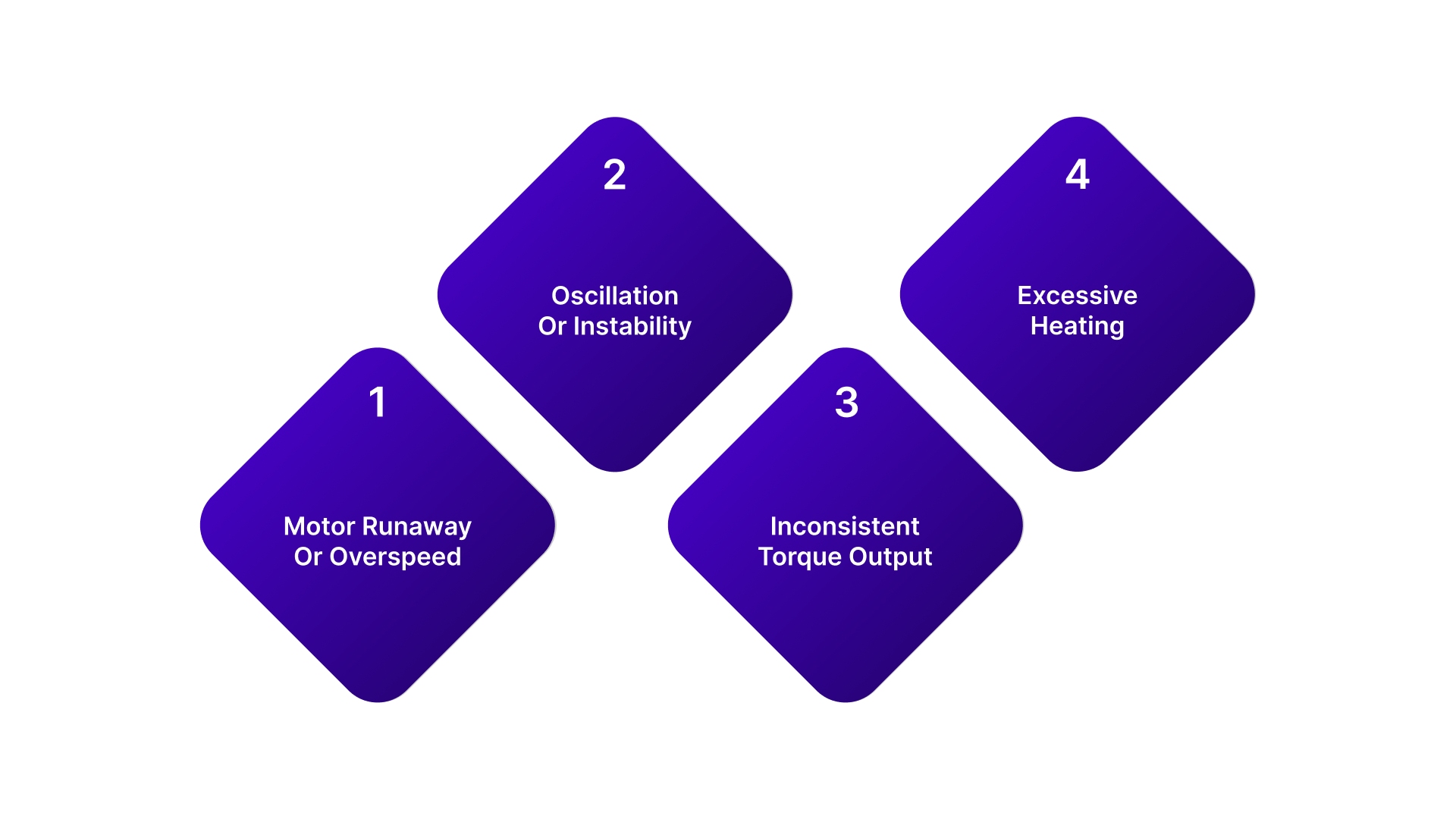
Torque control is highly effective for many applications, but like any system, it has its limitations and challenges.
Below are some common issues, their causes, and practical troubleshooting tips to help you get the most out of your torque-controlled systems.
Motor Runaway or Overspeed
The problem: The motor accelerates uncontrollably when you command torque. It keeps spinning faster until you hit a limit or trigger a fault.
Why it happens: Torque mode has no inherent speed limit. If there's insufficient load or friction, the commanded force keeps accelerating the motor. You're essentially commanding continuous acceleration with nothing to stop it.
How to fix it:
Implement external speed limiting in your control logic with a maximum velocity threshold that overrides torque commands
Set the speed clamp parameter in your drive specifically designed for torque mode operation
Add a velocity feedback loop that progressively reduces torque as you approach your speed limit
Oscillation or Instability
The problem: The motor vibrates, hunts, or oscillates around your target force. The torque output bounces instead of settling smoothly.
Why it happens: Your current loop gains are too aggressive for the mechanical system. High proportional or integral gains cause the control loop to overshoot and correct repeatedly. Mechanical compliance in your drivetrain amplifies this effect.
How to fix it:
Reduce your current loop proportional gain by 20-30 percent as a starting point
Lower the integral gain if oscillation persists after adjusting the proportional gain
Add a small amount of filtering to your torque command to smooth out step changes
Check for mechanical issues like loose couplings or excessive backlash that contribute to instability
Inconsistent Torque Output
The problem: The actual force delivered varies even though your command stays constant. You see torque fluctuations during operation or differences between runs.
Why it happens: Several culprits create this. Temperature changes affect motor resistance and torque constant. Cogging torque in the motor creates ripple at certain positions.
Poor current sensing or noise in feedback signals corrupts the control loop. Voltage supply fluctuations limit the drive's ability to regulate current accurately.
How to fix it:
Verify your torque constant matches the actual motor temperature and enable thermal compensation if available
Use electronic gearing or commutation tuning to minimize cogging effects at problematic positions
Check all feedback cable shielding and grounding to eliminate electrical noise interference
Ensure your power supply can deliver peak current without voltage sag or drooping
Add current loop filtering if electrical noise is corrupting your feedback signals
Excessive Heating
The problem: The motor or drive overheats during torque mode operation. Thermal faults trigger even though you're not near the rated torque.
Why it happens: Torque mode operation often means sustained current draw without movement.
When the motor stalls or moves slowly under load, you're generating heat without the cooling benefit of rotation. Continuous high current creates copper losses that build up quickly.
How to fix it:
Size your motor for continuous torque rather than peak torque in stall conditions
Add forced cooling with external fans if you need sustained high torque at low speeds
Reduce your torque command if you're hitting thermal limits regularly during normal operation
Consider duty cycling your application so the motor gets rest periods between high-torque operations
Monitor motor temperature and scale torque commands dynamically based on available thermal headroom
Conclusion
Torque control opens up applications where force precision matters more than position accuracy. Getting it right means understanding the control loop, sizing your components properly, and knowing how to troubleshoot when things go sideways.
The learning curve exists, but the payoff shows in better process control and fewer damaged parts.
At Pico Systems, we provide high-quality components like encoder converters and resolver converters that effortlessly integrate with your control systems. These products help optimize torque control by ensuring accurate feedback, enabling smooth and reliable operation.
Explore our complete range of products to find the right solutions for your motion control needs today!
Looking for something specific? Connect with us directly and tell us your requirements.
FAQs
1. What is the torque control of a servo motor?
Torque control is a mode where the motor applies a specific force rather than controlling position or speed, ensuring precise force management despite load changes.
2. How does a servo motor maintain consistent torque?
It adjusts its speed based on the load, increasing or decreasing speed to maintain the set torque, even under varying resistance or load conditions.
3. What are the key feedback systems in torque control?
Encoders, resolvers, and current sensors provide real-time feedback that helps regulate torque and ensure accurate motor performance under varying loads.
4. Why does torque control need real-time feedback?
Real-time feedback allows the drive system to adjust motor current to maintain the desired force, compensating for changes in load and ensuring precision.
5. What are the common challenges in torque control?
Issues like motor runaway, oscillation, inconsistent torque, and overheating can occur, often due to improper tuning, load changes, or system design flaws.