How to Estimate the Cost of a Production Servo Motor: A Complete Guide - Google Drive
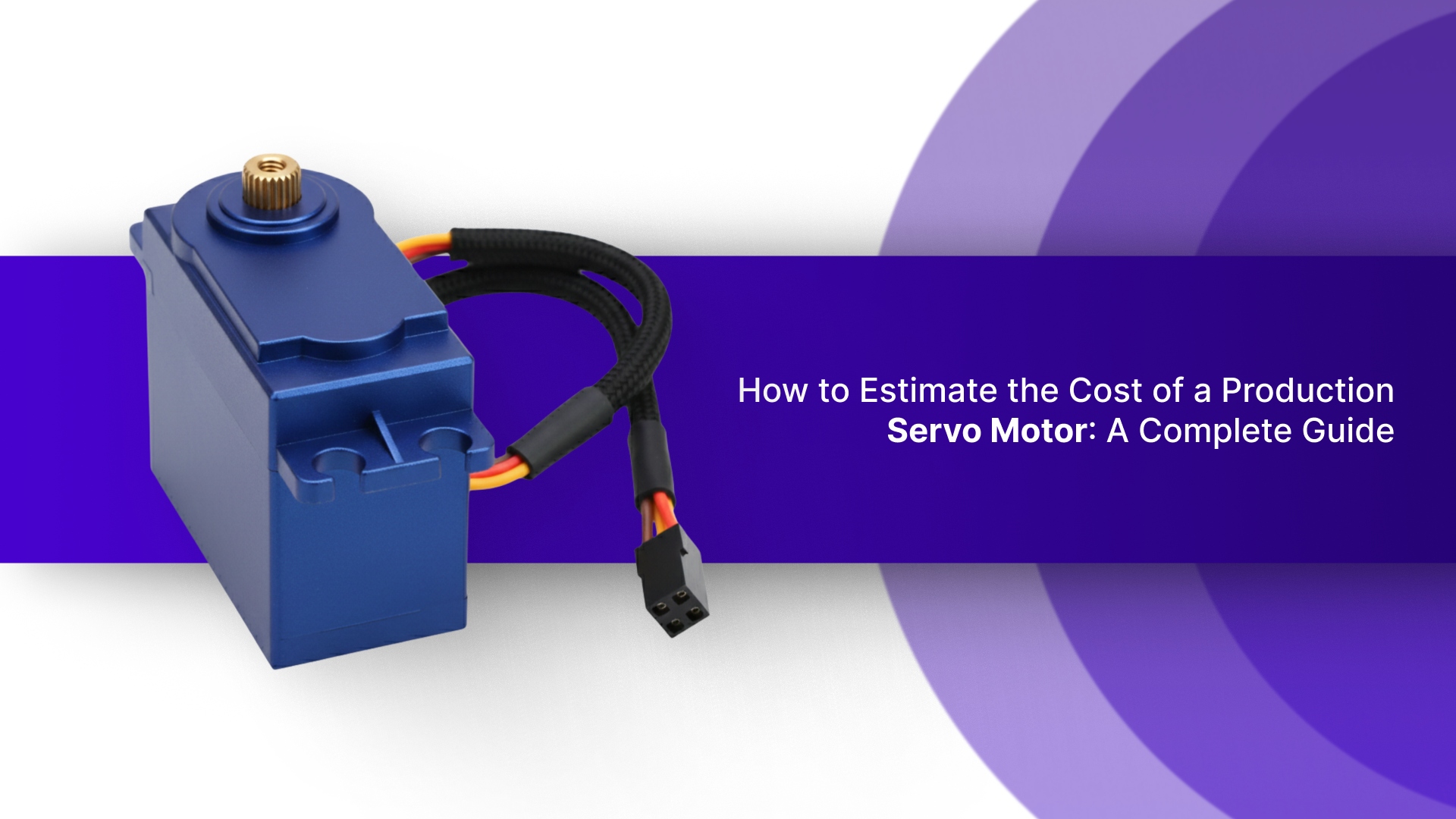
Servo motors are expensive, no doubt. Moreover, comparing quotes across suppliers feels like comparing apples to oranges when specifications vary.
Most cost estimation guides focus on consumer products or industrial averages. What you really need are specifics for motion control applications where precision and durability are non-negotiable.
The real question isn't just "how much does it cost" but "what am I actually paying for." Smart cost estimation accounts for the complete system, not just the motor nameplate price.
This guide covers direct costs, peripheral components, and operational expenses so you can forecast accurately from day one.
Key Takeaways
Motor costs range from $50 for basic applications to $15,000+ for fully customized systems with advanced drives and specialized features.
The drive system often costs as much as the motor itself. Advanced controllers with real-time algorithms dramatically increase the total system price.
Higher resolution encoders and feedback systems add substantial cost. Single-digit arc-second accuracy motors cost significantly more than arc-minute resolution alternatives.
Environmental ratings and certifications drive up pricing considerably. IP67-rated motors with industry certifications can double the base motor cost.
Custom mounting, specialized features, or non-standard specifications trigger engineering costs and dedicated production runs that eliminate volume pricing advantages.
How Expensive Are Production Servo Motors?
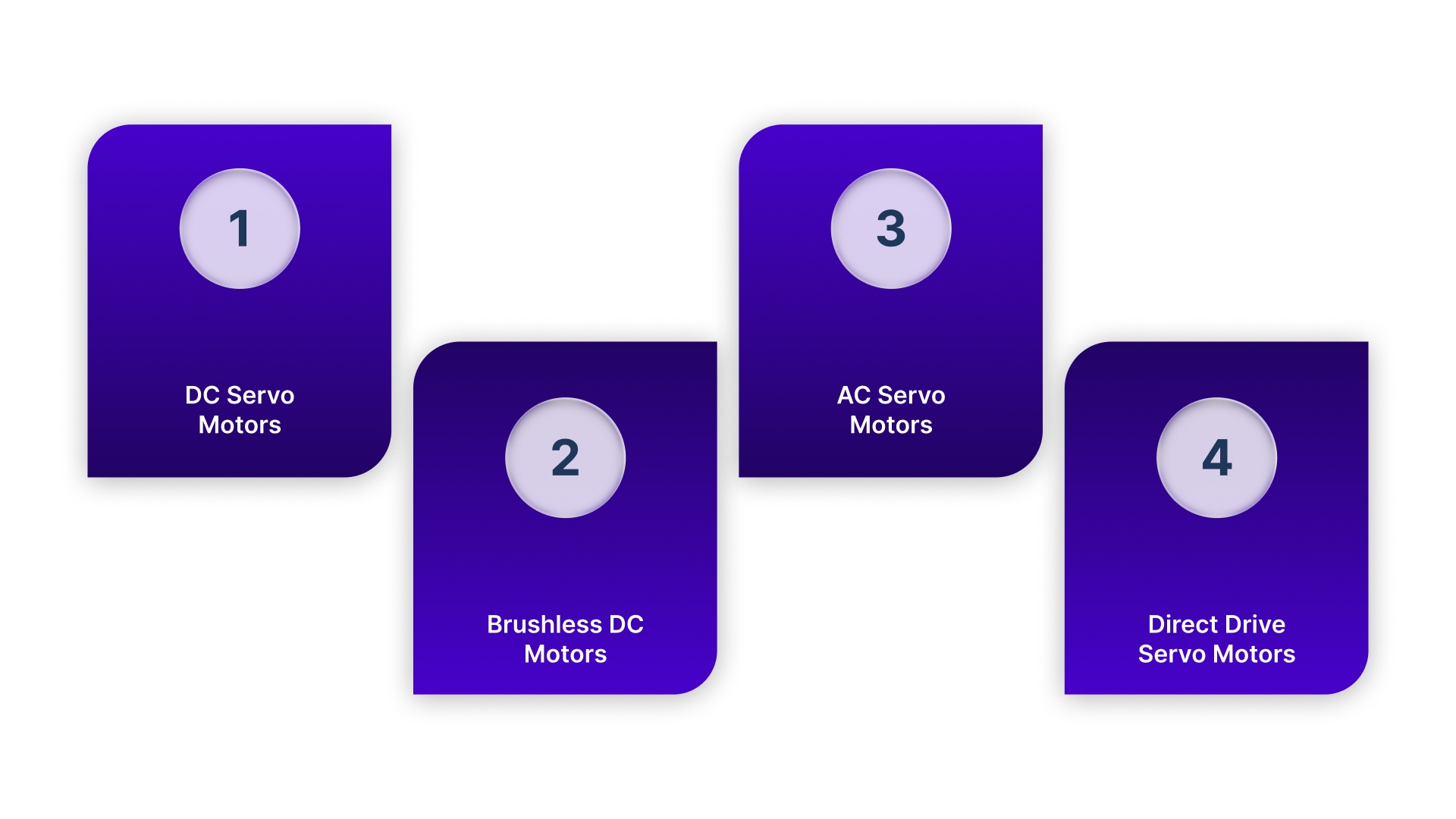
Production servo motors are primarily divided into four categories. Your choice between them shapes both your upfront investment and long-term operational costs.
DC Servo Motors
These are budget-friendly workhorses that use brushed commutation. They cost less initially but wear out faster because of mechanical contact between brushes and commutator, which means you'll replace them more often.
Brushless DC Motors (BLDC)
Electronic commutation eliminates physical wear points, so they last longer and run more efficiently. Expect to pay more upfront, but you're buying reliability and reduced maintenance headaches over the motor's lifetime.
AC Servo Motors
These can handle high-power applications where DC motors would struggle. They're the most expensive option because they deliver superior performance at higher speeds and torque ratings, plus they integrate effortlessly with three-phase industrial power systems.
Direct Drive Servo Motors
Direct Drive Servo Motors eliminate the need for gears or belts by directly coupling the motor to the load. This results in greater accuracy and lower maintenance costs. However, they typically come at a higher price point due to their advanced design and performance.
Cost Estimation of Production Servo Motors
The numbers you'll see in the table below are calculated guesstimates. Take these with a nice big grain of salt. The actual cost of your servo motor will depend on the factors mentioned in the upcoming section.
Having said that, here are some ballpark figures to help you get the ball rolling.
Application Category | Common Features | Estimated Cost Range | Common Applications |
|---|---|---|---|
Low-End Applications | Basic encoders, standard IP ratings, simple PWM drives, commercial-grade construction | $10-$50 | Small pick-and-place units, basic packaging machines, educational robotics, prototyping |
Mid-Range Industrial Use | Absolute encoders, EtherCAT/Profinet compatibility, IP65 protection, established brands | $100–$500 | CNC machines, material handling systems, assembly line automation, and food processing equipment |
High-Performance Systems | High-resolution feedback, advanced motion control, extreme environmental ratings, proven reliability | $800–$3,000 | Precision semiconductor manufacturing, medical imaging equipment, aerospace testing rigs, and high-speed printing |
Fully Customized Motors with Advanced Drive System | Application-specific design, integrated safety systems, custom mounting/interfaces, comprehensive testing | $3,000–$10,000+ | Defense applications, pharmaceutical production, specialized research equipment, and custom robotics platforms |
Building your own machine? At Pico Systems, you can find brushless servo motors, PWM servo amplifiers, encoder converters, connector panels, and more - all under one roof. We work with teams that need quality components without the guesswork.
Shop our catalog to find the right match for your specific application.
Factors That Affect the Cost of a Production Servo Motor
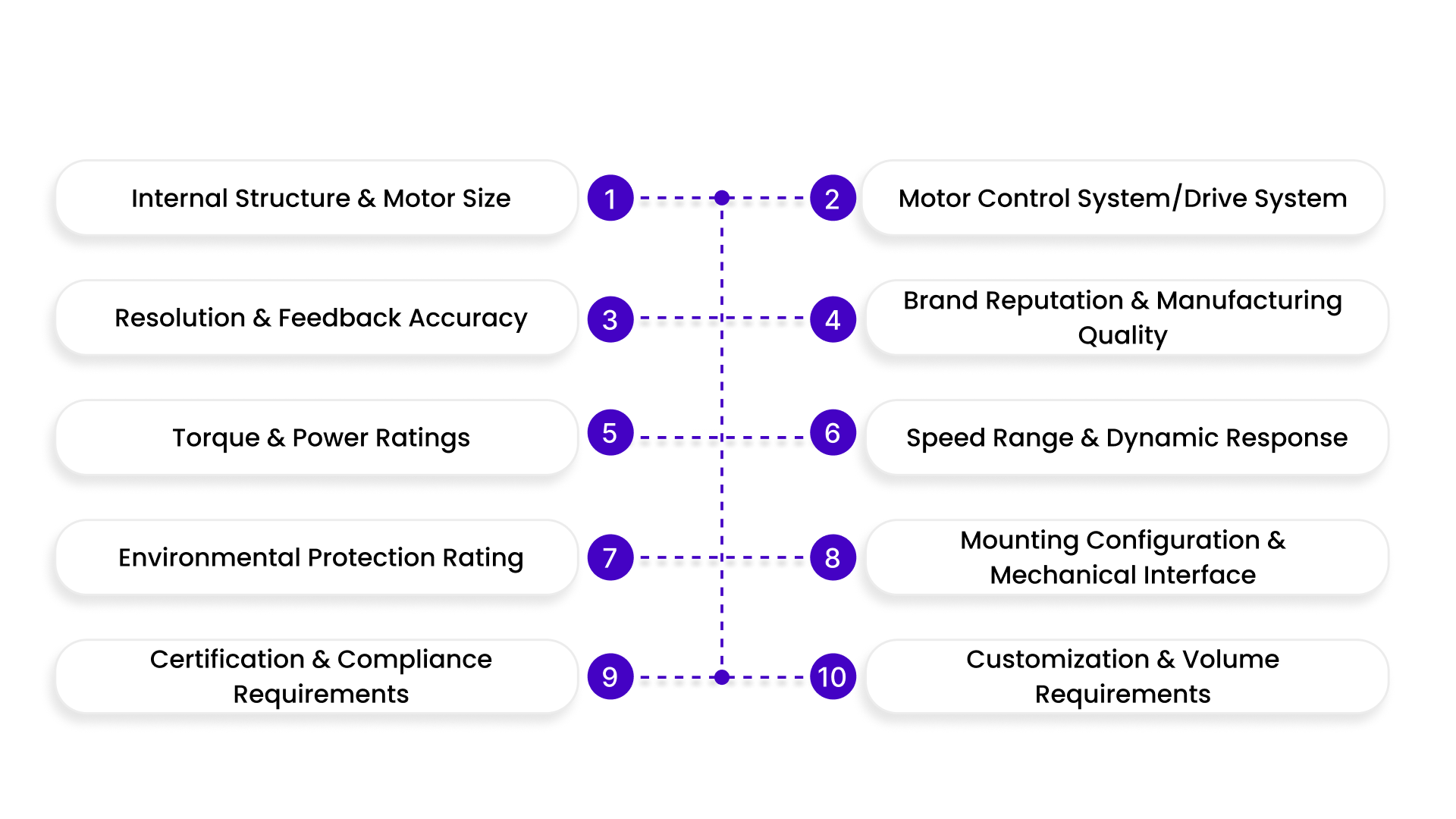
Servo motor pricing isn't arbitrary. The cost reflects the engineering complexity, materials, and performance capabilities packed into each unit.
These cost drivers help you justify specifications to your finance team and identify where you can compromise without sacrificing critical performance.
Internal Structure and Motor Size
Larger motors need more copper, steel, and rare earth magnets, which directly increases material costs. But size also determines thermal management capabilities, so you're paying for the motor's ability to dissipate heat during continuous operation without derating.
Physical dimensions and weight
Rotor and stator construction quality
Magnetic material grade and quantity
Thermal dissipation design
Motor Control System/Drive System
The drive translates commands from your controller into actual motor movement. Simple controllers use basic pulse-width modulation, which switches current on and off rapidly.
They work fine for applications where you just need the motor to reach a position and hold it.
Advanced controllers run sophisticated algorithms that continuously adjust current in real time, giving you smooth motion profiles and precise torque control even at low speeds. That computational power and the electronics to support it drive up the price considerably.
Drive compatibility and communication protocols
Control algorithm sophistication
Built-in safety features and diagnostics
Integration complexity with existing systems
Resolution and Feedback Accuracy
Your encoder tells the motor where it is versus where it should be. Higher resolution encoders use more sensitive electronics and tighter manufacturing tolerances. So a motor with single-digit arc-second accuracy costs significantly more than one with arc-minute resolution.
Encoder type (incremental vs. absolute)
Pulses per revolution count
Position repeatability specifications
Environmental compensation features
Brand Reputation and Manufacturing Quality
Established manufacturers charge more because they've invested decades in R&D, quality control, and proven reliability. You're essentially buying insurance against downtime, backed by comprehensive technical support and readily available replacement parts.
Manufacturer's track record and warranty terms
Quality certifications and compliance standards
Technical support availability and responsiveness
Global service network and parts availability
Torque and Power Ratings
Higher torque requires stronger magnets, more robust bearings, and beefier windings. Power ratings determine how much energy the motor converts, which means larger electrical components and better insulation to handle increased current flow without overheating.
Continuous torque capability
Peak torque specifications
Rated power output
Duty cycle requirements
Speed Range and Dynamic Response
Motors designed for high-speed operation need precision-balanced rotors and specialized bearing systems. Fast dynamic response requires low rotor inertia and advanced control electronics, both of which add manufacturing complexity and cost.
Maximum rated RPM
Acceleration and deceleration rates
Speed stability under varying loads
Time constant and settling time
Environmental Protection Rating
Sealing a motor against dust, moisture, or chemicals requires additional gaskets, coatings, and design modifications. An IP67-rated motor costs more than an IP54 because it needs comprehensive protection without compromising thermal performance.
Ingress protection (IP) rating
Operating temperature range
Vibration and shock resistance
Corrosion-resistant materials and coatings
Mounting Configuration and Mechanical Interface
Custom mounting flanges, shaft modifications, and special connectors all require additional machining and assembly time. Standard NEMA frame sizes cost less because manufacturers produce them in volume, while custom configurations need dedicated tooling and setup.
Flange size and mounting pattern
Shaft diameter, length, and keying options
Connector types and cable specifications
Brake or holding mechanism integration
Certification and Compliance Requirements
Getting motors certified for specific markets or applications involves extensive testing and documentation. UL listings, CE marking, or industry-specific certifications like ATEX for explosive environments all add to development and validation costs.
Regional safety certifications
Industry-specific compliance (medical, food processing)
Electromagnetic compatibility (EMC) standards
Energy efficiency ratings
Customization and Volume Requirements
Off-the-shelf motors leverage economies of scale, so they're cheaper. The moment you request custom winding, modified dimensions, or specialized features, you're paying for engineering time, prototype development, and potentially dedicated production runs.
Standard catalog vs. custom specifications
Order quantity and production batch size
Lead time requirements
Special testing or validation needs
Where to Buy Servo Motors: Key Sourcing Channels
Once you’ve selected the right servo motor for your project, the next step is deciding where to purchase it. The supplier you choose can impact your overall cost, lead times, and support experience. Here's an overview of the main channels for sourcing servo motors:
Channel | Description | Pros | Cons |
|---|---|---|---|
Direct from Manufacturers | Buying directly from the manufacturer is ideal for custom needs. | Direct access to engineering, custom solutions. | Higher MOQs, longer lead times, typically for OEMs. |
Authorized Distributors | Suppliers like RS Components and Digi-Key offer a wide selection. | Competitive pricing, reliable shipping, and expert support. | May have higher prices compared to online platforms. |
Online Marketplaces | Platforms such as Pico Systems offer budget-friendly options. | Lower cost, wide variety of suppliers. | Risk of counterfeit parts, poor documentation. |
Local Suppliers and Integrators | Local dealers offer hands-on support and integration services. | Faster support, local knowledge, personalized service. | Potentially higher costs, limited product range. |
Conclusion
Estimating servo motor costs gets easier once you know which specifications drive pricing. You can now build accurate budgets by matching your application requirements to the right motor category.
All we wanted to do was give you a realistic starting point and the cost factors to help you see exactly where your money would go. Armed with this framework, you can negotiate better deals and avoid overpaying for features you don't need.
At Pico Systems, we carry everything from individual servo motors and amplifiers to encoders and drive systems. Our inventory is designed for engineers and manufacturers who assemble custom automation equipment from the ground up.
Get in touch with us to discuss your component requirements and get accurate pricing for your project.
Frequently Asked Questions
What is the average cost of a production servo motor?
Production servo motors typically range from $50 to $15,000+, depending on the application. Low-end units cost $50-$200, mid-range industrial motors run $200-$800, high-performance systems cost $800-$3,000, and fully customized solutions exceed $3,000.
Why are brushless servo motors more expensive than DC servo motors?
Brushless motors use electronic commutation instead of physical brushes, eliminating wear points and extending lifespan. The advanced electronics, superior efficiency, and reduced maintenance requirements justify the higher upfront cost compared to brushed DC alternatives.
How does encoder resolution affect servo motor pricing?
Higher resolution encoders require more sensitive electronics and tighter manufacturing tolerances. Motors with single-digit arc-second accuracy cost significantly more than arc-minute resolution models because of the precision components and quality control needed.
What hidden costs should I consider when budgeting for servo motors?
Beyond the motor price, budget for compatible drives (often matching motor cost), custom mounting hardware, specialized cables and connectors, environmental protection upgrades, and certification requirements for specific industries or regions.
Are direct drive servo motors worth the extra cost?
Direct drive motors eliminate gearboxes and belts, reducing maintenance and improving accuracy. They cost more upfront but offer lower long-term operating costs and superior precision for applications where positioning accuracy is critical.