A quadrature encoder interface circuit plays a vital role in translating mechanical motion into reliable digital feedback. In industrial environments, issues rarely originate from the encoder alone. More often, failures arise from how the quadrature encoder interface circuit is set up and how well it matches the operating environment.
Poor setup decisions do not always cause immediate faults. Instead, they introduce intermittent errors that surface under vibration, electrical noise, or continuous operation. These issues disrupt motion accuracy, complicate troubleshooting, and increase operational risk across production systems.
In this guide, you will learn how environment suitability affects quadrature encoder interface circuit setup, the common failure risks teams overlook, and what engineers and decision-makers should evaluate to ensure long-term reliability.
Key Takeaways
A quadrature encoder interface circuit that works during commissioning may fail under real operating conditions if the setup ignores environmental stress.
Electrical interference, mechanical stress, and unstable supply conditions often cause intermittent errors rather than clear breakdowns.
Signal instability affects motion accuracy, uptime, troubleshooting time, and production predictability across the system.
Poor routing, grounding, or enclosure planning increases long-term maintenance effort and limits system scalability.
Long-term reliability depends on industrial-grade design, documentation quality, and consistent supplier support, not just component fit.
What a Quadrature Encoder Interface Circuit Does in Practice?
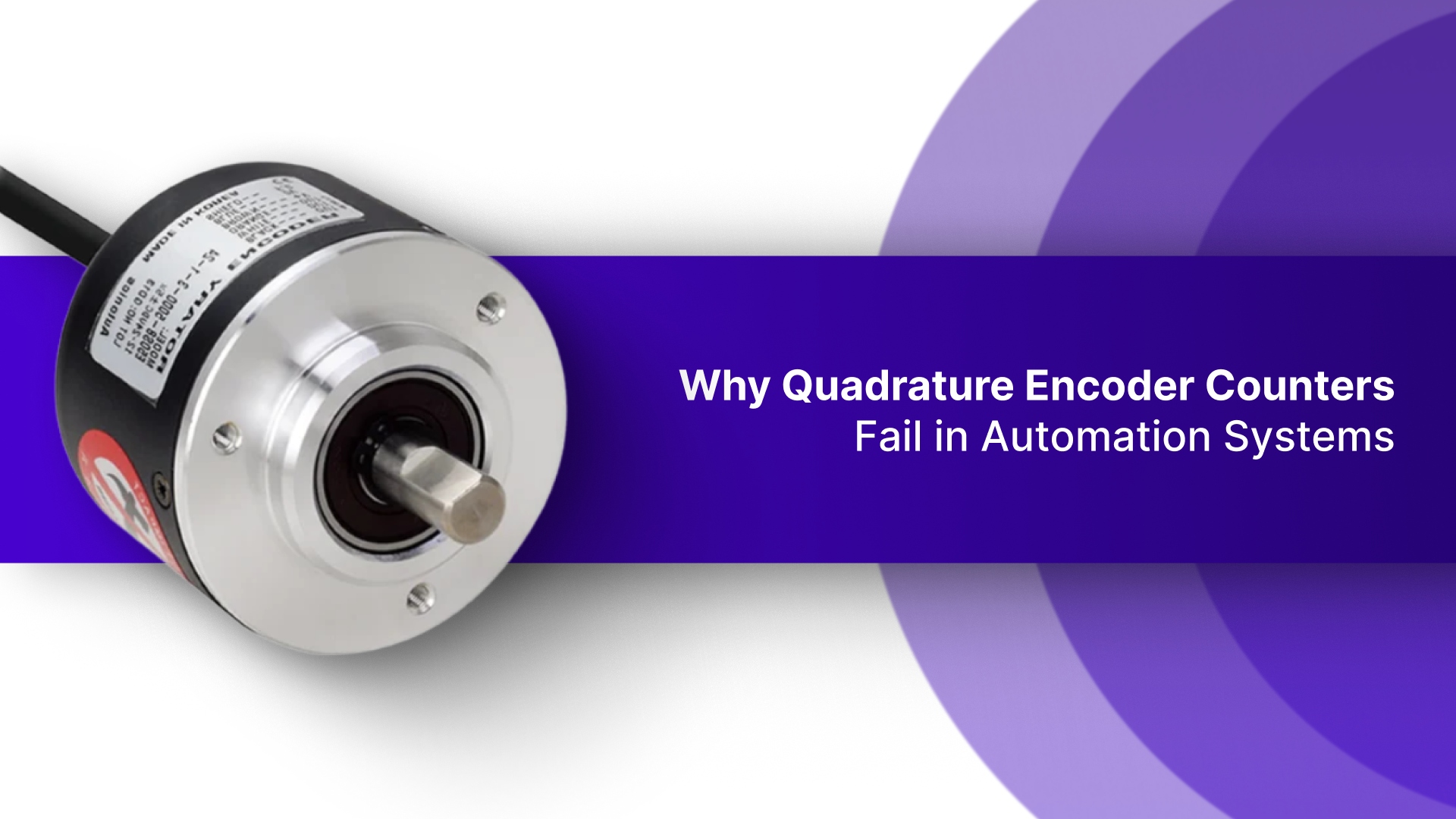
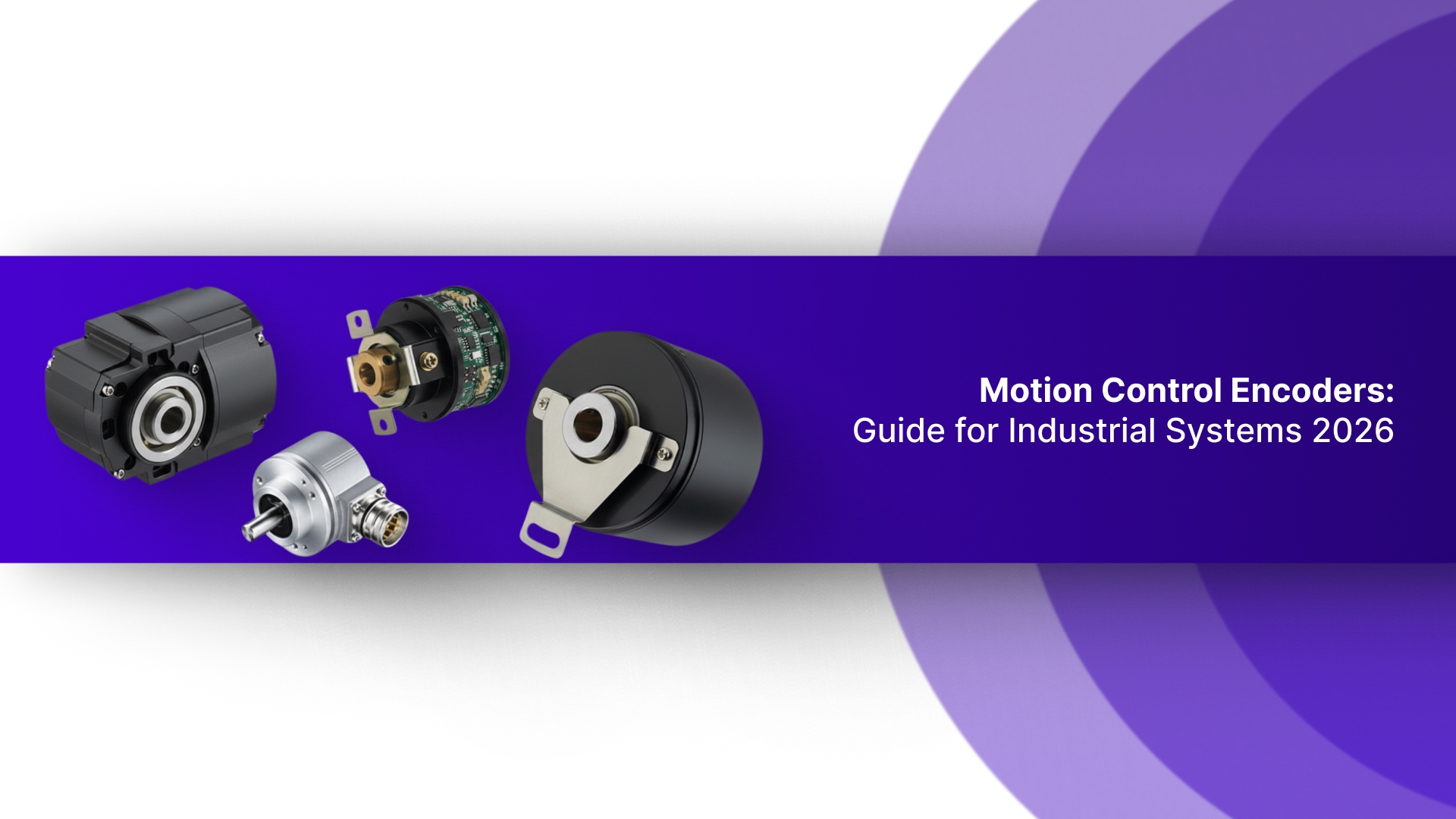
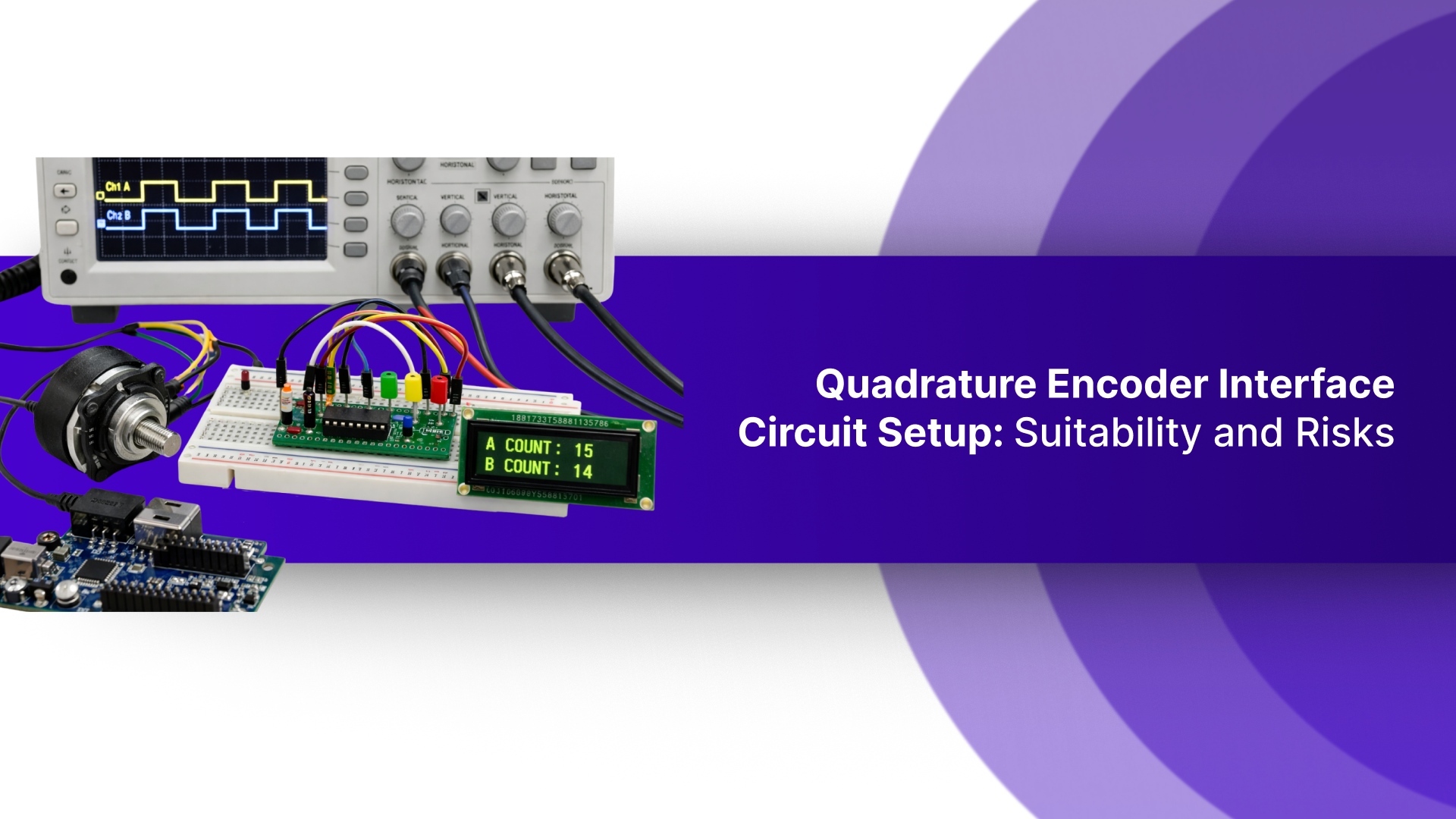
A quadrature encoder interface circuit processes signals from incremental encoders and converts them into usable position, speed, and direction data for control systems. It sits between mechanical motion and digital logic, making its reliability critical to system performance.
In practice, the circuit:
Counts pulses to calculate position or speed.
Maintains timing accuracy under varying loads.
Condition signals before they reach controllers or drives.
Interprets A and B channel phase shifts to determine direction.
Because this circuit directly influences motion control behavior, even small setup issues can propagate into larger system-level problems. Understanding where and how these circuits operate helps teams assess environmental suitability.
That brings us to the environments where quadrature encoder interface circuits are commonly deployed.
Typical Environments Where Quadrature Encoder Interface Circuits Operate?
Quadrature encoder interface circuits rarely operate in clean or controlled conditions. Most are installed inside industrial systems where environmental stress is unavoidable.
Common operating environments include:
Applications with frequent start-stop cycles
Enclosed control panels with limited airflow
Manufacturing floors with continuous machine operation
Facilities with high electrical noise from motors and drives
Motion-driven equipment such as conveyors, robotics, and CNC machines
Each of these environments introduces stress factors that influence setup decisions. To evaluate suitability properly, teams must examine the specific environmental conditions affecting the circuit.
Next, let’s discuss those conditions and how they impact reliability.
Environmental conditions that influence setup suitability
Not all harsh environments look the same.
The suitability of a quadrature encoder interface circuit depends on which environmental factors are present and how consistently they affect operation.
A few of those are as follows:
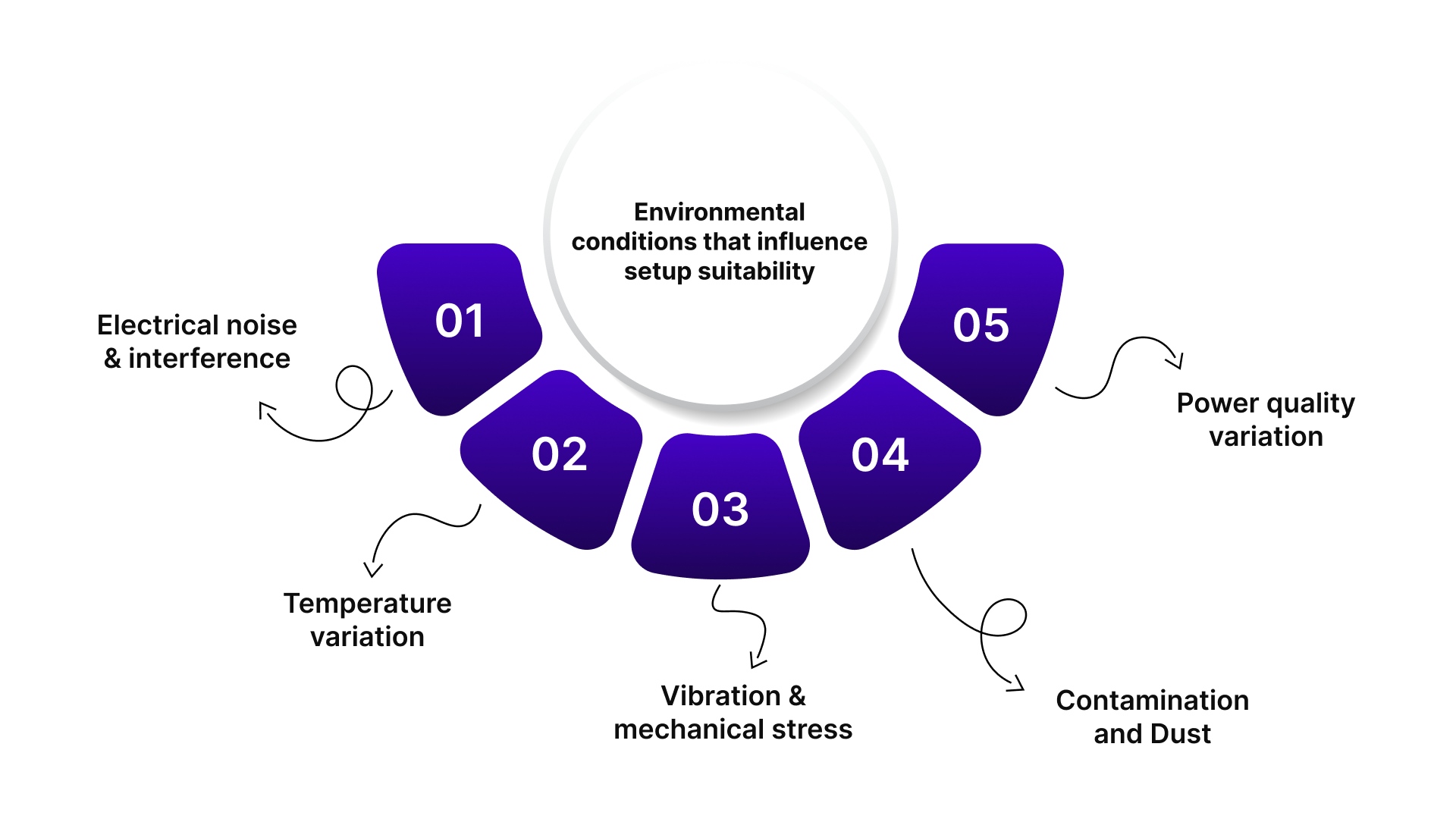
Electrical noise and interference: Industrial systems often contain multiple noise sources, including motors, VFDs, and power converters. Poor signal conditioning or grounding allows noise to corrupt encoder signals, leading to missed counts or false direction changes.
Temperature variation: Temperature changes place stress on electronic components. Over time, thermal cycling can affect timing stability and signal thresholds, especially in continuously operating systems.
Vibration and mechanical stress: Motion systems generate constant vibration. If the quadrature encoder interface circuit or its connections experience mechanical stress, intermittent signal loss can occur, making faults difficult to reproduce.
Contamination and Dust: Dust, oil mist, and airborne particles accumulate inside panels. These contaminants can affect connectors and signal paths if enclosure design and setup do not account for long-term exposure.
Power quality variation: Fluctuations in supply voltage, transient spikes, or unstable grounding can disrupt encoder signal processing. Inconsistent power conditions may not cause immediate failure but can degrade signal integrity and increase false counts over time.
Are you dealing with intermittent encoder faults, unexplained position errors, or signal instability in demanding environments?
To integrate reliably into harsh operating conditions, Pico Systems supports industrial motion applications with Fanuc Encoder Converters, Fanuc Serial Encoder Converters, Panasonic Encoder Converters, and more.
View our PWM servo systems catalog to learn about encoder conversion and motion support solutions built for industrial environments.
Understanding these conditions helps teams avoid setup choices that look acceptable on paper but fail under real operating stress. When teams ignore these factors, failure risks increase significantly.
Common Failure Risks When Suitability is Overlooked
When teams overlook environment fit during setup, quadrature encoder interface circuit failures rarely appear as clean or immediate breakdowns. Instead, problems develop gradually.
Common failure risks include:
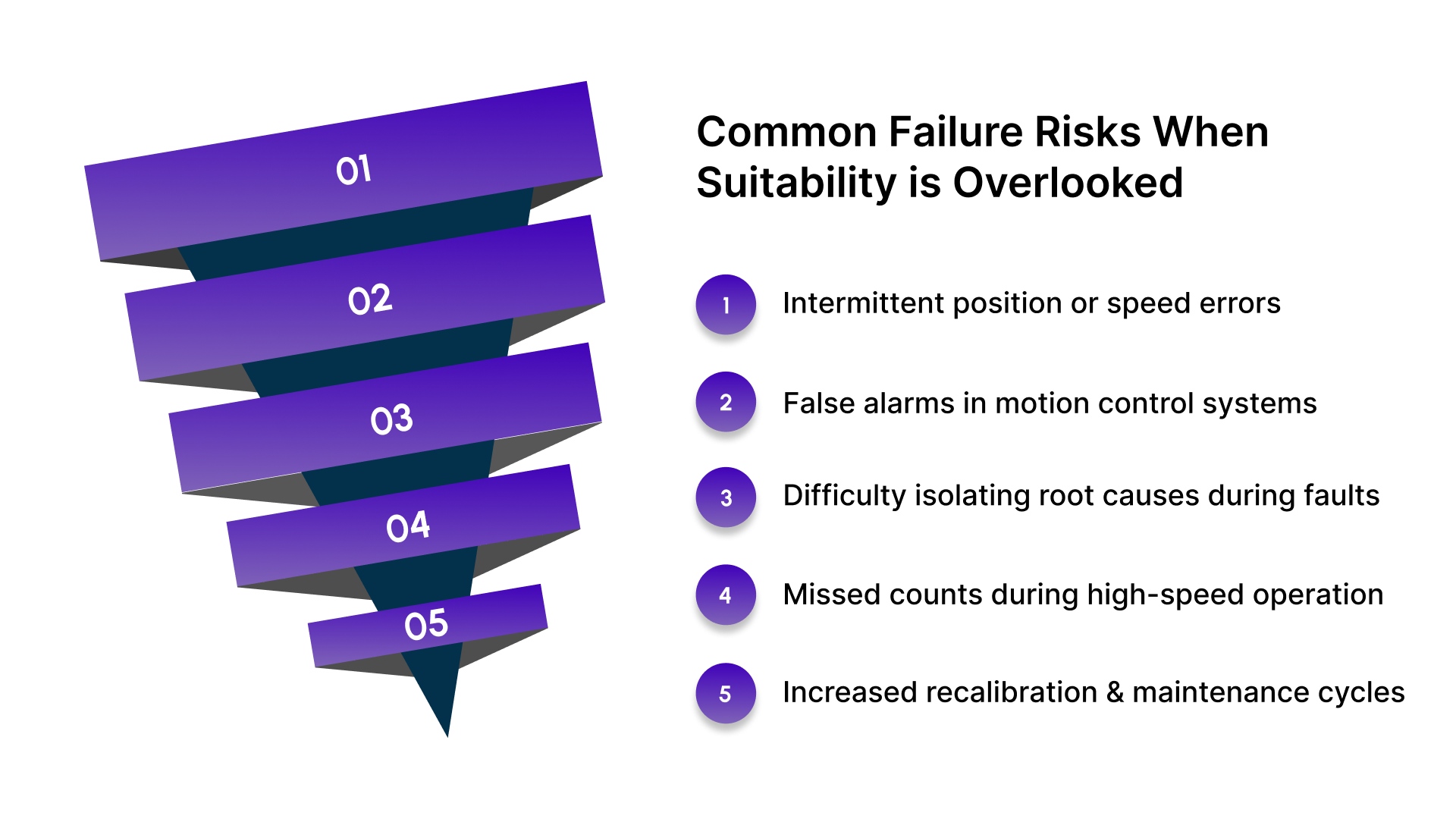
Intermittent position or speed errors
False alarms in motion control systems
Difficulty isolating root causes during faults
Missed counts during high-speed operation
Increased recalibration and maintenance cycles
These risks rarely show up during commissioning or bench testing. They surface during sustained operation, where environmental stress exposes weaknesses in setup decisions.
These failures do not stay confined to the encoder system. They directly affect operations at a higher level.
But how do these risks translate into operational impact?
Operational Impact of Environment-Driven Encoder Failures
For plant heads and operations leaders, quadrature encoder interface circuit issues are not component problems. They are production problems.
Environment-driven failures can lead to:
Cascading delays across dependent processes
Increased scrap or rework from motion inaccuracies
Unexpected machine stoppages that reduce uptime
Longer troubleshooting cycles due to unclear fault patterns
Reduced production predictability in continuous operations
For business owners, these issues increase operational risk and limit confidence in scaling production. Reducing this risk requires better evaluation during setup, especially from an engineering standpoint.
Now, let’s discuss what engineers should assess during selection and configuration.
What Engineers Should Evaluate During Setup for Harsh Environments?
Engineers should approach quadrature encoder interface circuit selection and setup from an application-first perspective rather than relying solely on datasheet specifications.
Key evaluation areas include:
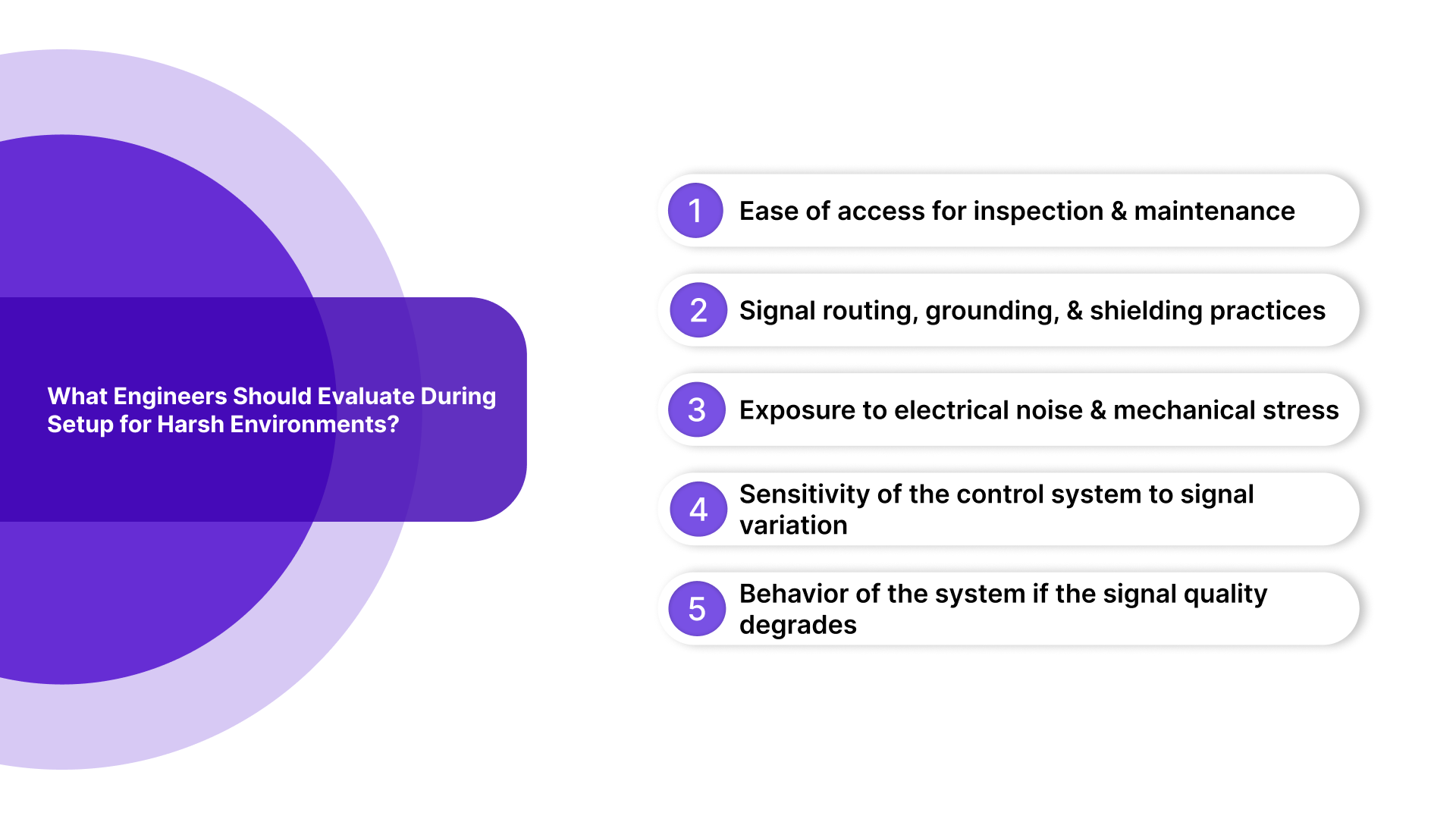
Ease of access for inspection and maintenance
Signal routing, grounding, and shielding practices
Exposure to electrical noise and mechanical stress
Sensitivity of the control system to signal variation
Behavior of the system if the signal quality degrades
Asking “how will this behave as conditions worsen” helps engineers identify risks early and avoid costly changes later. However, setup reliability is not just an engineering concern.
Procurement decisions also influence long-term performance.
What Procurement Teams Should Assess Beyond Product Fit?
Procurement teams play a direct role in the reliability of quadrature encoder interface circuit deployments. Supplier-related risks can be as impactful as environmental ones.
Key considerations include:
Manufacturing consistency and quality control
Responsiveness to technical support and field issues
Proven alignment with industrial automation use cases
Long-term supply continuity and replacement planning
Availability of clear documentation and application guidance
Selecting a quadrature encoder interface circuit is not just a technical decision. It is a sourcing and lifecycle decision that affects operations long after installation.
These considerations become even more critical in motion-driven systems, where encoder reliability directly affects control accuracy.
Quadrature Encoder Interface Circuits in Motion-Driven Industrial Systems
Motion-driven systems amplify the consequences of setup and environment mismatch. Even minor signal instability can affect positioning accuracy, synchronization, and control responsiveness.
In these applications, quadrature encoder interface circuits experience:
Higher vibration levels
Continuous load variation
Close interaction with control electronics

Manufacturers focused on industrial automation, such as Pico Systems, design encoders specifically for these realities. Our solutions prioritize stable signal processing, integration into motion control architectures, and long-term reliability in demanding environments.
This approach helps reduce integration friction and operational risk, especially in applications where motion accuracy is non-negotiable.
Conclusion
Choosing and setting up a quadrature encoder interface circuit for harsh environments requires long-term reliability. It depends on how well the circuit aligns with environmental exposure, application demands, and operational priorities.
Teams should evaluate environmental stress factors such as noise, vibration, and temperature, failure risks that emerge under real operating conditions, setup practices that influence signal integrity, and supplier reliability, documentation, and lifecycle support.
At Pico Systems, we design encoders for industrial motion and automation environments where reliability matters over time, not just at commissioning.
If you are evaluating encoder interface solutions for demanding applications, our team can help you assess suitability, reduce risk, and support stable operations. Get in touch to discuss your application or explore our product categories.
Frequently Asked Questions
1. Is a quadrature encoder interface circuit suitable for all environments?
No, suitability depends on electrical noise levels, mechanical stress, temperature variation, and system sensitivity. A quadrature encoder interface circuit that works in controlled conditions may fail in harsh industrial environments if setup and protection do not account for real operating stress.
2. What are the early signs of environment-related encoder issues?
Early indicators include intermittent position errors, missed counts, unexplained alarms, and inconsistent motion behavior. These issues often appear only during sustained operation, making them harder to diagnose than immediate failures.
3. Should procurement teams be involved in encoder interface selection?
Yes, procurement decisions affect supplier reliability, documentation quality, long-term availability, and support responsiveness. These factors directly influence maintenance effort, replacement planning, and overall operational risk.
4. How does the environment affect long-term maintenance planning?
Harsh environments increase inspection frequency, troubleshooting time, and replacement cycles. Poor setup can lead to recurring issues that consume maintenance resources without delivering a permanent resolution.
5. When should teams reconsider their encoder interface setup?
Teams should reassess the setup when encoder-related faults recur, motion accuracy degrades, or environmental conditions change. Revisiting suitability early can prevent escalating downtime and reduce long-term operational risk.